|
| Hydrangea arborescens, smooth hydrangea, photo by Hedwig Storch via Wikimedia |
Why I'm growing Hydrangea arborescens in my garden...
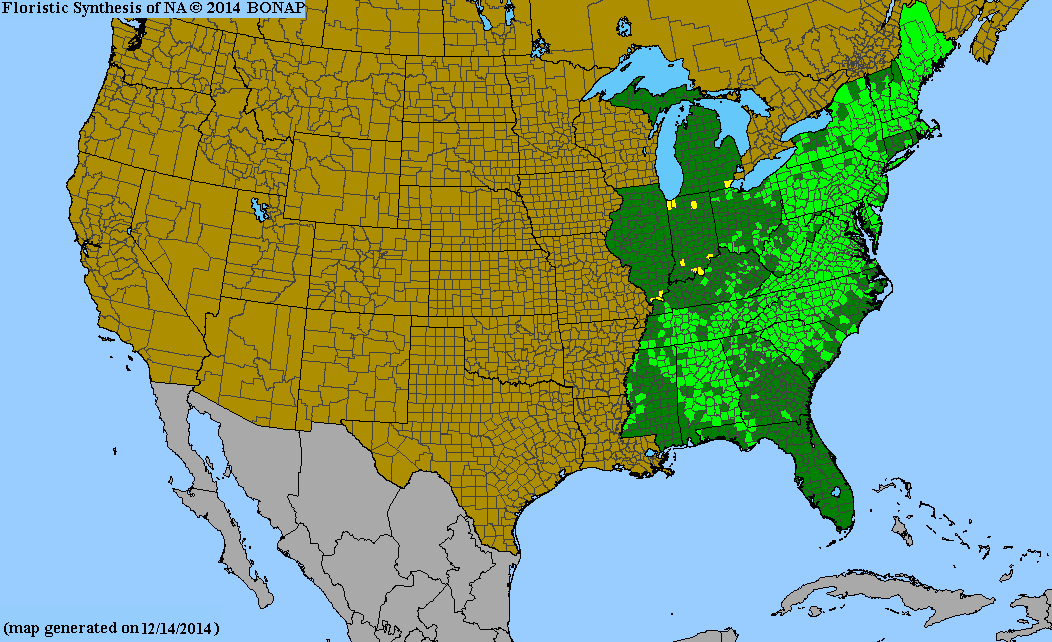
1) It is native to Tennessee and throughout a large swath of the Southeast, Midwest and Mid-Atlantic.
2) Sources at several botanic gardens say that H. arborescens flowers attract myriad pollinators including bees, wasps, hoverflies and skipper butterflies.
3) Since it blooms on new wood, I believe that smooth hydrangea should flower well even after the harshest Tennessee winters.
4) As with Cornus amomum, I've heard that smooth hydrangea is easy to propagate through a live-staking method (i.e., trimming branches in the spring, sticking them in the ground and giving them a bit of supplemental water if necessary as they get established).
5) Smooth hydrangea is supposed to be more drought tolerant than exotic mophead hydrangeas (H. macrophylla). It may even have a bit more drought tolerance than the oakleaf hydrangea (H. quercifolia), which I have found quite drought tolerant in partial shade.
6) H. arborescens may spread by suckers. I've planted it on a hillside where I think I would welcome that tendency to naturalize and protect the soil from erosion. However, I've heard those suckers are not especially difficult to control if I do want to keep it from spreading too far.
4) As with Cornus amomum, I've heard that smooth hydrangea is easy to propagate through a live-staking method (i.e., trimming branches in the spring, sticking them in the ground and giving them a bit of supplemental water if necessary as they get established).
5) Smooth hydrangea is supposed to be more drought tolerant than exotic mophead hydrangeas (H. macrophylla). It may even have a bit more drought tolerance than the oakleaf hydrangea (H. quercifolia), which I have found quite drought tolerant in partial shade.
6) H. arborescens may spread by suckers. I've planted it on a hillside where I think I would welcome that tendency to naturalize and protect the soil from erosion. However, I've heard those suckers are not especially difficult to control if I do want to keep it from spreading too far.
Do you grow smooth hydrangea? If so, what has been your experience with this plant?