Showing posts with label lawn. Show all posts

Friday, August 12, 2016

How to Make My Lawn Look a Little Less Awful

The weeds are winning...


I'm a gardener, not a lawn-guy.

I'm passionate about trees, shrubs, perennials and annuals, but turf generally bores me (and strikes me as ultra-wasteful, but that's a rant for another day).

On the other hand, I'm not necessarily happy having a lawn that's totally overgrown by weeds. And I do recognize that some of those weeds will spread or reseed into the garden beds (where I'll have to pull them out).

So ... my question to you fellow gardeners is what, if anything, do you do to maintain your lawn?

Yeah, I could hand-pull these weeds, but not their hundreds of brethren on the rest of my property. (Tried that in previous years. It's a Sisyphean task that led to only heartache -- and backache!


I'm thinking...

1) Overseed next month

2) Possibly spray some broad-leaf herbicide if/when we get a relatively cool, dry and non-windy day.

3) Put down some organic fertilizer in November to help the grass build its roots

4) Spread some pre-emergent herbicide (i.e., Preen) next spring. Preen's manufacturer recommends spreading its product around the time you see forsythia trees start to bloom. (I don't know if that works everywhere. But there are certainly enough forsythias around my neighborhood that it should serve as a suitable clock here.)

5) Preen's supposed to work for about 8 weeks, I think. So I was thinking I'd possibly spread some more Preen in early summer next year and then call it a day.


What do you think of this plan? I hate to use herbicides in the garden, but after years and years of pulling weeds by hand on my 3/4-acre lot, I can tell that the weeds will win (are winning) if I don't intervene.

I should note that I'm not looking for artificial monoculture perfection. I've no problem with the lawn being 10% or even 25% weeds, but right now I think the weeds are in the majority and aiming for total domination.

(I don't spray any herbicides or put down any pre-emergent chemicals in the garden beds themselves. The shrubs, perennials and annuals seem to do a pretty good job of outcompeting the weeds, and I don't mind hand-weeding whatever weeds do pop up in the beds. But I don't see any way that the turf will ever be able to outcompete the weeds.)

I'm interested to hear how you approach weeds / lawncare on your own property? Any tips (especially from Southern gardeners dealing with the same typical summer heat/drought issues that we get in Tennessee)?


Instagram

Follow Aaron Dalton on Feedio

Monday, November 10, 2014

On Snout Houses, Vast Lawns and Deafening Blowers

I find the sound of leaf blowers a bit grating...
Photo courtesy of Guian Bolisay

This post will be a (brief) rant.

I came across a couple of interesting blog posts on the Interwebs recently.

One dealt with the phenomenon of what we might politely call car-centric architecture. Or bluntly call a Snout House.

The other showcased a comparison of American suburban streetscapes (sprawling, dominated by lawn) and European streetscapes (compact, no front lawn to speak of).

Both posts were fun, trenchant reads.

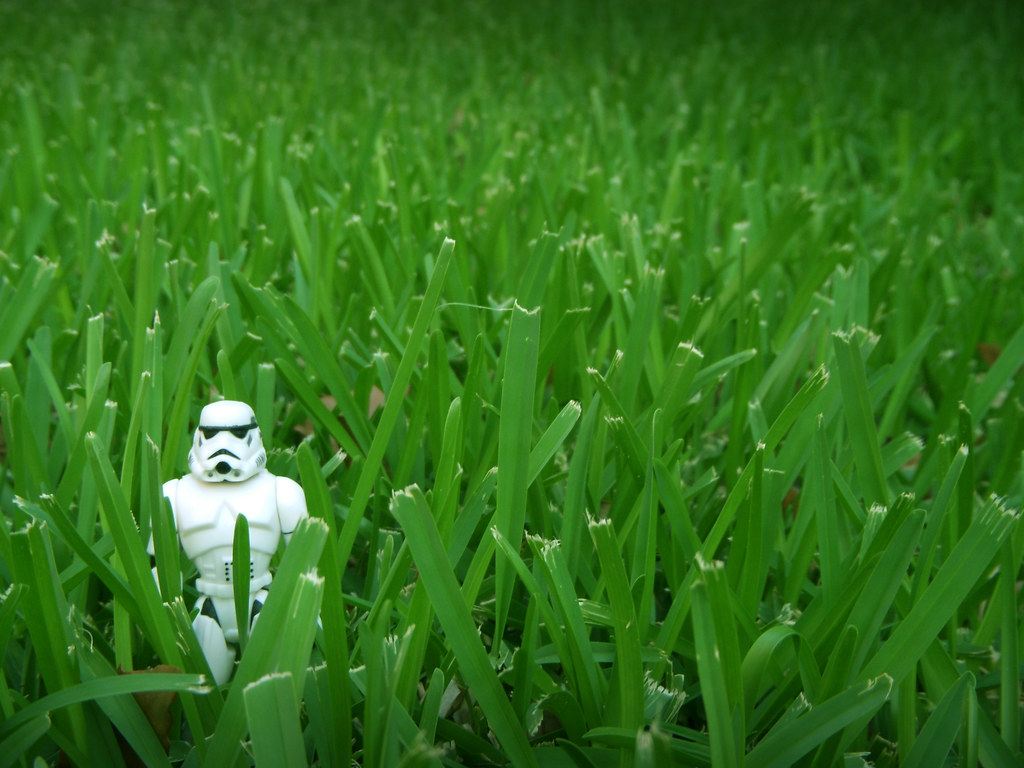
Storm Trooper in the grass
Apparently lawns are only able to support plastic life forms...
Photo courtesy of JD Hancock

So, here's my question to you all:

Is it too late?

Is this the ideal landscape for many Americans?
Photo courtesy of Tiger Pixel

Are we too far gone down that path of suburban soullessness where each house shall be fronted by a sea of green grass (or weeds) to be beaten each week into submission by the loud, whirring, pollution-spewing lawnmower (+ edger/trimmer + blower)?


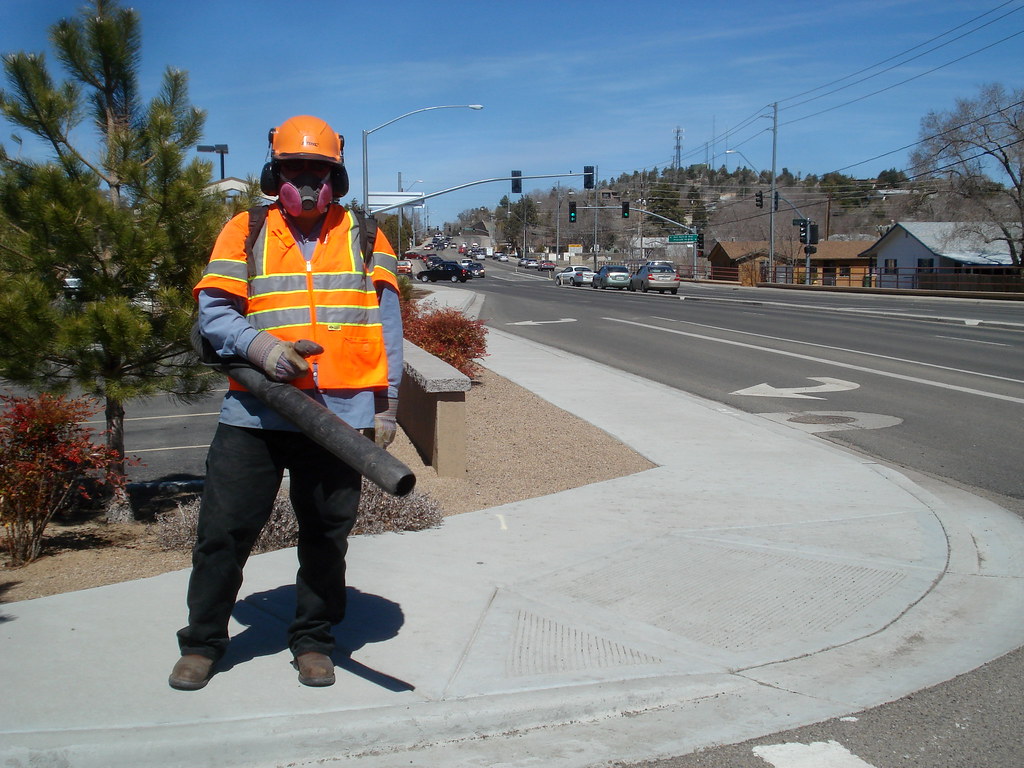
Just blowing some leaves...and dirt...and perhaps some dust, fecal matter, fungi, chemicals, spores, lead, etc. etc.
Photo courtesy of Dale


Or is there a chance that someday these green carpets - lifeless except for the amputated grass blades, drenched with fertilizers and pesticides and herbicides - will be replaced with a rich array of trees, shrubs and perennials buzzing and twittering (not Tweeting) with life?

I know which future I'd prefer. But I suspect I'm in the minority.

Attack of the Blower People?
Someone call Mulder and Scully!
Photo courtesy of Surat Lozowick

Thursday, July 17, 2014

Are Hellbenders actually Canaries?


Take a good look at this Hellbender. You might not get a chance to see one for real in the wild.
Photo by USFWSmidwest

I read a couple of disturbing stories last Friday about the disappearance of the Hellbender, North America's largest salamander, whose populations are crashing in the wild.

What's causing the Hellbender decline? Scientists don't know for sure, but a likely culprit seems to be declining water quality. Since salamanders breathe through their skin and live in creeks and streams, they could be the canary in the coal mine indicating problems with our water supply.

So how can we help save the Hellbender? The Christian Science Monitor says "Researchers are urging landowners to plant trees and grasses along rivers to improve the water quality."

So that does mean you're off the hook if you don't live alongside a body of water? I doubt it. One way or another, much of the water that runs off our lawns and hardscapes during a storm probably ends up in a river, creek, stream, lake or ocean (unless it goes directly into a water treatment facility).

If all or most of the land on your property consists of short lawn and hard spaces that can't absorb water, you're going to have a lot of untreated runoff. If you spray herbicides (weed killers) or pesticides or fertilizers on your lawn, some portion of those treatments may wash off in a heavy rain and make their way into bodies of water.

So how can homeowners help?

1. Reduce the lawn and add more ornamental grasses, perennials, trees and shrubs that will slow down and absorb runoff during heavy rains, giving bacteria and other soil organisms a chance to sequester and clean the water. (These plantings can of course offer many other wildlife benefits - flowers for bees and butterflies, nectar for hummingbirds, berries for birds - while reducing the acreage we need to cut with polluting mowers.)

2. Stop spraying and treating the lawn with herbicides, pesticides, fungicides and fertilizers. I'm not guilt-free here. I don't spray any pesticides or fungicides on my lawn, but living in a keeping-up-with-the-Joneses kind of neighborhood, there's a mandate to keep the lawn green and weed-free. But I'm trying to reduce the size of the lawn, because there's no mandate about what sorts of trees, shrubs, ornamental grasses and perennials I plant -- and if I plant those thickly enough, they'll do a pretty good job of suppressing weeds on their own without any spraying. (At least that's been my experience so far in the landscape beds I've already installed.)

Together, perhaps we can save the Hellbender. And ultimately, if the water is cleaner, we'll help ourselves too.

Monday, September 2, 2013

Oh Give Me a Home, Where the Buffalo Grass Roams


Buffalo Grass, summer 2013 at Garden of Aaron in Tennessee
Yes, this soft, feathery grass is Buffalograss (Buchloe dactyloides) growing in a small section of my Tennessee backyard

One of the neat things about writing a blog is being able to track the stats and seeing which posts are most popular. The two most popular subjects drawing people to the blog so far are searches concerning "pine straw mulch" and "buffalograss".

With regard to the mulch, my most recent post on the topic tells how and why I lost my infatuation with pine straw. More recently, regular readers will know that I've begun posting reviews of the groundcovers with which I hope to replace most/all of my mulches.

But it's been quite some time since my last post on the test buffalograss patch. The last update was way back in January, when the buffalo grass was hibernating (i.e., dormant) and resembled nothing so much as little gold tufts of straw on a dirt background.

So how are things going now? Much better thank you!

As you can see from the photo at the top of this post, the buffalograss did eventually green up and has mostly filled in its designated area.

It's doing better in some parts of the rectangular test patch than others. I think it's happiest in full sun and has not filled in as much in the section of the test patch that gets a fair amount of shade from a neighboring crape myrtle.

Buffalo Grass, summer 2013, photo #2
Here's a section of the test patch where the buffalo grass has not filled in as thickly as I would have hoped.  

The best thing about this patch of buffalograss -- it has only been mowed once. That's right, buffalo grass not only grows slowly, but the soft and tender blades of grass sort of flop over so that they make a nice wavy texture.

Even the one time that the buffalograss was mowed, I don't think it really needed to be mowed. Our lawn care guy was mowing the rest of the lawn and I guess he decided to give the buffalograss a trim. To be honest, I liked it better when the buffalograss was a little bit longer. Sorry I don't have that 'before' picture.

So is a buffalo grass lawn right for you? Here are my thoughts after a year on the pros and cons:

Pros:

1. No need to mow! Near as I can tell, you can skip mowing your buffalograss lawn altogether. Or maybe mow it once or twice a year if you really like a manicured look. That's a major improvement over the typical lawn that needs to be mowed once every week or two from spring to autumn to stay looking nice.

2. Drought tolerant. Buffalograss is supposed to need much less water than regular grass. We've had a pretty wet year so far here in Tennessee, but there have been some warm and dry spells over the last month. The buffalograss seemed to handle the warm, dry weather without any problem.

3. Soft. I remember soft (Kentucky bluegrass?) lawns from my childhood in Pennsylvania, but many of the lawns down here in Tennessee including our own are stiff and rough fescue-based lawns that constantly poke your feet and ankles. Not fun. The buffalograss, by contrast, is feathery-soft and very easy on the feet.

4. Fills in, but does not run rampant. The buffalo grass spreads above ground by stolons, so it's easy to see where/how it's spreading and to rein it in if need be. But the truth is that it does not spread at unmanageable pace. In fact, I wish it spread and filled in a bit more quickly.


Cons: 

1. Zzzzzz.... Yeah, there's that pesky dormancy period. Buffalo grass is not the only grass to go dormant. Zoysia also has a dormancy period, for instance, as does Blue Grama Grass. Anyway, the problem for me was that weeds (and Viola tricolor) took advantage of that dormancy period to establish themselves among the Buffalo grass bunches.

You can see what the dormant grass looked like as late as early April by scrolling down through this archived post.

And even when the Buffalo grass greened up and filled in late in the spring, a number of the weeds still coexisted alongside the grass.

So, is this a dealbreaker? I'm not sure. I'm eager to see whether the dormant Buffalo grass does a better job at resisting weed invasions now that most of the clumps have knitted together. Stay tuned for another update in late 2013 or early 2014.

Regardless of the weed invasion, the long dormant period was not particularly attractive, but maybe it will look better with an unbroken golden carpet this fall rather than the isolated tufts I had to look at last winter. I'm trying to keep an open mind.

2. The Swiss Cheese Effect. So Buffalo grass has filled in, but it has not filled in completely. There are still some bare patches, particularly in the shadier spots. Folks say that Buffalo grass loves the sun and apparently they're right.

3. The Net Effect. The interlocking stolons of Buffalo grass form a kind of net that seems to help it block a lot of weeds, but when a weed does get in there, it's pretty hard to pull it without ripping out a lot of Buffalo grass stolons in the process.

4. The Cost. I ordered my Buffalo grass plugs from Todd Valley Farms. I think one tray cost about $62 including shipping. That tray covered an area that is maybe 50-square feet. So if you've got a big lawn, you're looking at a lot of moola if you want to cover the whole area with Buffalo grass.

5. Brown Spots. Even where the buffalo grass has filled in nicely, I can still see brown spots. Is it the dead/dormant spots from last winter? What's going to happen this winter when the whole patch goes dormant? Will there be brown and green intermixed throughout next spring? Beats me, but I'll update you as soon as I know.

Buffalo Grass, summer 2013, photo #3
The Big Picture. The buffalograss has come a long way, baby. It hasn't exactly turned out to be the groundcover of my dreams nor has it matched the glowing descriptions from marketing brochures, but it certainly has its attractions. If only it were a little greener, a little thicker, a little more weed-proof, with a shorter dormancy period...


Conclusion

I'm happy that I trialed buffalo grass and I think it's an interesting, beautiful groundcover with some significant advantages over traditional lawns.

Unless I win the lottery, I can't imagine spending the money to cover an entire lawn with buffalo grass, but I could see using it again in the future for a small space.

I look forward to seeing how it will perform in its second winter and how it will green up next spring. If it gets stronger and more established, I'm curious as to whether it will become more aggressive at invading the flower beds and the fescue lawn, or whether it will stay mild-mannered and let me keep it in check.

Stay tuned for future updates! If you have any questions about your current or planned buffalo grass lawn, please leave a comment below and I'll try to provide answers!

Monday, April 22, 2013

Starting New Beds - The Smothering Approach

I hired a landscaper to create this new garden bed in the front lawn. He sprayed the grass with RoundUp, dug a border around the bed and put down a lot of pine straw. He still has had to spray subsequently with RoundUp a couple more times to take care of grass that would not die. (That's the greatest irony, right? The grass won't grow where I want it - notice the bare spots outside the bed. But it invades where it's not wanted.) The plants here include daffodils, moss phlox (Phlox subulata), Hypericum (the little shrubs leafing out uphill from the daffodils), one Appalachian Redbud and three Eastern Red Cedars (not cedars actually, but Juniperus virginiana)

I don't have any imminent plans to start new garden beds (I'm still busy trying to figure out the best solutions for the beds I've already got), but I also have big dreams of a lawnless yard filled with trees and beds of flowers and vegetables.

So...how does one go about transforming a lawn into garden beds?

I researched this question a few weeks ago and came upon a number of sites that suggest the easiest and best approach is to smother your yard under a combination of newspaper, cardboard, soil and/or mulch.

Here are some of the sources I consulted:

- LessLawn.com

- Washington State University

- Restoring the Landscape with Native Plants

- A Way to Garden


What do you think of this method? Have you tried it? Or do you have some other method of starting new garden beds?

Tuesday, January 29, 2013

Buffalo Grass In Winter Hibernation Mode

"Prestige" buffalo grass in January 2013, approximately 5-months after planting in 2012. I scattered some mulch around the plugs closest to the camera to try to keep down weeds. The majority of the plugs, especially those furthest from the camera, just have bare ground between them.

So last August, as some of y'all may remember, I took the plunge and planted some buffalo grass.

I had three primary reasons for wanting to cultivate a buffalo grass patch:

1) Buffalo grass is supposed to be very tough and able to tolerate heat and drought. This is important because summers can be very hot (90-100+ Fahrenheit) in Tennessee for months at a time -- sometimes without any rain for weeks. I'd like to cut down on my supplemental irrigation, so finding plants that can survive a drought is key.

2) Buffalo grass is supposed to be low-growing. Especially the varieties that are sold for lawn use - like the Prestige variety I bought - are only supposed to get 4-6 inches tall over an entire season. That means you could theoretically not mow your lawn at all, or maybe just once or twice per year.

3) Buffalo grass is native to North America (although I think it is more native to Western parts of the continent).

4) Buffalo grass requires far less nitrogen fertilizer (1-2 lbs per 1000 square feet) versus conventional lawns (e.g. Bluegrass at 3-5 lbs per 1000 square feet). I'm always looking for ways to reduce external inputs such as fertilizer for more eco-friendly (and wallet-friendly) landscaping.


So, how did the buffalo grass planting turn out? I posted a 2nd day update, but this is my first time revisiting the buffalo grass patch since then on this blog.

To be honest, it's not particularly a pretty sight at the moment. As I'd expected, the buffalo grass went into hibernation mode ('dormancy' is the technical term, I believe) once nighttime temperatures started dipping below freezing in late October and early November.

One advantage of the buffalo grass plugs not growing together yet is that there was space for some self-sown lettuce seedlings to emerge. I believe this is Merveille de Quatre Saisons. The lettuce never got all that big, but I did pick and eat the baby lettuce one night when temperatures were forecast to drop into the teens, which I thought might damage the tender lettuce leaves.

The winter color is not unattractive - I like to think of it as 'tan' or 'golden'. I less charitable soul would probably call it 'brown'. Beauty continues to be in the eye of the beholder.

The main lesson I think I can pass on from my experiences thus far would be this: If you live in a climate where temperatures drop below freezing in winter, it doesn't really make sense to plant buffalo grass in late summer.

Because while I think all the plugs survived being transplanted into an August heatwave, I also think it took them a while to settle in and get rooted. Plus they required frequent watering around the transplant time.

It probably would have been smarter to plant the plugs around May. In a good year, we're still getting nice spring rains in May, so the buffalo grass plugs probably wouldn't need much supplemental irrigation. And then they would have all summer to knit together by growing into each other along stolons.

A dormant buffalo grass plug that started to send out a stolon to the left. I like the way that the dormant buffalo grass goes all curly or frizzled.

It's hard to tell from the picture, but some of the plugs did start to send out runners and interlace with one another, but they didn't have a chance to complete that process before the weather got cold and the new growth shut down for the winter.

And because they had not yet knit together, that left plenty of space for weeds to develop. (I picked most of those weeds out by hand, which wasn't too hard in most cases, although I had to be careful not to damage buffalo grass roots.

On the bright side, the stories about buffalo grass being a low-growing grass definitely seem to be true. When the grass did start growing, it focused its energies on lateral growth rather than vertical growth. So I can definitely see this being a grass that needs hardly any mowing to keep it at a reasonable height for a lawn.

So that's the story right now.

One more dormant buffalo grass plug. This one expanded a bit more than some of the others, but it has a lot more expanding to do in the spring and summer to connect with its neighboring plugs.

My hope is the buffalo grass will start greening up in late March or early April, once the temperatures start staying above freezing at night and daytime temps are reliably in the 60s or higher. (It's actually around 70 Fahrenheit today, but that's not going to last. We'll be going back to highs in the 30s-40s range and lows in the 20s by the end of the week.

Presuming the grass is still alive and in good shape, I will post another update when it starts greening and then hopefully be able to post additional updates in the summer if it does start forming a solid patch of grass.

Based on my experience thus far, I don't feel I know enough yet to say whether or not buffalo grass would make a good alternative to other lawngrasses in the Southeast. I can say that if I were to do it over again, I would try to get an earlier start planting the buffalo grass (by June at the latest) to give them a whole summer to try to grow together and form a solid patch of turf.

Do you have any questions on my buffalo grass trial experiment so far? Praise, criticism, suggestions and cheerful encouragement are all welcome in the comments section below!