Showing posts with label Cheekwood Botanical Garden. Show all posts

Wednesday, August 13, 2014

A Skink, I Think

A skink checks to see if the coast is clear among some rocky ruins at Cheekwood garden in Nashville, Tennessee
Well, actually, I'm pretty sure it's a skink -- and a juvenile Five-lined Skink at that!

(The bright blue tail is a giveaway.)


This skink is rocking that blue tail look.  So stylish!
This skink is rocking that blue tail look.  So stylish!


Sunday, April 13, 2014

Tulip Extravaganza! (And Dogwoods too)

This morning we visited Cheekwood Botanical Gardens in Nashville.

Cheekwood has been going all out with tulips the last couple of years. Last year, they claimed 50,000 bulbs. This year, they upped the ante and doubled the count to a neat 100,000!

Here are some highlights from our visit - plenty of tulips, but also some dogwoods and ...

Yellow tulip with violas


River of orange tulips
River of orange 

Blowzy pink and purple tulips

Pink and lavender tulips surround a gazebo
What a lovely spot for a rendezvous...


White, pink and purple tulips mixed with blue and yellow violas
So many colors -- somehow they all work beautifully together!

White tulips mixed with purple fringed tulips
Who doesn't love a fringed purple tulip?

River of white and purple tulips flows beneath still bare mature crape myrtle trees
These majestic mature crape myrtle trees may still be bare, but their exfoliated trunks serve as the perfect vertical contrast to this flowing river of white and purple tulips

A patch of cheerful yellow tulips
What a sunny, cheerful sight!

Yellow and orange formal tulips surround a billowy informal yellow variety
Here's an unusual "deconstructed" yellow tulip surrounded by some complementary more formal peers


And it wasn't all about the tulips at Cheekwood. The garden has an impressive collection of dogwoods, many of which were in bloom. Our favorite was Cherokee Chief:

Cornus florida "Cherokee Chief" Dogwood

Cornus florida "Xanthocarpa" full of white flowers
Cornus florida "Xanthocarpa"


Cornus florida "Xanthocarpa" flowers against a blue April sky

Side-by-side pink and white flowering dogwood trees seem to enhance each other's beauty

Monday, March 3, 2014

One More Horticultural Resource -- List of Selected U.S. Historical and Estate Gardens


Visitor at Monticello vegetable gardens. Photo by Chiot's Run
Visitor at Monticello vegetable gardens
Photo by Chiot's Run

Over the past couple of months, I've added a few lists to the sidebar of this blog.

The first list was my effort to provide a fairly comprehensive overview of the highest quality U.S. botanical gardens I could find.

Last month, I tried to give the same treatment to U.S. arboreta.

Now I have compiled a third (and perhaps final) resource list comprising some of the most famous, impressive and beautiful historical and estate gardens across the United States. As with the others, you'll find that list in the sidebar directly following the arboretum list.

What separates an historic or estate garden from a botanic garden or arboretum?

Clearly historic or estate gardens typically are built around old mansions. Many of these properties try to stay true to their historical roots by continuing to use the same types of plants (including heirloom vegetables and ornamentals) or at least the same design ethos.

Botanic gardens and arboreta are subject to no such constraints. Generally, they can experiment to their heart's content with new designs and new plants.

In other cases, the difference is simply a question of age. Gardens like the ones at Monticello and Tryon Palace are hundreds of years old, whereas many U.S. botanic gardens were founded within the 20th Century.
Gardens at Tryon Palace, New Bern, NC. Photo by Zach Frailey
Gardens at Tryon Palace, New Bern, NC
Photo by Zach Frailey

On the other hand, there are much older botanic gardens overseas -- the botanic garden in Padua, Italy is more than 450 years old!

So age is not the main consideration and neither is the question of whether or not the garden is built around an old estate. In Nashville, Tennessee, Cheekwood Botanical Garden is built on the grounds of a 1930s estate that was constructed with a fortune made through an early investment in Maxwell House coffee.

But Cheekwood does not attempt to recreate the formal gardens that existed on the site 80 years ago. Elements of those gardens may remain, but Cheekwood now includes a Japanese garden, an herb garden, an impressive dogwood collection, a rain garden and many other marvelous ahistorical plantings.

I would say the other major difference between botanical gardens, arboreta and historic/estate gardens, is that botanical gardens and arboreta have multiple missions. Yes, they are places of beauty, but they are also focused on horticultural education, research and preservation.

By contrast, it seems that historical or estate gardens are concerned primarily with aesthetic beauty, with historical education being a secondary goal.

One obvious way in which these different types of institutions reveal their different goals is through the use of plant labeling. Botanical gardens and arboreta understandably tend to be very good about labeling the plants in their collection so that a visitor instantly knows what type of plant she is observing - genus, species and named variety (if applicable).

By contrast, an historical or estate gardening may have minimal labeling, if it has any at all. Last summer, I had the opportunity to visit the wonderful Chanticleer garden in the Philadelphia suburb of Wayne. There were unobtrusive boxes where placards were stored that gave interested visitors information on nearby plants, but the plants themselves were unlabeled so as not to interfere with the pure aesthetic appreciation of their beauty.

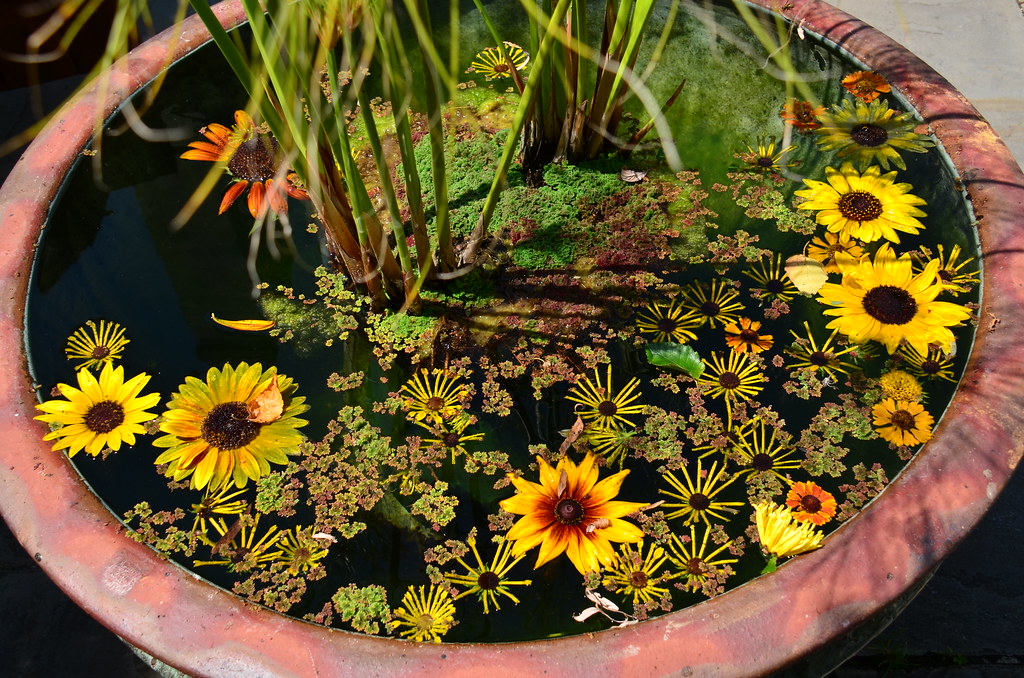
A floating wonderland at Chanticleer in Wayne, PA. Photo by Simon
A floating wonderland at Chanticleer in Wayne, PA
Photo by Simon
All three types of gardens have their merits. I hope these three lists in the sidebar inspire you to visit botanic gardens, arboreta and historical/estate gardens near where you live - or wherever your travels take you.

(PS - I hope that my focus on the U.S. will not be misinterpreted as narrow-minded nationalism. I have no doubt there are many amazing and worthy botanic gardens, arboreta and historical/estate gardens around the world, but unfortunately I do not have the time at the moment to publish a comprehensive list. What I may do sometime later this year is create another list in the sidebar of some of my favorite foreign gardens that I have visited in person. That list would be rather brief at the moment, but I hope it would grow in years to come.)

Thursday, December 19, 2013

New Resource: Botanical Garden List


You never know who you'll see at a botanical garden!
Here a cute frog crashes the party at Powell Gardens' Festival of Butterflies.
Photo by Greg Boege


Dear Garden of Aaron readers,

Thanks for all your support and valuable feedback over the past year!

I would like to draw your attention to a new resource - a list of U.S. botanical gardens that I have added to the right sidebar. 

I'm sure this list is not comprehensive, but I hope that I've included most of the biggest and best botanic gardens in the country.

If I've missed any notable names, please contact me or use the comments section below to let me know.

(In the future, I hope to add a list of major U.S. arboretums. Since some botanic gardens - like the one in Dallas - seem to define themselves primarily or equally as arboretums, they'll end up on that other list.)

Hopefully these links to botanic gardens around the country will help you to discover gardens in your region or give you ideas of gardens you can visit when you travel.

What are your favorite U.S. botanical gardens? I've got to give some hometown love to Cheekwood, but I also was incredibly impressed with a visit a couple of years ago to Powell Gardens outside Kansas City, particularly the 12-acre Heartland Harvest Garden. Well-played, Powell!

Which garden would you most like to visit? I have to say that I'm hoping to visit some of the famous nearby gardens in upcoming years, including the botanical gardens in Memphis, Atlanta and St. Louis, plus the University of Tennessee Gardens in Knoxville!

Wednesday, August 8, 2012

Botanical Garden Review - Cheekwood, Nashville, Tennessee, USA

I'm a big fan of botanical gardens in general, and since Cheekwood is my hometown garden, naturally I have warm and fuzzy feelings toward it.

And yet, I don't get to Cheekwood as often as I would like. I used to live just around the corner, but since we moved further away, it's become a special occasion sort of trip.

But just to be masochistic, we decided to visit Cheekwood on a typically hot and muggy August day (~95 degrees). The good part is that the garden wasn't that crowded. The bad part is that it was 95 degrees! We carried LOTS of water, sought out shade and hydrated constantly.

I wanted to see which plants were thriving in Middle TN despite the heat. Here's some of what we saw:

Big bee on unidentified purple flowers. Anyone know what these flowers are?

Beautiful goldfinch snacking on cone flower seeds, I believe

Two more goldfinches munching on coneflower seeds. I like goldfinches and I like coneflowers. They go together like Rice Krispies and milk.

I was so focused on getting a photo of this handsome grasshopper before he hopped off that I didn't even notice this white flower until I uploaded the photo. What do you think? Could it be a balloon flower?

These green and gold bushes were really dazzling and looked simply luminous and healthy despite the baking heat. They were pared (as you can see) with hostas that had a similar color scheme. I'm not a huge fan of hostas (is that sacrilegious to admit?) but I did like this big bush. Anyone know what it's called? I'm pretty sure I've seen it in a catalog, but I can't remember the name and it looks like it would be a great shrub for Middle TN if it can handle this summer's heat, humidity and drought and still look this good. PS - Could it be Aucuba japonica??

Beautiful groundcover, dotted with charming pink flowers. I'm thinking that the leaves and buds look a lot like zinnias, but these were really short and the flowers seemed pretty different from zinnias that I've grown. What do you think? Are they zinnias? And if so, what variety?  Maybe one of the Profusion series?


Praise:

1) Art + Gardens -- Cheekwood has both an (air-conditioned) art museum housed in an historic mansion and numerous gardens. It's a nice mix. When you get hot and tired (or, in the winter, cold and tired) there's a climate-controlled space to cool down or warm up. And if you're a history buff or a coffee drinker, you might be interested in visiting Cheekwood just for the Maxwell House connection...

2) New Literary, Rain and Wildflower Gardens -- Like other parts of Middle Tennessee, Cheekwood has suffered its share of severe weather lately. As I recall, one particularly severe storm wreaked havoc in what had been a shade garden, necessitating a complete rethinking and replanting of that space. The newly renovated Howe Garden is not only a beautiful space in its own right, but also does a good job explaining some of the concepts and importance of rain gardens. And I simply adored the Hobbit-esque house stone house with the thatched roof in the Howe Garden. Plus there's a new Sigourney Cheek Literary Garden too where readings are held on a monthly basis. I haven't been to any of the readings yet, but it looks like there is a small rock amphitheater that has been built to foster intimate storytelling sessions and I can easily imagine that the result is charming. Paths throughout the new gardens are well-constructed and comfortable for strolling.

3) The People -- As elsewhere in Nashville, my experience is that Cheekwood staffers, particularly the gardeners and the museum docents, tend to be kind, cheerful and polite, which makes any botanical garden visit more enjoyable.


Constructive Criticism:

1) Variety, or Lack Thereof: I believe that a botanical garden should serve both aesthetic and educational purposes. Cheekwood has loads of dogwood trees and an impressive alley of crape myrtles. Both certainly fit into the local horticultural vernacular and deserve a place in the garden, but I would have very much liked to see more variety and more unusual specimens among the plants on display.

2) Give Me a Sign: I don't mean to be harsh, but I thought signage was simply dreadful through the gardens we visited. Seeing an interesting plant and finding a identifying tag was the exception to the rule. And sometimes in the rare occasions where ID tags did exist they were illegible due to their location literally 20-feet from the path in the middle of a landscaped bed sporting a sign pleading with visitors to stay on the path. It would have been more helpful in that scenario to have a large illustrated sign near the path explaining what plants were in the bed and offering photos of each one. There are one or two signs in the Howe Garden that take this approach, but again, they are the exception rather than the rule. Thus my confusion and pleas for assistance in identifying some of the beautiful plants in the photos above...

3) A Feast for the Senses: Gardening is about beauty, but taste is also one of the five senses. How about adding a demonstration vegetable garden that might inspire visitors to grow some of their own food and even show them that a potager can be aesthetically pleasing? I guess it would be a lot of work to maintain, but I think it would be a valuable addition to what Cheekwood has to offer (and probably would help make the garden more historically accurate, since I would imagine the Cheek family grew some crops on site back in the day...)

PS - If you have children or you are a child-at-heart, this month is a great time to visit Cheekwood to see some incredible giant treehouses based on famous works of literature!