Showing posts with label Hemerocallis. Show all posts

Wednesday, February 5, 2014

Breaking Up 2014 Edition - 31 Failed Plant Relationships in my Garden

Some garden relationships just don't work out.

Here is a rogue's gallery of past loves that have since fallen into disfavor:

(PS - It probably should go without saying, but just because these plants flopped in my garden doesn't mean that they're doomed to do the same in yours. Every garden is different. Every gardener is different. Feel free to catch some of these rejects on the rebound. YMMV - Your Mileage May Vary...)

Callirhoe bushii, Bush's Poppy Mallow, blooming June 2013
1) Callirhoe bushii, Bush's Poppy Mallow - Supposed to have a long bloom season and attract lots of bees and other pollinators. Instead it had a short bloom season and I never saw a single pollinator on a C. bushii flower.

Callirhoe involucrata, Winecup, photo by peganum

2) Callirhoe involucrata, Wine Cups, Poppy Mallow - Tried growing this from seed by sowing directly in the garden. Failed.

3) Calycanthus floridus, Carolina Allspice, Sweetshrub - Planted in spring 2012 in partial shade. This plant struggled through the dreadful drought and heat of the 2012 summer. Somehow when picking this plant, I missed the fact that it prefers moist soils. When it had not shown any signs of life by early April 2013, I gave it the heave-ho. The photo I was going to share of this plant is so hideous that to post it would be to dishonor the dead. But if you must see the train wreck, you can check it out in this late 2012 post.

Caryopteris, Blue Mist Spiraea. You can find other caryopteris photos online that make the plant seem bigger and bushier, but this is sort of what mine looked like - rather unassuming, almost see-through, not a bold presence in the garden. I can't say that I dislike it. The blue color is lovely and it does attract bees when in bloom, but the bloom season was not long for me and the plant was not attractive out of flower. Maybe a plant for an unobtrusive, out-of-the-way corner of your garden? Photo by mwms1916

4) Caryopteris, Blue Mist Spiraea - Chosen for its reported drought tolerance and ability to attract bees and butterflies over a long bloom season (supposedly July to September). In reality, Caryopteris did not leaf out until mid April and did not start blooming until mid-August. The sparse blooms did attract some bees, but I never saw a butterfly on the plant. I've since read that Caryopteris performs best with a hard pruning in the spring, so I'll give that a shot this year and see if it makes any difference. I may also try transplanting it to a slightly sunnier location to see if that induces more flowers.

Ceratostigma plumbaginoides, Leadwort, Hardy Blue Plumbago finally emerging from a long winter nap, mid-April 2013

5) Ceratostigma plumbaginoides, Leadwort, Hardy Blue Plumbago - In 2012, several of these plants performed admirably through the record heat. 2013? Not so good. The plumbago in full sun looked sickly all year and pretty much pooped out early. Maybe it was negatively impacted by the roots of a large sunflower growing nearby? I won't be surprised if it doesn't return next year. The leadworts growing in partial shade (morning sun, afternoon shade) performed better, but they didn't start putting on new growth until mid-April. Since the plants drop their leaves by late-November, we're looking at nearly five months of bare stems, which isn't appealing on a specimen plant, and certainly is not desirable on a large-scale groundcover. The blue flowers are pretty in late summer and early autumn, but they don't seem to draw many pollinators. Under the right circumstances, the leaves can attain a rich red coloring before they fall. I don't think I'll rip out my plumbago, at least not quite yet, but neither am I eager to add any more to garden.


6) Ceratostigma griffithii, Griffith's Plumbago - A total flop. It was supposed to be a drought-tolerant evergreen shrub or sub-shrub (depending on which catalog description you chose to believe). Purchased via mail order, the plant looked feeble to start and saved  me the trouble of shovel-pruning by disappearing sometime during the 2013 growing season. (Sorry I've got no photo for this one. What can I say? It's a rare plant and I couldn't find any Creative Commons-licensed photos of it on Flickr. Nor could I showcase any photos from my own garden, since it did its disappearing act before I could take any.)
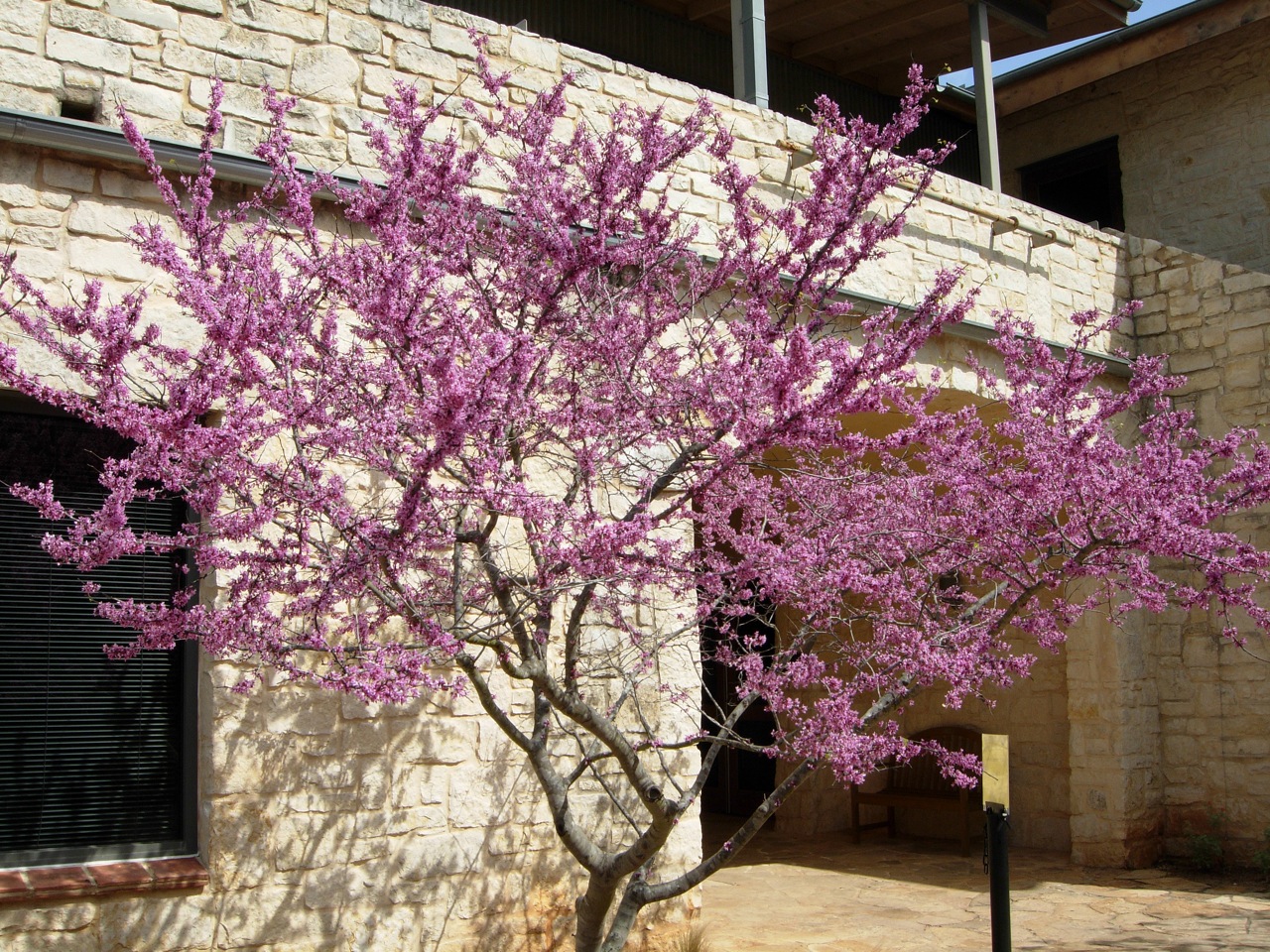
Redbud in bloom. Enjoy it while it lasts...Photo by Jeff Stvan
7) Cercis canadensis, Redbud - I'm going to go out on a limb here and criticize the Redbud (not to be confused with Citizen Kane's beloved Rosebud). Yes, it's native to Tennessee (and much of the Southeast, Mid-Atlantic and Midwest). Yes, it looks lovely for about one week in the springtime when it is covered with flowers. Yes, the bees go crazy for it - although just over a few days. But it is reportedly short-lived (typically 20-25 years acording to various sources), reportedly weak-wooded and susceptible to damage from snow, ice and wind. In sheltered understories, the leaves probably look quite nice.

Clematis integrifolia, May 2013

8) Clematis integrifolia - I admire this plant, but I wouldn't necessarily recommend planting it or add any more of it to my garden. It is tough and reblooms throughout the summer, but I'm not a fan of the lax, sprawling growth habit or the downturned flowers. Nor have I ever seen any pollinators visiting those flowers. I can appreciate its strong points, but Clematis integrifolia and I just aren't meant for each other.

Dianthus gratianopolitanus "Firewitch", May 2013

9) Dianthus gratianopolitanus "Firewitch" - Hardy to zone 3, but tough enough to make a full sun perennial / groundcover in Middle Tennessee. So what's the problem here? I admit I'm probably being persnickety, but I find the persistent stems terribly unappealing and I don't know how to remove them. Also, despite the fact that Firewitch is supposed to be appealing to bees, I've never yet seen a bee on a dianthus flower. Some sources say that Firewitch flower petals are edible. I've tried them occasionally and lived to tell about it. While they may make an attractive garnish, they have zero appeal for my palate.

Eupatorium dubium, Dwarf Joe Pye Weed, August 2013

10) Eupatorium dubium, Dwarf Joe Pye Weed - Purchased for its reported ability to attract butterflies. I did not see any butterflies on the plant all summer, although a few small bees did visit the flowers. It didn't seem all that happy in full sun even though the summer was neither particularly hot nor dry by Tennessee standards. Not impressed from an aesthetic standpoint.

Galium odoratum, Sweet Woodruff, February 2014

11) Galium odoratum, Sweet Woodruff - How the mighty have fallen. After a torrid love affair with this plant, the romance cooled toward the end of last summer. One patch that got morning sun and afternoon shade petered away to nothing. The main patch (in a morning sun, afternoon shade setting) suffered some ugly dieback that I believe could have been fungal. Despite the fact that it's rated as hardy to zone 4, this winter has given Sweet Woodruff severe freezer burn. I can accept a plant that doesn't look its best in winter (such as Ajuga or Creeping Raspberry), but I can't see the logic in keeping a plant that looks dreadful year-round. I will say that the tiny white flowers have a pleasant vanilla fragrance when dried, but that's not enough for me to keep or recommend Sweet Woodruff as a groundcover any longer.

Gardenia jasminoides "Jubilation", February 2014


12) Gardenia jasminoides - I was hooked when I caught a whiff of gardenia on a garden tour. I don't know what secrets that gardener had for keeping his or her bushes lush and healthy, because my "Jubilation" gardenia has struggled pretty much ever since I planted it in late 2012. It made it through 2013 and even produced a few sweetly-scented blooms, but it's been downhill ever since. The near-zero temperatures this winter have blackened many of the remaining leaves. Missouri Botanical Garden calls gardenias high maintenance and warns they are susceptible to numerous diseases and pests. There is a very funny, very long archived thread on the Gardenweb forum that reveals how gardenias drive many gardeners bonkers. I still love the scent of gardenia -- I'll just be seeking it out in someone else's garden. (Incidentally, while some gardeners report their gardenias surviving negative Fahrenheit temperatures, it's also the case that gardenias seems susceptible to major damage from late spring freezes.) In any case, I like tough and trouble-free plants, and gardenias don't exactly seem to fit that bill.

Geranium maculatum, April 2013, shortly after planting, not long for this world

13) Geranium maculatum - Native to the Southeast, reported to have great fall color and to be somewhat evergreen, my G. maculatum gave up the ghost within months of being planted. I have good luck with other geraniums, but maculatum and I clearly were not meant for each other.

Unknown daylily, May 2012

14) Hemerocallis, Daylily - OK, if the gardening community isn't coming for me yet with pitchforks over my criticism of the Redbud, this may soon have them storming the parapets. But I'll say it anyway -- I'm just not a fan of daylilies. The plants look awful in winter. The flowers are pretty, but they typically only last a single day, and the dead flowers and persistent scapes are a pain to remove. Daylilies don't seem to attract bees, butterflies or other beneficials, but they do attract plenty of aphids. (The only good thing about that is that the aphids in turn attract ladybugs and other predators.) I'll admit that they're fairly tough and even drought tolerant, although my personal experience indicates that daylilies will stop flowering and suffer serious foliage damage unless given supplemental water in drought conditions. Daylilies aren't dreadful. I'm not planning on shovel-pruning the ones in my garden, but I do think they are far over-used and over-hyped. There, I said it.

Hexastylis arifolia, Heartleaf Ginger, photo by BlueRidgeKitties

15) Hexastylis arifolia, Heartleaf Ginger - I really wanted this to work out. An ornamental (non-edible) ginger native to Tennessee and throughout the Southeast, I thought this might make a nice evergreen groundcover. The plant I received via mail order was pathetically small and it struggled from the get-go. (My mail order experiences last year have really pushed me toward buying local in 2014.) The plant never had more than one leaf throughout the growing season and it ultimately disappeared sometime in the autumn. I'm keeping my finger's crossed that it could make a reappearance this spring, but I'm not holding my breath.

Hibiscus moscheutos, Hardy Hibiscus "Lady Baltimore", July 2013

16) Hibiscus moscheutos, Hardy Hibiscus - The flowers are beautiful, and the plant is tough enough to survive Tennessee droughts (with a bit of supplemental water). So what's the problem? The flowers are very short-lived. The plant is slow to emerge from dormancy in spring (late April in 2013). Hardy Hibiscus flowers are supposed to attract hummingbirds and butterflies, but I've never seen either one visiting the flowers. Hibiscus moscheutos is also very susceptible to the hibiscus sawfly, which tatters the foliage and frequently leads to frustrating levels of bud drop before the flowers even open. So what's a zone 6/7 hibiscus lover to do? Hibiscus coccineus (a.k.a. Swamp Hibiscus or Texas Star) is supposed to be at least moderately resistant to the sawfly, so that's a plant that I'll probably try to trial in my garden in the near future.

Kolkwitzia amabilis, Beauty Bush "Dream Catcher", April 2013

17) Kolkwitzia amabilis, Beauty Bush "Dream Catcher" - Looks nice in the online photos. In reality? Ugly foliage. Zero flowers. I guess no one would buy it if they called it "Ugly Bush"? And that, my friends, is why there will rarely be truth in advertising.

Lagurus ovatus, Bunny Tails, photo by Jon Sullivan

18) Lagurus ovatus, Bunny Tails - Mea culpa. I did a lousy job raising this from seed and transplanting it. It's also true that my heavy clay soil is the diametric opposite of the sandy soil that L. ovatus reportedly prefers. That said, I was underwhelmed with the size and vigor of this plant. Sigh.

Lobularia maritima, Sweet Alyssum, October 2012

19) Lobularia maritima, Sweet Alyssum - Well, here's another 2-3 year love affair that has crashed on the rocks of reality. In 2011, I was pleased with the smattering of sweet alyssum I grew from seed. In 2012, I tried working with starter plants, but most of them croaked, so I decided that starting my own plants from seed was the way to go. So I ordered a gazillion seeds (I exaggerate slightly) from American Meadows and scattered them liberally along the borders of my garden beds. Many sprouted, but did not thrive. Those that sprouted and thrived (especially in morning sun, afternoon shade settings) quickly grew leggy and ugly, swamping nearby plants. Yes, the flowers are fragrant when massed. Yes, this is a fairly easy annual plant to grow in the right conditions, but the dead flower stems are ugly, persistent and a huge pain to remove. As I struggled to grub out Sweet Alyssum from the beds, I found myself wondering - "Why did I create all this work for myself?" I still don't have a good answer to that question. Well...except for the fact that Sweet Alyssum does attract hoverflies and parasitic wasps. That's a good thing, but not good enough to grow it again next year. And if I do have another fling with Sweet Alyssum, I can promise that it will be a single, small seed packet, sparsely scattered into a discrete corner, not flung about with wild abandon. I've learned my lesson. Really.

Lonicera periclymenum, European Honeysuckle, Woodbine, April 2013

20) Lonicera periclymenum, European Honeysuckle, Woodbine - A variegated vine died in 2012 just months after it was planted. A variety called Serotina did survive and returned more strongly in 2013, but it did not perform to expectations. This deciduous woody plant sprawled perhaps 7-feet wide and produced pretty but very short-lived flowers. These were followed by a few red berries. It's not an awful plant, and it might get better in subsequent years. (I've pruned it way back, but haven't decided yet whether or not to shovel prune it.) But I much prefer the native climbing Lonicera sempervirens (Coral Honeysuckle) over the European Woodbine.

Monarda didyma, Bee Balm, "Jacob Cline", July 2013

21) Monarda didyma, Bee Balm, "Jacob Cline" - Just a bit too vigorous for my tastes. After only a few months, I saw Jacob Cline was spreading through underground stems and popping up throughout the bed. Well, I might have simply tried to control its spread if the flowers had been attractive, or if they had lived up to their reputation to attract bees, butterflies and hummingbirds. As it was, I never saw bees or butterflies on Jacob Cline and the hummers seemed far more interested in the Coral Honeysuckle (not to mention the Zinnias). So I went for a clean break (not that easy since the M. didyma stems tend to snap when you try to pull up the roots. I'm still keeping my eye on a Monarda (M. fistulosa, a.k.a. Wild Bergamot), but I don't see any more M. didyma in my future.

Salvia elegans, Pineapple Sage, June 2012

22) Salvia elegans, Pineapple Sage - Didn't live up to the hype. Officially only hardy to zone 8, Pineapple Sage survived the long (though not especially cold) winter of 2012-13. I doubt it will return after the below-zero cold temperatures during this 2013-14 winter. But I won't mourn its passing. Despite a reputation for attracting bees and hummingbirds, I never saw a single bee visit the late autumn flowers, and the hummingbirds didn't visit much either. (Perhaps because it bloomed so late in the season that most hummers had already begun migrating further South?) Leaves and flowers are both supposed to be edible, but I couldn't discern any pineapple flavor (or any flavor at all really) when I sampled one of the leaves. In drought conditions, S. elegans is one of the first plants in my garden to show distress, curling its leaves and generally looking miserable. It can survive a drought with some supplemental water, but it won't win any beauty contests in the process.
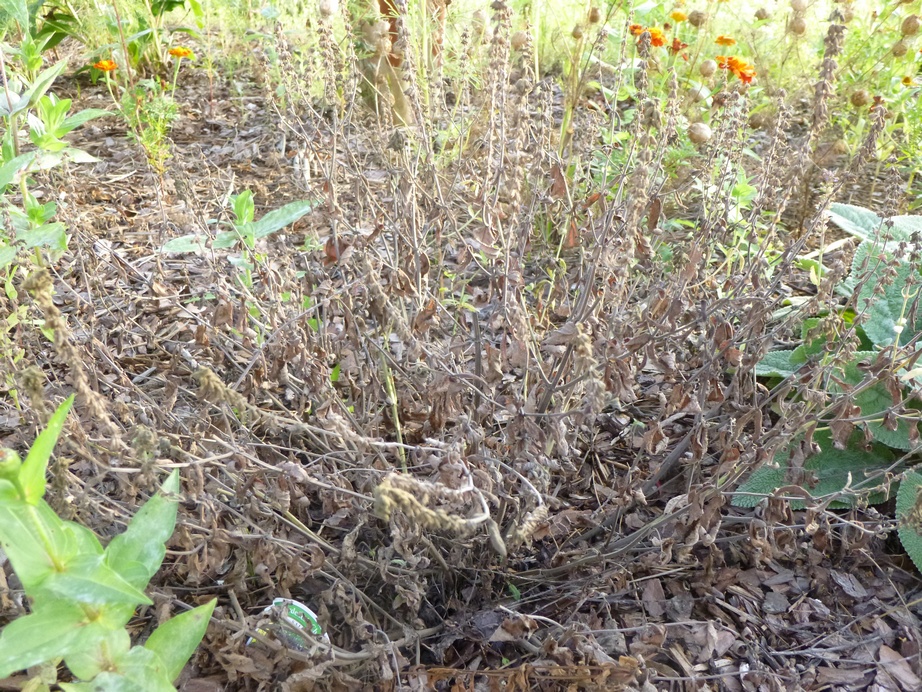

Salvia nemorosa, August 2013

23) Salvia nemorosa, Woodland Sage -- I added two kinds of woodland sage to the garden in September 2012 - May Night and Blue Hill. Both plants performed tolerably in the first half of 2013. In June, I was able to post a picture of May Night in the midst of a mild rebloom. They both drew a couple of bees, but neither became the bee magnet I had envisioned. These plants are not what you would call "self-cleaning". They need deadheading and trimming to look their best, but deadheading can be a chore when S. nemorosa's tough, wiry stems that fought back against the bypass pruner. After the bloom is done, these plants are not particularly attractive and they look more and more ragged as the calendar turns toward autumn and winter. I haven't yet given up on the whole Salvia genus yet, but I think I've crossed S. nemorosa and S.elegans off my list.

Sarcococca confusa, Sweet Box, February 2014

24) Sarcococca confusa, Sweet Box - On paper, this looked like a winner. Evergreen? Check. Drought-tolerant once established? Check. Fragrant winter flowers that reportedly attract bees? Double-check. And yet...the two plants that arrived via mail order in the spring of 2012 were tiny. One died due to the punishing double-whammy of summer drought and heat wave. The other struggled onward and put on a promising growth spurt in early 2013. I was sure that this year would be the year that S. confusa came into its own. But the plant looks to have sustained serious foliage damage from the arctic blasts of the winter of 2013-14. It's a little strange, since Sweet Box is rated as hardy at least to zone 5, but I'm thinking that rating probably applies to a sheltered forest setting rather than an exposed foundation planting. I guess I should have paid more attention to the warning to shelter S. confusa from winter winds (which would have meant not buying it at all, since I don't really have any significant shelter to offer at this point in my hilltop garden). With snow cover or a properly wooded setting, I think S. confusa might be a nice, modest plant for most of the year with the added of bonus of winter fragrance (provided it's nice enough to outdoors and do a little sniffing). But I can't see adding it to any garden of mine in the near future. It also grew very slowly - which has advantages in terms of not needing much pruning, but disadvantages if starting with a small plant and hoping to have any sort of near-term significant impact.

Autumn Joy, Sedum spectabile, January 2013

25) Sedums - I hope that I won't have to surrender my gardening license, but I have to admit that I don't really like sedums much. And in the interest of reciprocity, I have to admit that they don't seem to like me much either! I've tried a few different types - Sedum spectabile (e.g., Autumn Joy, Autumn Fire and Vera Jameson), as well as Sedum tectractinum (Chinese Stonecrop) and Sedum ternatum (Whorled Stonecrop, a Tennessee native). None of them have wowed me. The spectabile sedums have proven particularly disappointing this year - weak, spindly, beset by aphids, hardly attracting any beneficial insects even when they deigned to flower. I'm sure I'm doing something wrong here, because I've seen flourishing stands of Autumn Joy sedum on a garden tour. I will say that Autumn Joy sedum is very easy to propagate simply by breaking off a stem, removing the bottom leaves and sticking the stem in the ground. But what's the point of propagating something you don't like very much? No point at all.

Sempervivum "Red Rubin" April 2013

26) Sempervivum, Hens and Chicks, "Red Rubin" -- Simply failed to thrive. As a plant native to Northern Africa, Southern Europe and SW Asia, I'm guessing it did not appreciate our humidity or the heavy clay soil. It hasn't died a dramatic death, but rather seems to be subtly and quietly sinking into the background and being absorbed into the surrounding soil.

Tiarella cordifolia, Foamflower, May 2013 (the Tiarella is at the top of the photo, the bottom plant is Stachys officinalis, a.k.a. Betony or Hummelo

27) Tiarella cordifolia, Foamflower -- Somehow I overlooked the fact that these plants have low drought tolerance. Oops. Tennessee has frequent periods of drought, often coupled with high heat. I'm trying to grow a self-sufficient garden. Ergo, drought intolerant plants are doomed.
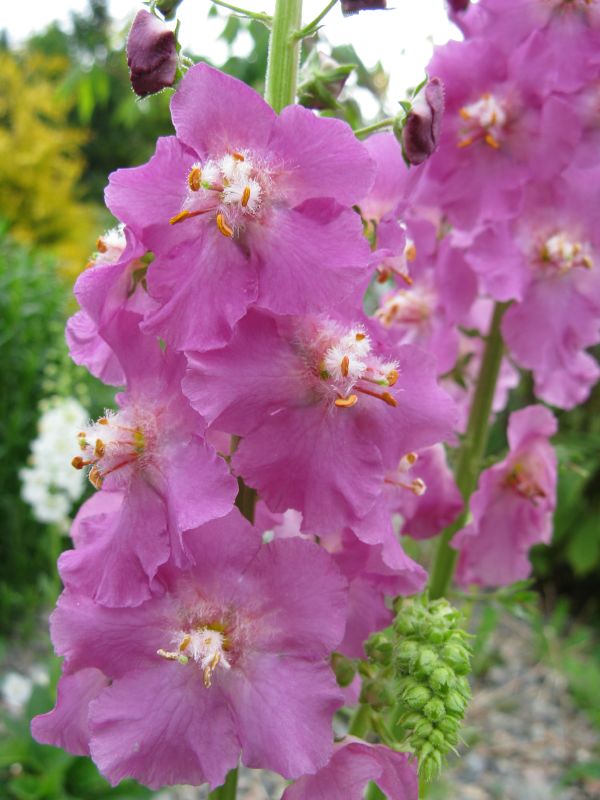
Verbascum phoeniceum, Mullein, photo by Kingsbrae Garden

28) Verbascum phoeniceum, Mullein -- This was a funny one. I know I read somewhere that these plants will rebloom if the flower stalks are cut back. So I cut it back. Did it rebloom? It did not. Argh! In addition, while the flowers were supposed to attract bees, hoverflies and moths, I never saw any visiting pollinators. I do recall reading that these pollinators are supposed to visit early in the day. Maybe I needed to check the Mullein at the crack of dawn? If it returns this year, I'll try to remember to set my alarm to go out and scout the flowers for any early-rising pollinators.

Vernonia noveboracensis, Ironweed, August 2013
29) Vernonia noveboracensis, Ironweed - Native plant enthusiasts tend to sing Ironweed's praises to the heavens, so perhaps my expectations were overinflated when it came to this plant. Regardless, I thought the sprays of little purple flowers were pretty, but short-lived. And I never saw those flowers attract a single bee or butterfly. Now it's possible that Ironweed might attract such pollinators if I planted a whole patch of it, but I'm not about to do the experiment when I have other plants I'd rather trial instead.

Veronica spicata, Spike Speedwell "Giles van Hees", June 2013

30) Veronica spicata, Spike Speedwell, Giles van Hees variety -- Once again, this was a case of flowers that were reputed to attract bees and butterflies not living up to that claim. Lest you think that I live in bee or butterfly free zone, there were plenty of both in the garden last year working plants such as Hypericum, Vitex, Crape Myrtle, Zinnia, Cosmos and several varieties of Sunflower. But they bypassed the Spike Speedwell completely. In addition, the middle part of the plant seemed to die out by late summer, although sections of the plant at the edges were still throwing up long-lasting flower spikes into autumn. This is somewhat of a mixed verdict. I'd like to see how the plant performs in the year ahead -- or even if it comes back at all -- but at this point I greatly prefer the Creeping Speedwell (V. peduncularis) over the spike variety.

Zinnia haageana "Persian Carpet" July 2013


31) Zinnia haageana "Persian Carpet" -- Here's the backstory: I grow Zinnia elegans partly for its beautiful flowers and partly for its potent ability to attract butterflies to the garden. Powdery mildew is the scourge of my Z. elegans, often killing the plants mid-summer and rendering them fairly hideous-looking in the process. Z. haageana promised mildew resistance and it certainly seemed at least somewhat resistant, but it didn't really matter. The petite yellow flowers held little interest for the butterflies and the plants themselves were diminutive and not particularly attractive. So it's back to the drawing board. I'm taking a break from sowing Zinnia seeds in 2014 (although I may allow some self-sown zinnias to grow if any seeds survive this harsh winter), but I'll be trialing one or more of the supposedly mildew-resistant Zinnia elegans varieties - such as Benary's Giant Purple - in 2015.


Thus ends a long and somewhat embarrassing role call. And yet, I am not (too) discouraged. This is a challenging environment for plants in many ways - the heat, cold, droughts, wind, heavy clay soil - not to mention a cold-hearted gardener who insists they get by on their own without too much coddling, fertilizing, watering, spraying or other interventions.

Well, I do whisper sweet nothings at them...

And I know that sooner or later, I'll winnow down the possibilities to find plants that were meant for me, plants with which I can build a long and fruitful relationship.

Saturday, March 16, 2013

Eating My Words on Pine Straw


Mulching the grass -- the pine straw shown here has blown out of the beds over the past couple of months.  Of course, this is just the grass near one beds. A similar scene (or worse) can be seen around other beds. Sometimes I rake the pine straw back, but it just blows out again.

It seems like only yesterday (even though it was actually two months ago) when I said unequivocally, loudly and proudly that Pine Straw Makes the Best Mulch.

And now I will say three more words: "I Was Wrong."

(I will then qualify those three words to say, "I was wrong for me. Pine straw may still make a good mulch for some people in certain situations, but it's far, far from a good solution for every landscape."

So why have I changed my tune?

Weeds penetrating pine straw mulch with ease behind an HVAC unit.


I still believe pine straw has certain advantages. Let's look at the six claims I made earlier:

Pine straw is easier and faster to spread than other mulches - I still think this is mostly true. It is easier (since the straw is so light) and fast to spread bales of pine straw versus shoveling several cubic yards of mushroom compost (the only mulch I've tried spreading in bulk).

Pine straw is less expensive - Probably still true, at least initially (read on to see what I mean by that). A bale of pine straw does cover a lot more ground than a bag of mulch, so it probably costs less than bagged mulch even though a single bale is usually more expensive than a single bag of mulch. If you buy your mulch in bulk, I can't say whether or not it's less expensive than using pine straw.

Pine straw is more eco-friendly than bagged mulches - Still seems plausible, both because the pine straw is only packaged with twine (not plastic bags) and because you're not actually cutting anything down (as far as I know) to gather pine straw. Not sure of who wins the eco-friendliness contest between pine straw bales and unbagged mulch delivered in bulk.

Pine straw doesn't look all that great when it is incubating a bumper crop of weeds.

Pine straw looks better - Um, no. I don't think so anymore. Particularly after it has blown around a bit and has a lot of weeds growing through it (see below), I'd say I'm not that enamored with the look anymore.

Pine straw is easy to rearrange - Sort of, as long as you don't mind getting poked a lot by the needles. I will say that it is easy for the wind to rearrange the pine straw for you!

Pine straw stays in place when necessary - Ha! By which I mean, no, it didn't stay in place at all.


So now I will proceed to eat my words (a bit painful given that pine straw is so pokey) and tell you why my love affair with pine straw ultimately proved to be a torrid but fleeting romance.

A sprinkling of healthy weeds mixed in with pine straw around the base of a crape myrtle tree. Getting these weeds at the root won't be easy. You'll need to move aside the pine straw mulch first or simply grab, pull and lift a swatch of pine straw along with the weeds.


Pine straw did a fairly lousy job of blocking weeds - As I see it, there are three main reasons to use any mulch: (1) to beautify your landscape, (2) to improve the soil and (3) to block weeds. Of these three reasons, weed-blocking is probably the most important for me. And pine straw just doesn't cut the mustard in this category. Sure, in certain places if it's piled on really thickly it will suppress weeds (and swamp and low-lying perennials in the vicinity), but any places where you've only got a few inches of pine straw, plenty of weeds will be able to push through. And I'm not just talking about giant pokeweeds, proud dandelions or prickly thistles. Even delicate weeds will thread their way through the straw. Heck, even slender grass blades will find a way through. (And lest you think that the weeds are simply a function of me having not laid the pine straw all that well -- a significant possibility -- rest assured that the landscape beds installed earlier this year in the front lawn by professional landscapers are now also filled with grasses and other weeds. And this is only 1-3 months after the straw was laid down!! I shudder to think of the weed infestation that will be visible as the pine straw decomposes rapidly in the heat of the summer...)

Is this more pine straw that blew into the lawn? Nope, in this case you're looking at grass that has easily invaded the pine straw bed that my landscaper put down just a few months ago.

Picking weeds in pine straw is not fun - The pine straw does suppress some weeds, so what's the big deal if a few weeds get through. First of all, the pine straw will inevitably poke you when you try to pull the weeds, making an unpleasant task even more unpleasant. Second, if you try to pull the weed through the pine straw, you will pull up a decent swath of pine straw in the process and disrupt the thatching of the straw that supposedly (but not really) will hold the straw in place and keep it from blowing or washing away. So you have to first move the pine straw out of the way as best you can so that you can get a clear view of the soil and have a better chance of grasping the weed near the soil surface or digging down to get the root, remove the weed and then push the pine straw back into place, knowing that it won't be long before another weed sneaks through and you have to repeat the process. I'd estimate that the pine straw probably triples (at least) the time it takes to pull a given weed.

Pine straw flies like the wind - That's because pine straw flies with the wind. I was warned about this by a nursery worker last year, but I shrugged it off. Turns out he knew what he was talking about. We get some blustery weather down here. Very blustery. Like 20-30 mile per hour winds are not uncommon here, especially in the winter and spring. And this winter, we've had a couple of storms blow through with 40-60 mile per hour winds. Now I was concerned about this before buying the straw, but I decided to take a chance for two reasons: (1) our professional landscapers had used pine straw on the new beds and I figured they would be unlikely to use a mulch that had a tendency to easily blow away and (2) I had read online (and even seen photos) that pine straw could stay put in windy conditions and even in hurricanes!

I guess the lesson here is either (a) don't believe everything you read on the Internet or (b) at the least, Your Mileage May Vary (YMMV)

In any case, I did as the experts suggested and watered in the pine straw after scattering in to help it settle down and interlock, but subsequent winds still sent a good portion of the straw onto the driveway, into the lawn, piled up against shrubs that acted as windbreaks and goodness knows where else! Most likely some of my neighbors have pieces of my pine straw now!

I will say that not all the pine straw flew away in each wind storm. The pine straw that the pro landscapers had laid in the front lawn seemed to stay in place much better (not perfectly, but better), so it's clear that technique can make a difference here.

I think luck plays a role here too. If your pine straw has a chance to settle in for a few weeks and benefits from one or more good soaking rains that flatten and interlock the straw, it's probably far less likely to blow to the ends of the earth than if you scatter it, water it in and then have a wind storm (or succession of windy days) within the next week or two.

I also think location is a consideration. The straw seemed to be most prone to disappearing was the straw I had placed around the corners of the house where the wind would whip around the structure. (Our professional landscaper said that he had noticed this problem at other homes where folks had tried to use pine straw in foundation beds.)

So I'm prepared to believe that pine straw may be less prone to wind damage in some locations at some times, but I had lots of problems with it on my windy Tennessee hilltop, especially in the foundation beds.

Here's a daylily growing in pine straw mulch. Notice that the pine needles are sort of embedded throughout the foliage.

Pine straw acts like a magician with your perennials -- it makes them disappear! Months ago, when I told my landscaper I was thinking about using pine straw in my foundation beds, he warned me that the straw might be a bad idea because I had so many small perennials in the beds and the pine straw (being fluffy) could overwhelm and obscure the perennials.

In brief, he was right. With really low-lying perennials and groundcovers - things like ajuga, sweet woodruff, blue star creeper, veronica "Georgia Blue", creeping dianthus - you risk having the pine straw simply cover, hide and probably kill the small plants. (I say 'probably kill' because I kept going out there and moving the pine straw when it blew over the plants, so I didn't actually lose anything. But Georgia Blue veronica only get a couple of inches high. If the pine straw blew over it, I don't think it would go through the pine straw and I don't think it would get any light, so it would probably die.)

OK, admittedly you're not going to overlook this aquilegia plant, but it still doesn't look nice with the pine straw scattered over top of it. I didn't scatter the pine straw on this aquilegia - the wind did that for me.

With groundcovers that go dormant like hardy blue plumbago, the pine straw makes it very difficult to even see where your perennial was, so you risk stepping on it and/or digging in that area, thereby accidentally killing or damaging your plant.

With larger perennials or small shrubs, the pine straw won't kill the plant, but it will pile up against it, get tangled in the branches, and generally obscure the plant, making it look messy and less visible. In my experience, it's simply much harder to see most plants against the light-colored tangle of pine straw needles than against a darker and more uniform mulch.

More pine straw tangled up in more daylilies.


If not pine straw, then what?? So I had decided in despair that pine straw really wasn't working out for me after all. It wasn't blocking the weeds. It was blowing all over the place - leaving bare dirt in some places, piles of pine straw up against certain boxwoods and Indian Hawthorns and getting strewn throughout the yard. And it was hiding and diminishing the beauty of the perennials and shrubs.

I had to get rid of it - or at least not make the problem any worse.

But what could I use to replace it?

I thought (and still think) that groundcover plants would be ideal, but they're pretty costly (a single plant can cost anywhere from $2.50 to $10) and none of the groundcovers I've tried have filled in that quickly. And I was (and am) loathe to put in any super fast-growing but invasive groundcovers like ivy or vinca.

I'm still experimenting with groundcovers and have high hopes that some of them will turn out to be a good part of the long-term solution. As I've stated at least twice (this makes it three times), I'm really liking the sweet woodruff. Veronica "Georgia Blue" is tiny, but seemed to survive the winter with no problems. I like that it's evergreen and I like its little blue flowers. Hopefully it will flourish and I'll be able to divide it (or buy new plants). And I've got high hopes for experimenting with sedum and ornamental ginger, perennial geraniums and more.

But meanwhile, I've got to find something to cover the dirt and keep down the weeds that won't blow away, cover up the perennials and groundcovers, look awful or generally make a nuisance of itself.

Could pine bark nuggets save the day? Here are some mini pine bark nuggets that I used to cover a patch of ground where the pine needle mulch had blown away. I've included some neighboring pine straw mulch to allow you to compare color and texture side-by-side.


I went to Home Depot and looked at all the options and the one that looked best to me was pine bark nuggets - or more specifically, mini pine bark nuggets. Here's what I like about them so far:

1. I like the look. It's subjective, but I just like the nuggets. They're sort of rounded and make a nice pattern.

2. They're pretty light. Heavier than the pine straw and hopefully not so light that they'll blow away (they haven't moved noticeably yet on the couple breezy days we've had since I put them down), but probably only half as heavy as a bag of pine fines.

All the pine straw blew away from this bed at the corner of the house and driveway - repeatedly. So I put down mini pine bark nuggets. So far, I'm liking the look and they've been suppressing the weeds like a champ (for a couple of days). 


3. They seem chunky enough to keep down weeds. Pine straw is so fine that there are lots of places for light and weeds to keep through. Larger pieces of pine bark nugget seem broad enough to hopefully block the weeds in most places.

4. They give perennials their place in the sun (or shade). They don't swamp or cover up the perennials. Even tiny perennials like the Veronica "Georgia Blue" or the nearly-flat creeping dianthus can stand up and stand out against the pine bark nuggets.

Even tiny perennials like Veronica "Georgia Blue" that would get swamped by pine straw stand out against the mini pine nuggets.


5. They're durable. Pine bark nuggets decompose slowly. Various sources say they can last approximately three years. (The bigger nuggets seem to last almost indefinitely, which seems to peeve some gardeners who want their mulches to decompose and feed the soil, but the mini nuggets apparently have sort of a three-year lifespan.) That's in contrast with fast-decaying pine straw mulch that supposedly has to be refreshed once or even twice a year - and that's if it doesn't blow away! ;-)

I believe this is a wild geranium. (It may just be a weed.) Either way, it's standing out nicely now against some newly spread pine bark nuggets.


6. No chiggers? Janet QueenofSeaford commented on my last post by noting that she dislikes pine straw due to the fact it often contains chiggers. Also some folks have commented about snakes living in pine straw. Or voles hiding under it. (Perhaps the snakes enter the pine straw to hunt the voles?) Either way, I'm hopeful that the pine bark nuggets will harbor fewer pests. (Not that I have anything against snakes, voles or chiggers, I'd just prefer not to have any of them in my landscaped beds!) Of course, the one benefit to pine straw from a pest perspective is that it is supposedly unattractive to termites, but I was planning to purchase trap-based termite control protection this year anyway.

The pine straw blew away from these daylilies on its own. So I surrounded them with mini pine bark nuggets.  There are still some pine needles trapped in the daylily foliage, but I can pick those out at my leisure.


7. Less fire risk. Some folks around here, like the guy who takes care of our sprinkler system, warned me about the flammability of pine straw as a mulch. From two studies that I could find online (University of Nevada and Journal of Arboriculture) it does seem that pine straw is more dangerous than pine bark nuggets from a fire perspective - particularly with regard to how fast flames can spread through pine straw. Interestingly, both studies note that rubber mulch is very dangerous from a fire perspective - that it catches fire easily, burns very hot with high flames and can be difficult to extinguish. I didn't know that and wouldn't buy rubber mulch anyway (doesn't feed the soil and who knows the source of that recycled rubber?) but I wonder if the folks buying rubber mulch know of its fire hazard issues? (Here's a post from GardenWeb talking about pine straw mulch being implicated in some devastating fires in North Carolina. This is apparently an especially big issue if you live in a home with vinyl siding.)

8. Less messy to spread. Wait, didn't I say that spreading pine mulch was easier than spreading say mushroom compost? Yes, but that doesn't mean it's always fun. Your mileage will definitely vary here because pine straw is not a standardized product. The quality of the straw depends on each supplier. I purchased pine straw three different times from three different suppliers and the quality was variable each time. The first batch of pine straw (from a nursery) was the best. (It was also the most expensive at more than $6 per bale!) Clean bales of good-quality and long leaf straw. I think I had maybe a few charming pine cones from all six bales, but the rest was just straw. Sadly, the next batch of bales (from a landscaping company, ~$4 per bale) were the complete opposite, filled sticks, dirt and debris. It was dusty and messy to spread. I actually wore a mask over my mouth so I wouldn't have to breathe in all the dust. And the pine needles themselves were broken and shorter than the ones in the previous batch. Frankly, if the first batch of pine straw had been as bad as the second batch, I would never have kept trying to spread pine straw mulch or written my initial ode. The third batch (from Home Depot, ~$4 per bale) was of intermediate quality. Less dirt and debris, but the needles weren't as beautiful or long as those in the first batch.

9. Much less messy to transport. Yes, I feel guilty from an ecological perspective about buying bagged mulches, but I will say that pine straw bales tend to shed their needles in the car on the trip home. Certainly not the determining factor here, but unless you have a pickup truck and can hose out the bed after the trip, you'll probably want to bring a tarp to put in the car before loading up the pine straw. And even then, count on picking out and/or vacuuming out pine needles afterwards.

Callirhoe bushii (Bush's Poppy Ballow) was practically invisible in the pine straw. It pops nicely against the pine bark nuggets and seems in no danger of getting buried.


Conclusion - So far I'm loving the pine bark nuggets. But I said that two months ago about the pine straw. So time will tell. The one thing I'm a little worried about is that we don't just get high winds here, we also get heavy rains fairly regularly and some sources warn that pine bark nuggets may have a tendency to float or wash out of beds that are not edged. (Ours are not edged.)

So we'll see about that. At least I am only using the pine bark nuggets on a flat ground, so that will hopefully reduce the risk of them washing away, but I have a feeling that there will probably be some mulch erosion from at least one particular corner near the house and driveway.

As for pine straw, I can see it having limited utility in certain specific circumstances. Wind may wreak havoc with the straw, but rain doesn't seem to faze it, so I can see it working on a hillside (as where my landscaper used it) where other mulches might wash away. (Although I should mention another hazard here that some folks mentioned to me and I've experienced myself -- pine straw gets very slippery when wet. Used on a hillside, it becomes even more hazardous. So if you do spread pine straw mulch on a hillside, I'd avoid it (or at least be very careful walking on it) after a rain.

I could see pine straw also being a decent solution in a very calm environment where there were either no high winds or where there were lots of trees and shrubs to block the wind and create a sheltered microclimate.

And I could see it working over a large area planted only with trees and large shrubs where there would be no concerns about perennials and smaller shrubs getting lost in the mulch.

But even in those areas, it seems like weeds will creep through unless you either (a) lay a very deep and thick layer of pine straw (at which point I'd be worried about critters in the straw, fungus and water getting to the soil) or (b) use weed killer. I think my landscaper is planning on using Roundup (i.e. glyphosate) to take care of the grasses and other weeds growing in the new landscape beds, but I think you'd have to be careful not to kill any valuable plants in the pine straw and besides I hate spraying herbicides or working where they've been sprayed so that's not a good solution for me.

Bringing this opus to an end, I'd like to repudiate my previous praise for pine straw. To anyone who was swayed by my earlier post to consider pine straw for their own landscape, I apologize.

Now stay tuned for an update in a couple of months as to whether my current fling with pine bark nuggets will develop into a stable long-term relationship! :)

PS - If you'd like to stay abreast of the latest developments at Garden of Aaron, you can now subscribe via email! Totally convenient, totally free - what could be nicer?

Saturday, May 26, 2012

Shots in the Garden! (May 20-26, 2012)


Daylily (Hemerocallis), not sure of the variety because we inherited these dayliles when we moved in.

Busy bee at work gathering pollen from Cosmos flower

I believe this is a type of coneflower (Echinacea). I don't remember ordering it, but I think it might have grown from a bonus pack of seeds we sowed last year.
Russian Sage (Perovskia atriplicifolia) and bee.

I like the way that Zinnia buds look just before they open.
The front border is filled with bright and cheerful English Marigolds (Calendula officinalis, a.k.a. Pot Marigolds)

Pole bean seedlings (Phaseolus vulgaris, Spanish Musica variety) getting off to a strong and inspiring start.