Here's the scenario: We moved into our home about two years ago. The development and the surrounding houses are around 6-7 years old, but many folks still seem to prefer huge expanses of grass to any large trees or bushes.
As a result, there's not much privacy -- except on the back patio, where several crape myrtles have grown big enough to provide some shade and screening in the warmer months. (Not so much in winter and early spring when the crapes are bare and leafless.)
I'd like to plant some large shrubs near the periphery of the property. Here are the parameters:
1)
Fast-growing. Typically, I know that gardeners should not be inpatient, but we might move on in a few years and it would be nice if we could get at least a little privacy before then. I could just start with larger plants, but I feel like that plants settle into the landscape much easier if they're transplanted when they are still young. (The maples, redbuds and Eastern Junipers that our professional landscaper installed last winter all seem to be struggling in the summer heat, despite the fact that this is actually a relatively mild summer so far and despite the record rain and cool weather we enjoyed this spring.)
2)
Dense. Well, I'm planting these for privacy / screening, so having an airy see-through shrub wouldn't make much sense! :) Evergreen would be ideal, but not necessarily a conifer. And I'm not opposed to having deciduous shrubs in the mix since I spend most time outdoors in warmer weather anyway when the bushes would have leafed out. Also, I know that some shrubs with a dense branching structure can provide some privacy / screening even if they're deciduous.
3)
Hot and sunny. Because none of the neighbors have many trees and we're on top of a hill, the backyard is windy, full sun pretty much from morning until night. These plants have to be able to take the heat and they have to be drought-tolerant -- both on general principal and because I don't know how often I can lug a hose to the edges of the property. Oh and they have to be able to handle clay soil and wet winter conditions. Is that asking too much?
4)
Not too big. I don't want to be a jerk and put plants on the perimeter of the property that tower over the neighbors' yards. I think my ideal shrub would be the 8-10 feet range. I wouldn't mind something that topped out a bit taller (12-15 feet?) or could be kept in the desired range by being trimmed once a year. And of course I'm not going to plant it right on the property line, but well within our property so that the mature plant should not hang over into the neighbors' space.
5)
Safe. Several of our neighbors have small children, ergo I would not want to plant anything that's even mildly toxic. A surprising number of common landscape plants are poisonous (for instance,
yew, daphne, wisteria, azalea, etc.) I was excited at the notion of using a native holly like Ilex opaca or the Ilex attenuata hybrid, but
some sources like NCSU list the berries as being slightly toxic. Even though the
USDA calls I. opaca non-toxic, I'd rather err on the side of caution and not put such a plant near the edges of my property.
6)
Climate suitable. We're on the cold side of zone 7. (We were in the warm part of zone 6 until the latest USDA zone refresh.) Temps regularly fall into the high teens in the winter. Summertime highs often hit the 90s and sometimes even climb into triple digits. Average annual rainfall is around 47-inches. Average annual snowfall is supposedly 10-inches, but in the few years we've been here, snow has been exceedingly rare. Ice is a more likely (and more frightening) possibility.
So, here are the plants I'm considering, along with why they're on the short list. If you've grown any of these and have an opinion as to whether they'll fit the bill, please chime in. Or if you think I've missed something that
should be on the short list, please let me know! Thanks :)
 |
| Raphiolepsis umbellata, Indian Hawthorn, not sure which variety, but definitely a variety that grows too low to provide any privacy screen! |
1)
Raphiolepsis umbellata, Indian hawthorn: We have several of these as foundation plants and they have been carefree and bulletproof since we moved in. They're not terribly flashy, but they do have nice pink flowers for a brief time in the spring. They're evergreen and supposedly prefer partial or full sun, although again ours seem to be thriving in a mostly shady area underneath a large crape myrtle. (I guess they get a lot of afternoon sun in winter and early spring when the crape has dropped its leaves, but they're mostly in shade the rest of the year.) Supposedly they're able to handle heat, humidity, wind, drought and rabbits. A nearby nursery carries a variety called
Southern Moon that supposedly can grow 5-6 feet tall and 6-8 feet wide. The thing that gives me pause is that the varieties we already have are very low shrubs (maybe 2-feet tall by 5-feet wide). I don't know if they usually grow wide before they grow tall or if Southern Moon would have a more upright growth habit. I believe they are also supposed to have a slow growth rate. There's another variety that intrigues me called
Montic (a.k.a. Majestic Beauty) that I've seen described as everything from a 5-foot tall shrub to a 25-foot tall tree. Sounds very variable!
 |
| Vitex agnus-castus, Chaste Tree, Monk's Pepper |
2)
Vitex agnus-castus, chaste tree, monk's pepper - It's the right height -- supposedly grows up to 25-feet tall in zone 8 or 9, but I've read that it would probably stay closer to 8-10 feet tall in Tennessee. Based on my experience so far, it definitely seems able to tolerate heat, rain, wind, full sun and flying bowling balls. (OK, probably not that last one...) The flower are bee magnets, which I love. In my experience, it has a decent growth rate. The only real drawback I can see is that it is deciduous and leafs out as late as the crape myrtle (mid-April).
 |
| Small crape myrtles don't necessarily offer much in the way of privacy |
 |
| But mature crape myrtles can definitely help block a view or provide some shade - all while providing a long display of summertime flowers that attract some bees |
3)
Lagerstroemia india, crape myrtle - Speaking of the crape myrtle...I know from 2012 that these are tough as nails and can handle punishing heat and drought (at least once established). They also grow fairly quickly (1-2 feet per year or more) once they've settled in. And there are some nice-sounding varieties like
Catawba that are available at local nurseries and reportedly mature around 12-15 feet tall. The flowers seem intermittently attractive to bees (they were all over the flowers on the Natchez Crape when they first opened, less so now). Of course, as I just mentioned with the Vitex, crape myrtles are deciduous and take a looooong time to leaf out in the spring. So, not a lot of privacy in winter. They're also
ubiquitous (for good reason) in the landscape around the neighborhood. Personally, I have about 10 of the plants on my property, so I'd prefer to add something different for the sake of biodiversity. The final kicker is that none of the three young crapes I added from a local nursery last winter have grown at all. Two are looking fine and one (that gets blasted with wind at the corner of the house) looks a bit ragged. None show any inclination to bloom. So my experience leads me to believe that small crapes probably need some time to settle in before they grow and bloom. Of course, I could start out with larger plants...but still, crapes are not at the top of my list.
4)
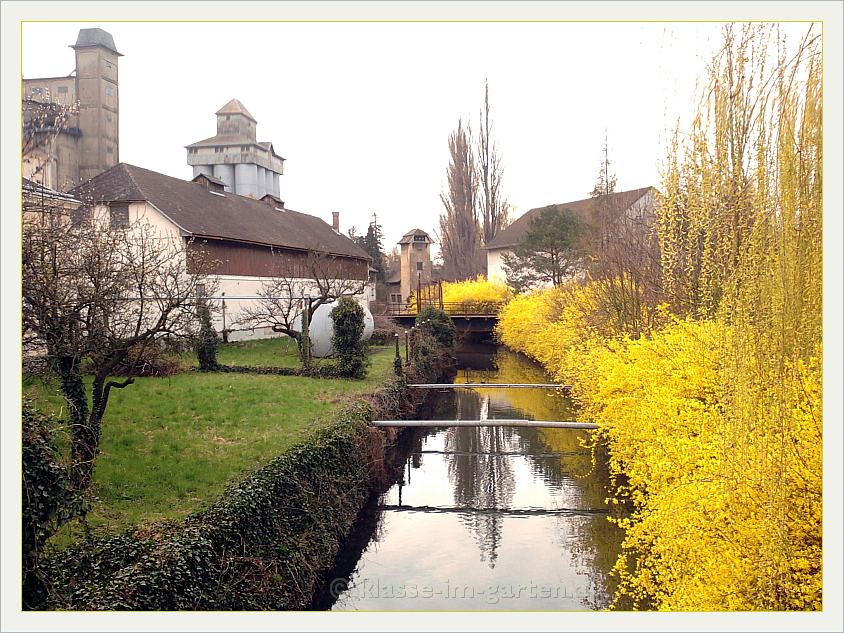
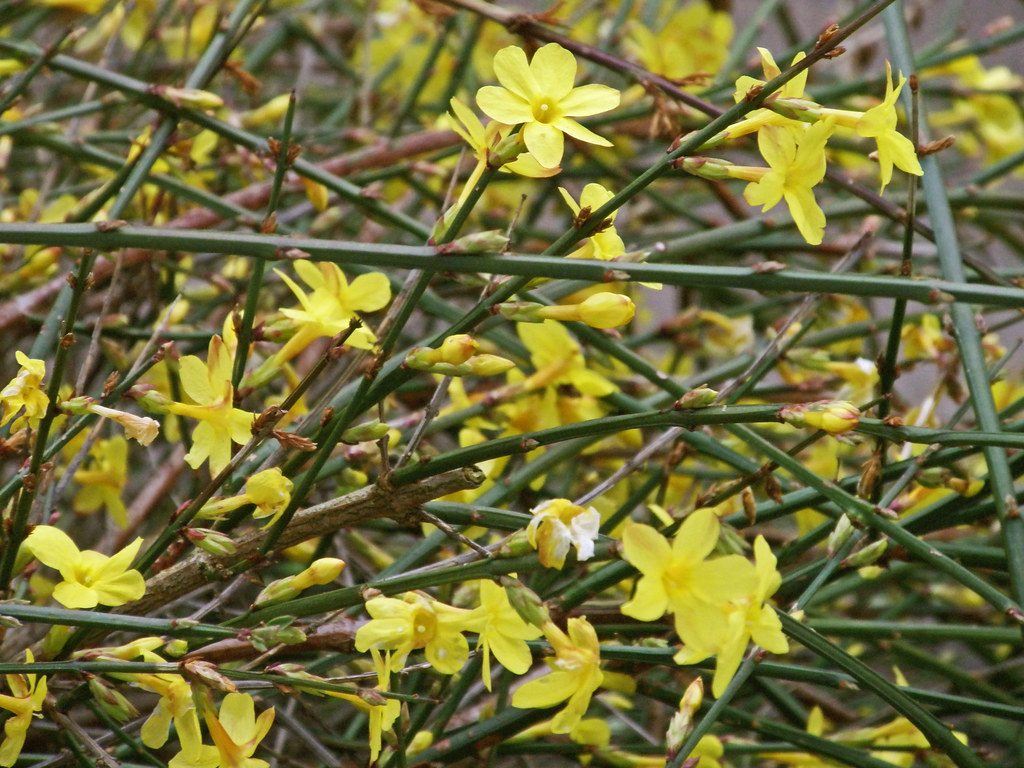
Forsythia x intermedia 'Lynwood Gold': Yes, they're also sort of ubiquitous, but they do add a cheery yellow start to spring and supposedly provide a good early nectar source for bees. More importantly, they are reportedly very tough, rugged and drought-tolerant.
Lynwood Gold supposedly can grow as fast as 2-4 feet per year and tops out around 8 feet tall and 10-feet wide. And it's available at a local nursery.
 |
| Magnolia grandiflora, Southern Magnolia, this is another popular dwarf cultivar called "Little Gem", photo by UGA College of Ag |
5)
Magnolia grandiflora, southern magnolia: The species can grow 60-80 feet tall, but there are a number of smaller cultivars. I'm leaning toward one called
Teddy Bear (a.k.a. Southern Charm) that supposedly maxes out at 15-20 feet tall. Other advantages - it's evergreen, native, reportedly fairly drought tolerant and has beautiful fragrant white flowers (that are pollinated by beetles) and produces seeds for birds to eat. It's available at a local nursery. The only drawback I can see is that young Southern Magnolias sometimes look really sparse. So it might take the tree a few years to fill in...
 |
| Myrica cerifera, Wax Myrtle, photo by Sharpj99 |
6)
Myrica cerifera, southern waxmyrtle: It's a native evergreen shrub that reportedly tolerates heat, drought, wind and full sun. It supposedly has a rapid growth rate and matures anywhere from 10-30 feet tall (so I might have to do some pruning to keep it at the desired height). The flowers reportedly attract butterflies and the berries (if both male and female plants are present) reportedly attract birds. In terms of drawbacks, we're at the northern end of its range, so I anticipate there could be some damage in tough winters, but southern waxmyrtle can reportedly bounce back quickly from winter damage during the warmer seasons.
7)
Osmanthus americanus, Devilwood, American Olive: A native evergreen shrub or small tree (reported height typically ranges from 10-20 feet tall, but can reach 50-feet in extraordinary circumstances), Devilwood is supposed to be fast-growing (1-3 feet per year), and tolerant of wind, drought, flooding and full sun.
8)
Philadelphus lewisii, Lewis' Mock Orange: A native of the Western U.S.,
Lewis' Mock Orange height varies by cultivar, but the Natchez variety carried at a local nursery reportedly grows 6-8 feet tall and wide. It is reportedly wind-tolerant and drought-tolerant. The flowers are supposed to be fragrant. The shrub is deciduous and some sources recommend using rejuvenating pruning techniques (cutting the plant to the ground after flowering -- though I'm not sure if this is supposed to be an annual process), so I'm not sure whether it would make a good screen in that regard.
9)
Ternstroemia gymnanthera, Cleyera: An evergreen shrub that can grow 8-25 feet tall. I have a few concerns: (1) Reportedly prefers acidic soil whereas I think our soil is relatively neutral (although I could amend at planting and with some acidic fertilizer yearly thereafter, (2) contradictory information as to whether it requires partial shade or can handle full sun and (3) reportedly only has a moderate growth rate. To add one more layer of confusion and uncertainty, even though Ternstroemia gymnanthera's common name is "Cleyera" and even though Ternstroemia comes from Japan, this plant is apparently
not the same as Cleyera japonica, which is also called Cleyera. Confused yet? Me too.
10)
Viburnums: There are many species and hybrids of Viburnum in the gardening trade. I'm interested in these four, all of which are supposed to be tough, wind-tolerant, heat-tolerant, sun-tolerant and drought-tolerant with a moderate to fast growth rate:
- V. dentatum, Southern Arrowwood, I think this is closely related to V. bracteatum, native to much of Eastern United States, size varies depending on cultivar but there are several interesting ones in the 8-12 feet high range, deciduous but supposed to have good fall color, may sucker profusely
So that's the story. Any thoughts on the suitability of some/all of these plants for privacy screens in my sunny, windy, hot-then-cold, dry-then-wet backyard? Or have I overlooked the Best Plant Ever (if so, feel free to enlighten me) :)
PS - If you'd like to stay abreast of the latest developments at Garden of Aaron, you can now subscribe via email! Totally convenient, totally free - what could be nicer?