Showing posts with label Abelia x grandiflora. Show all posts

Thursday, September 3, 2015

Trip Report - Giverny, France - Back to Monet's Garden (1 of 3)


A few years ago, before I knew much about gardening (not that I'm saying I know everything now), I had the chance to visit Claude Monet's garden in Giverny, France and was gobsmacked by its floriferous beauty.

So on a trip to Europe last month, I jumped at the chance to return to the Giverny garden once more and share some of its beauty with you on this blog.

(Incidentally, although Monet is best known for his painting, he supposedly said, "My garden is my most beautiful masterpiece." Although, you know, he said it French, so it sounded even better...)

For the last couple of decades of his life, I think Monet focused mainly on painting his garden. Some of his most famous paintings are of garden scenes, including his famous series of waterlily paintings on display at the Orangerie museum in Paris. 

Here are some pics from the August garden at Giverny...

(I took lots of photos. Since I don't want to overwhelm anyone, I'll separate the photos into batches and upload them as three separate blog posts over the next week or so. This is post #1...)


The famous lily pond glittering in the early morning sunlight...

I thought the contrast between the soft pink of the (foxglove?) flowers and the spiky (holly?) leaves in the background was eye-catching...


Grape-leaf anemone? Anemones seem to be a favorite plant in parks and gardens in London and Paris these days.

Dinosaur-sized leaves!


I believe this is glossy abelia (Abelia x grandiflora).

Anyone know what these could be? Dahlias? Peonies? They are outside my realm of expertise...

Not sure about the identity of the star-shaped dark red flower. But I love the contrast with its ruffled pink gladiolus neighbor!

Update: Enrico, a kind gardener at Giverny, has informed me that the red flower is actually Dahlia 'Honka Rouge'. Thanks for the info, Enrico!

Down the garden path... The main part of the Giverny garden is interlaced with these paths leading toward Monet's house, visible here in the background. The paths are not for visitors, but for the gardeners who weave in and out of the lush plantings making magic with trowel, rake and pruners.


Don't want to miss the second and third installments of this Giverny visit? Be sure to sign up for the free email newsletter!

Tuesday, May 5, 2015

In Full Swing - Clematis, Penstemon, Sumac, Sage, False Indigo and More!


Things are in full swing in the garden - bees are buzzing, flowers are blooming, leaves are expanding, plants are growing, everything there is life (except where there is death).

I apologize for the lull in posting photos. My camera is currently traveling overseas (along with my wife), but my kindly neighbor Christian generously lent me his camera so that I could capture some scenes from the early May garden.

(There are a lot of photos, so I'll split them into two posts. This post will focus on the back garden, the next one on the front and side gardens.)

Abelia x grandiflora, dwarf cultivar. I'd thought it was 'Rose Creek', but I think it was mislabeled, so I'm not sure of the cultivar. Whatever it is, it seems to be settling in nicely during its first year in the garden. I don't usually like bright yellow plants, but I like the contrast here against surrounding greenery.

My favorite plant in the garden these days is Baptisia australis (blue wild indigo). In its third full year in the garden, it has sent up multiple stalks of pretty blue flowers that (as you can see here) attract bees!

The Burkii eastern red cedars (Juniperus virginiana) are loaded with berries/cones. The branches were coated with rust fungus earlier during our wet spring, but that issue seems to have abated (at least for now) as the weather has turned drier and warmer.

Clematis 'Crystal Fountain'. We had this clematis tied up into the crape myrtle tree with biodegradable twine. The twine degraded in some rain storms this spring and the vine fell to the ground, but it doesn't seem too much worse for the wear and actually makes a rather nice groundcover. Make lemonade from lemons and all that...

Nothing too exciting here - Forsythia x intermedia 'Lynwood Gold'. But I must admit that the shrub looks very healthy. The foliage was a lovely shade of green earlier in the spring. I'm not over-the-moon on Forsythia. It's totally overplanted and the flowers seem relatively useless in terms of supporting wildlife, but I have to give it props for toughness.

What happened here!? 'Lemon Queen' perennial sunflower is not looking her best.  I need to investigate further, but my initial suspicion is some sort of fungal rot. It's not a pretty picture, but I believe gardening blogs should honestly show the good, the bad and the ugly.

Lantana camara 'Miss Huff', first year in the garden, first blooms.

Panicum virgatum (switchgrass) 'Northwind' -- This is my second year with switchgrass in the garden. I cut back the old stems myself in March. It seems to me that in a normal-to-harsh winter here, I could easily wait until the end of March or even the beginning of April to make such a cutback. The old stems look good all winter and into spring, so the cutback is only needed to make way for new growth. But that new growth doesn't start in earnest until mid-April. Cut back your grasses too early, and you have relatively unattractive stubble mocking you for a month.

Penstemon x mexicali 'Red Rocks', first year in the garden

Acer rubrum (red maple), not sure which cultivar, but whatever the name, it's turning into quite a nice little tree. As long as the deer don't try ripping up the bark again (like they did a couple of winters back), I hope it will be OK.

Fuzzy berries forming on fragrant sumac (Rhus aromatica) 'Gro-Low'. The small yellow flowers that preceded the berries seemed to be a big hit with all sorts of small pollinators (probably a motley crew of bees, wasps and flies).

Salvia greggii (autumn sage), not sure whether this is 'Flame' or 'Rose Pink', but in either case both survived the winter (I was holding my breath since they're rated marginally hardy in Mid-Tennessee) and have started blooming. Last year, the autumn sage flowers attracted hummingbirds.

As with the azaleas I inherited at the front and side of the house, I feel like this ornamental sage ('May Night'?) looks good for a couple of weeks and then looks like Death warmed over the rest of the year. Still those brief bursts of beauty - especially in the Spring - have won it a place in the garden for now. The lamb's ear 'Helene von Stein' in the background looks good most of the year, including now.

Looks like there should be lots of crabapples this year on the 'Sugar Tyme' crab.

This is not too impressive, but I'm just happy that my wax myrtles (Morella cerifera) survived the winter. Although evergreen further South, they pretty much defoliated here. Then again, I probably shouldn't have planted marginally hardy plants in November. Both plants almost made it through the winter intact, but one got chomped by a deer (I presume) right before Spring arrived. This is the one that didn't get chomped. (The other is still alive, but only barely.)

Purple coneflower (Echinacea purpurea) wilting in early May. Not a good sign of drought tolerance when we're still 5-6 weeks away from the official start of summer.

As with the 'Lemon Queen' sunflower, I'm not sure what happened here, but a portion of the Hyssopus officinalis (hyssop) seems to have wilted out practically overnight. Hyssop is a fast grower, so I'll try just trimming out the damaged section and hoping for a recovery.

Stay tuned, more photos coming soon from the front garden!

Wednesday, December 17, 2014

Still Useful After All These Years -- Vintage Advice on Hedges from the 1960s!

Cat hedge
Wrap it up and put a bow on it.
Photo courtesy of Lance McCord


Sometimes I love the Internet.

How else could I stumble across a 1960s report from the University of Tennessee detailing the results of years of trials into hedging experiments with popular landscape plants.

Much of the report is still useful today, nearly 50 years from when it was first published.

I learned that Abelia x grandiflora (still very much in use today) and Spiraea thunbergii (fallen out of favor) showed no ill effects from a 7-week drought.

On the other hand, ornamental quince (Chaenomeles) was nearly completely defoliated by the drought, which is interesting since numerous sources list Chaenomeles as being drought tolerant.

(Of course, the report does not say - as far as I could tell - whether the Chaenomeles was permanently damaged or only temporarily set back by the drought. Some gardeners might be willing to accept a temporary defoliation is the plant is just trying to prevent water loss (transpiration) from its leaves, but if it will leaf out again once the drought passes or in the spring...)
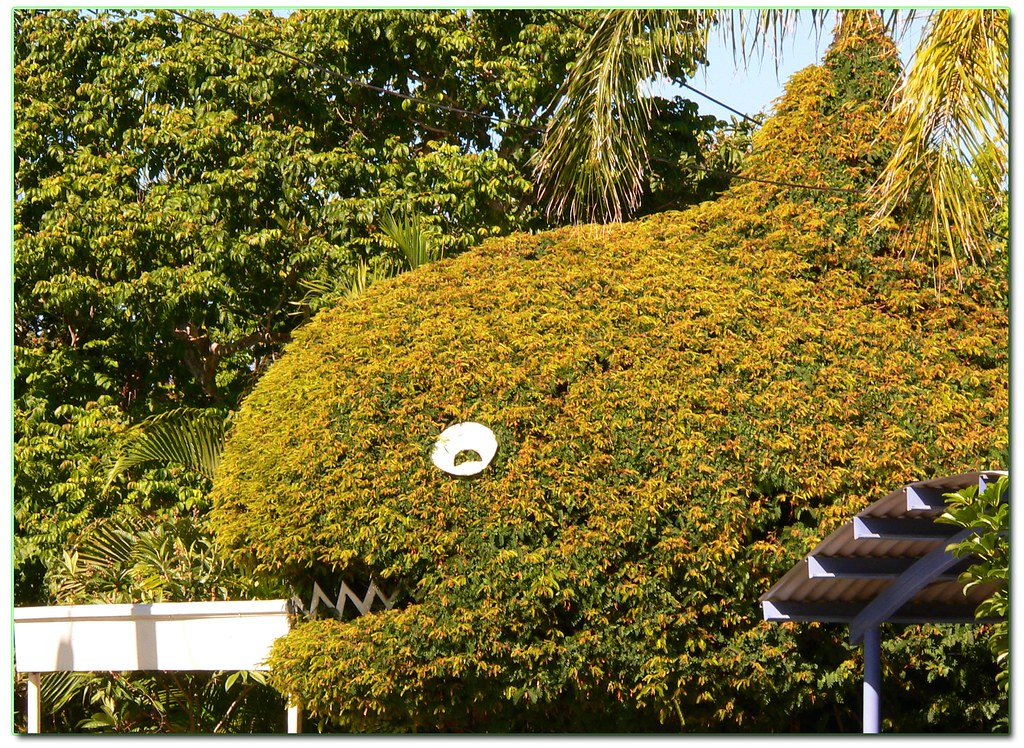
Shark hedge
Something fishy going on with this hedge
Photo courtesy of Len Matthews


The study also details the effect of cold weather on the hedging plants, particularly due to the winter of 1962-63, which if my secondary research is accurate, reached an official low temperature of -5 degrees Fahrenheit in Knoxville (where the study took place).

The winter hardiness research showed that plants like Ilex vomitoria (Yaupon Holly) suffered hardly any damage, which is interesting since most sources only list Yaupon as being hardy to zone 7. (In other words, it should have suffered major damage below zero degrees Fahrenheit, but apparently it did not.)

On the other hand, the cold winter apparently killed Lagerstroemia indica (Crape Myrtle) to the ground, which was not surprising. What was surprising was that it also reportedly killed Pyracantha crenato-serrata (Firethorn) to the ground.

Now Pyracantha is not used much today around Middle Tennessee, probably due to those vicious thorns. To give you an idea of its relative popularity, I'd say more than 50% of the houses in my neighborhood have crape myrtles on their property (and yes, many of those did suffer major damage due to the -2 Fahrenheit temperatures we encountered last winter, particularly the crapes that had been pruned back), whereas I've seen a grand total of one property with a few Pyrcanthas (looking glorious laden with berries) by the front foundation.

But I don't think Pyrcacanthas fell out of favor due to lack of reputed cold hardiness. Most sources I've seen list Pyracanthas as being hardy to zone 6 -- so they should have fared better than the Yaupons. But they didn't. That kind of first-hand scientific reports of heat and cold tolerance is invaluable.

(I should note that most Pyracanthas sold today are P. coccinea, not the P. crenato-serrata species of days. past. Perhaps coccinea has greater cold tolerance? It's hard to find much information on crenato-serrata via Google these days.)
I believe in hedges - just like John Lennon did
I think John Lennon had a song about hedges...
Photo courtesy of NCM3


But what is also interesting about the 1960s guide is what it omits.

Guess how many mentions of bees?

Zero.

How about butterflies?

Zero.

Birds, moths, small mammals?

Zero.

In fact, there are no mentions of pollinators or wildlife at all. It's as though they don't exist. The concept of planting a shrub / hedge for anything other than privacy or aesthetic reasons seems to have not even crossed the minds of the authors.

(There's also no mention of invasiveness, which could explain why the guide recommends Euonymus alatus, i.e., Burning Bush, which is still sold in many nurseries today despite its reputed invasive characteristics.)

Fascinating.

Then again, the population of Tennessee in the 1960s was only a little more than half what it is today (~3.5 million Tennesseans in 1960 vs ~6.5 million Tennesseans in 2013).

My guess is that there was a LOT more open and wild space. People probably didn't feel the need to garden specifically to attract or support wildlife because it probably seemed as though most of the landscape already supported wildlife, ergo people could afford to devote their relatively small piece of the pie toward beauty or functionality (i.e., food, fuel, building materials for people).

The population of Tennessee, the United States and the planet continues to climb inexorably higher year after year. Even as human fertility rates drift lower, our demographic inertia carries us toward a planet more crowded with people with less space for all the other inhabitants.

Ergo, I believe it is incumbent upon all of us gardeners to do what we can to build and tend our gardens in a way that not only pleases our eyes and our palates, but also offers sustenance and habitat to the many creatures great and small who also call Earth home.

Wednesday, November 5, 2014

New Plants - Glossy Abelia, Forsythia, Winter Jasmine and Heavenly Bamboo


I'd like to introduce the newest inhabitants of the Garden of Aaron:

Glossy Abelia (Abelia x grandiflora)
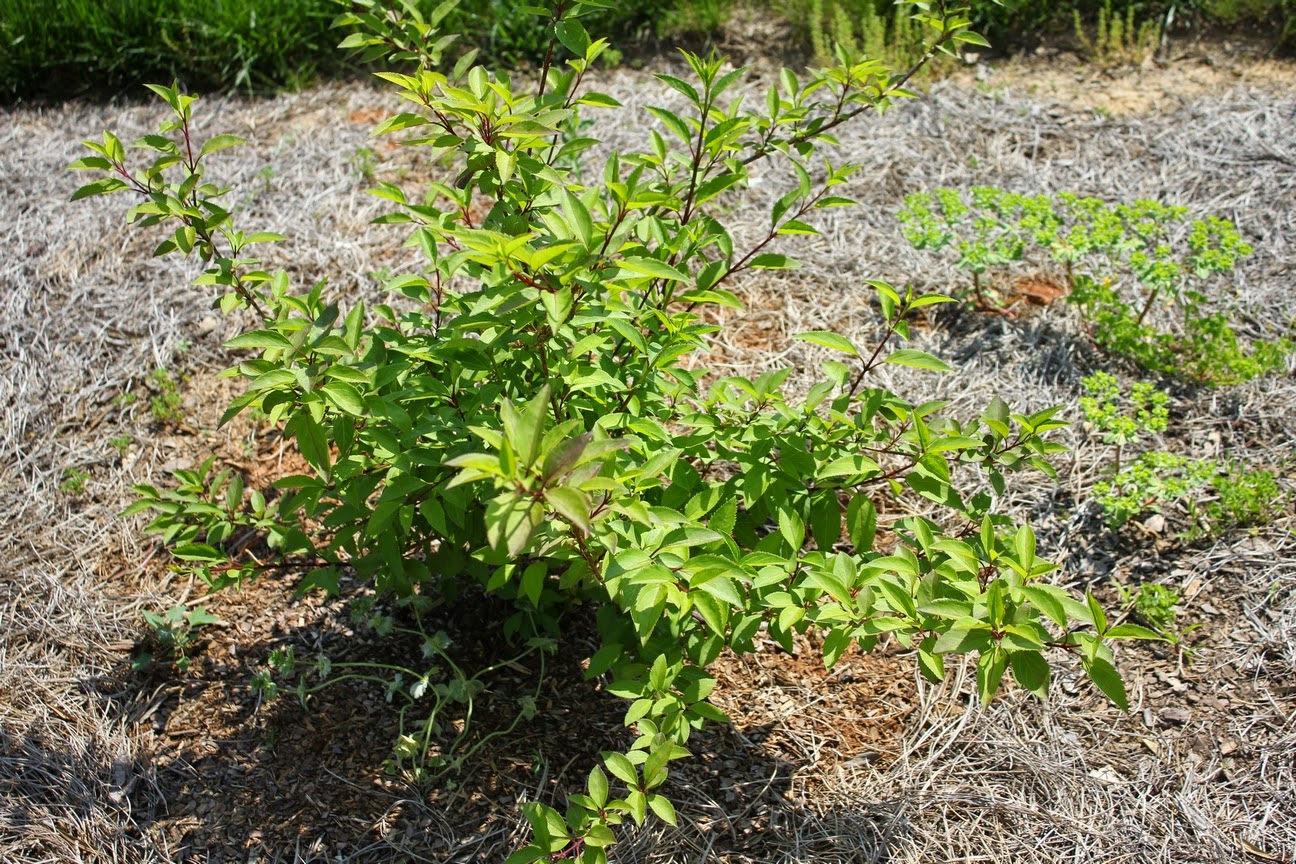
I added both the species - which reportedly can grow as large as 10-feet tall - as well as a cultivar called Rose Creek that is supposed to stay much smaller. I planted them for their reputed toughness, semi-evergreen nature (fully evergreen in warmer zones) and ability to attract bees and butterflies over a long flowering season.
Photo courtesy of Tatters

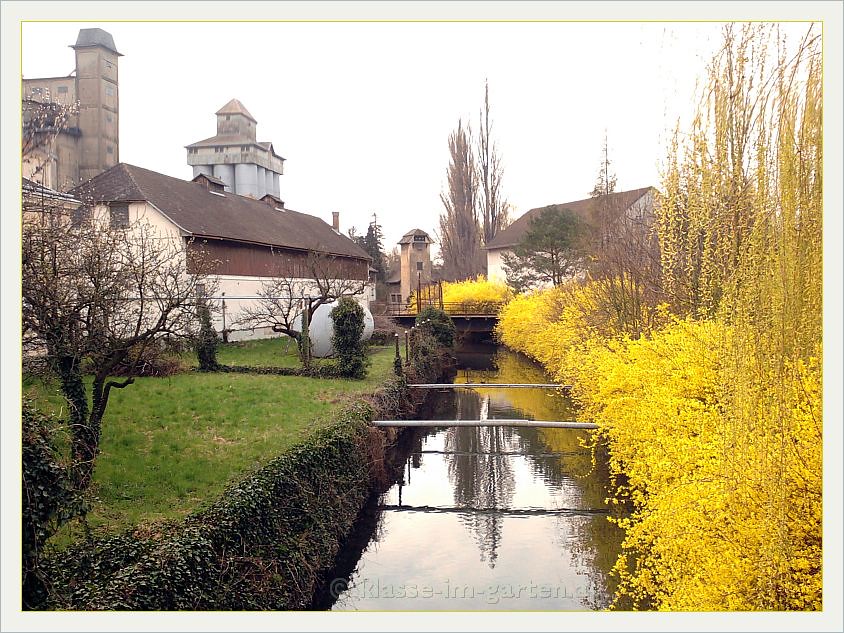
Forsythia x intermedia
Photo courtesy of Klasse im Garten
I planted a variety called Lynwood (also known as Lynwood Gold) that should grow up to 8-10 feet tall by 6-8 feet wide.
I'd like to add another groundcover variety called Gold Tide, but I'm having a devilish time trying to find one at any local nurseries.

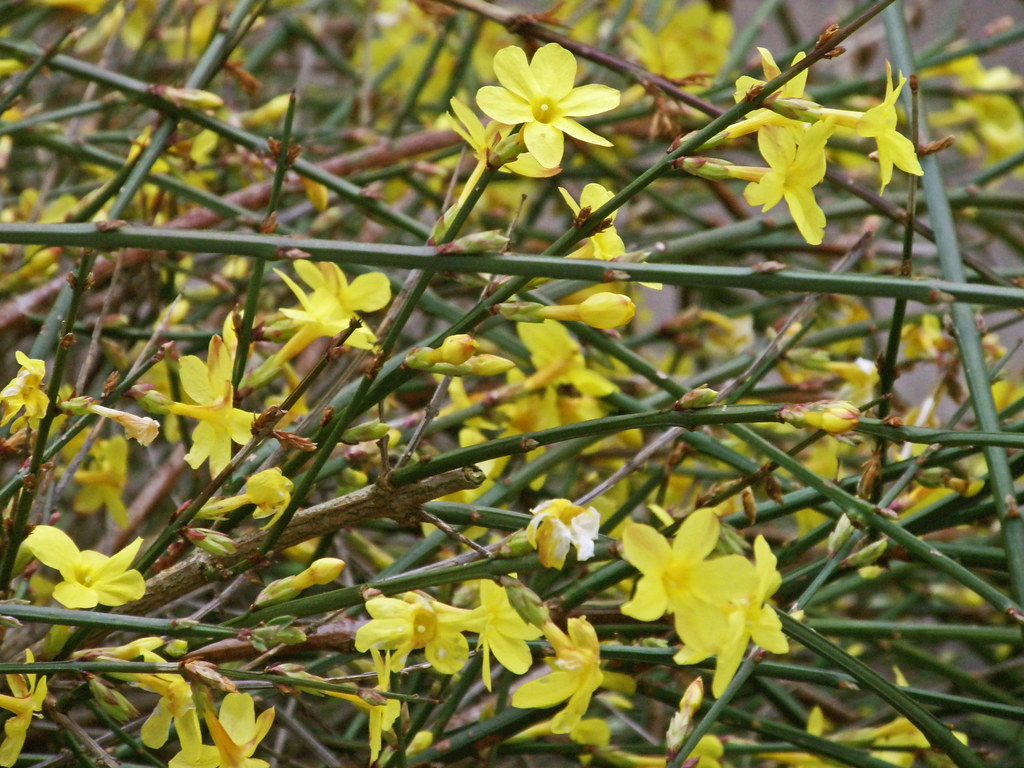
Winter Jasmine (Jasminum nudiflorum)
Photo courtesy of Amanda Slater

Heavenly Bamboo (Nandina domestica), Gulf Stream variety
Photo courtesy of hollysuewho


Now I know these picks are not going to win me any praise from native plant enthusiasts.

Heck, I'm a native plant enthusiast, ergo I feel a bit guilty about my choices.

But I was careful to choose plants that do not have any reputation for invasiveness.

Well, to be clear, Heavenly Bamboo does have a reputation for being invasive in the Southeastern United States, but the Gulf Stream variety that I planted reportedly produces hardly any berries.

Since Nandina reportedly spreads invasively when birds eat its berries and disseminate its seeds, it stands to reason that a berry-less plant like Gulf Stream could not be invasive.

As far as I know, Forsythia and Abelia are not on any invasive species lists. I think Winter Jasmine can 'invade' in the sense of spreading aggressively and vigorously through tip-layering, but I don't believe it spreads long distances by seeding.

So why plant exotics and why these specifically?

All of these have a reputation for being extremely tough and versatile, able to handle drought, heat, cold, wind, clay soil and rampaging dinosaurs. (OK, I made that last one up.)

I'm not sure that they all can handle compacted, poorly-drained clay soil, but I've planted the Nandina and the Winter Jasmine on a bit of a slope where I hope the soil will drain a little better. And I've tried planting all of these shrubs a little bit on the high side, which I've read can help when dealing with compacted clay soil.

Why not just bring in massive amounts of soil to create a raised bed or heavily amend the soil I've got?

I have a couple of reasons, but a big part of it revolves around a gardening mantra I read recently in The New American Landscape: Don't Fight the Site.

I believe there's a good deal of wisdom in those four simple words. My land encompasses around 3/4 of an acre and nearly all of it is heavy, compacted clay.

But I'm not alone. Many, many other people in the United States face similar "soils". And these soils are not all bad. From what I understand, clay can hold a lot of nutrients. We clay gardeners don't need to worry about water draining through the soil so fast that plants can't capture it (a worry, as I understand it, of those gardeners blessed/cursed with sandy soil).

I want to encourage sustainable, low-input, low-cost gardening. I don't want gardening to only be for those people who can afford to have good soil trucked in. And I know that there are often a lot of ecological costs behind the scenes to creating, packaging (sometimes) and transporting that soil.

I'd rather work with what I've got.

And some plants, I'm discovering, seem to be able to thrive in heavy clay. Others can cope with it. And as I discover which plants are OK with clay, and as I add more of them to the garden, I believe that their roots and their decomposing leaves, and all the insects and worms and tunneling animals that live in the garden will work the soil for me and gradually make it better and more friable.

Some of the plants (e.g., the Abelias) I've also chosen for their 'ecological services' (ability to attract and feed bees and butterflies over a long flowering season.

One (the forsythia) I've chosen for its reputed ability to provide rapid screening in an area where I could really use some privacy.

I picked the Winter Jasmine in my continuing quest to explore potential groundcovers that could free me (and many other gardeners and homeowners) from the endless cycles of mowing and mulching that currently afflict suburbia.

Both the Forsythia and the Winter Jasmine I also chose unabashedly for their reputed ability to produce cheerful yellow flowers in late winter or early spring -- a time of year when I could really use a pick-me-up.

The Nandina I picked really just for ornamental reasons -- it's got beautiful fall color -- and reputed toughness. I understand it may spread a little through underground stems, but (if it survives/thrives) I expect it to function more as an accent than as a large scale solution in the garden.

Oh and of course there's another major reason I bought and installed these plants -- they're what I could find.

I have plenty of ideas for other tough plants, many of them natives, that I'd like to try, but they're impossible to find locally. I've just ordered some via mail order from a regional nursery and hope that I'll be able to plant and introduce them shortly. Hopefully they'll arrive soon and I'll have some more newcomers to introduce to you all.

Wednesday, October 1, 2014

Two Shots from Bernheim Arboretum - Abelia and a Pink Mystery Plant


Happy October!

Last week, I shared a slew of photos from a trip I took to Yew Dell Botanic Garden back in late August.

Around that same time (September 1st) to be exact, I stopped at the Bernheim Arboretum, also in the Louisville vicinity, on my way back south toward Tennessee.

I didn't take nearly as many photos at Bernheim, but I did have two snaps that I wanted to share:

I saw a number of Glossy Abelia shrubs (Abelia x grandiflora) at Bernheim. Covered with small flowers, the Abelias were attracting several butterflies, including this gorgeous Monarch that kindly held still long enough to permit this photo.

OK, all you Horticultural Gurus, would you care to hazard a guess on this (unlabeled) plant with pretty pink flowers that clearly has a bumble bee fan base? I'm thinking it might be some sort of Japanese anemone?