Sunday, August 15, 2021

Meet the Burr Gherkin


Burr gherkin
That's not a hedgehog in my palm -- it's a burr gherkin!

It looks like a little spiky cucumber.

(And to be honest, it kind of tastes like a little spiky cucumber.)

But it's not really a cucumber (same genus, different species).

It's my first year growing burr gherkins after I was gifted some seeds by a kind farmer friend (Thanks, Brittney!).

They have not been all that productive yet (I've only just harvested my second one) and the fruits are small, but I have been very impressed with their toughness and ability to tolerate heat, humidity, awful clay soil, and reflected heat from a brick wall. So far, the vines also seem to be ignored by herbivores, both insects and the rabbits that have ravaged other plants in my vegetable garden this year (e.g., Armenian cucumber and molokhia). 
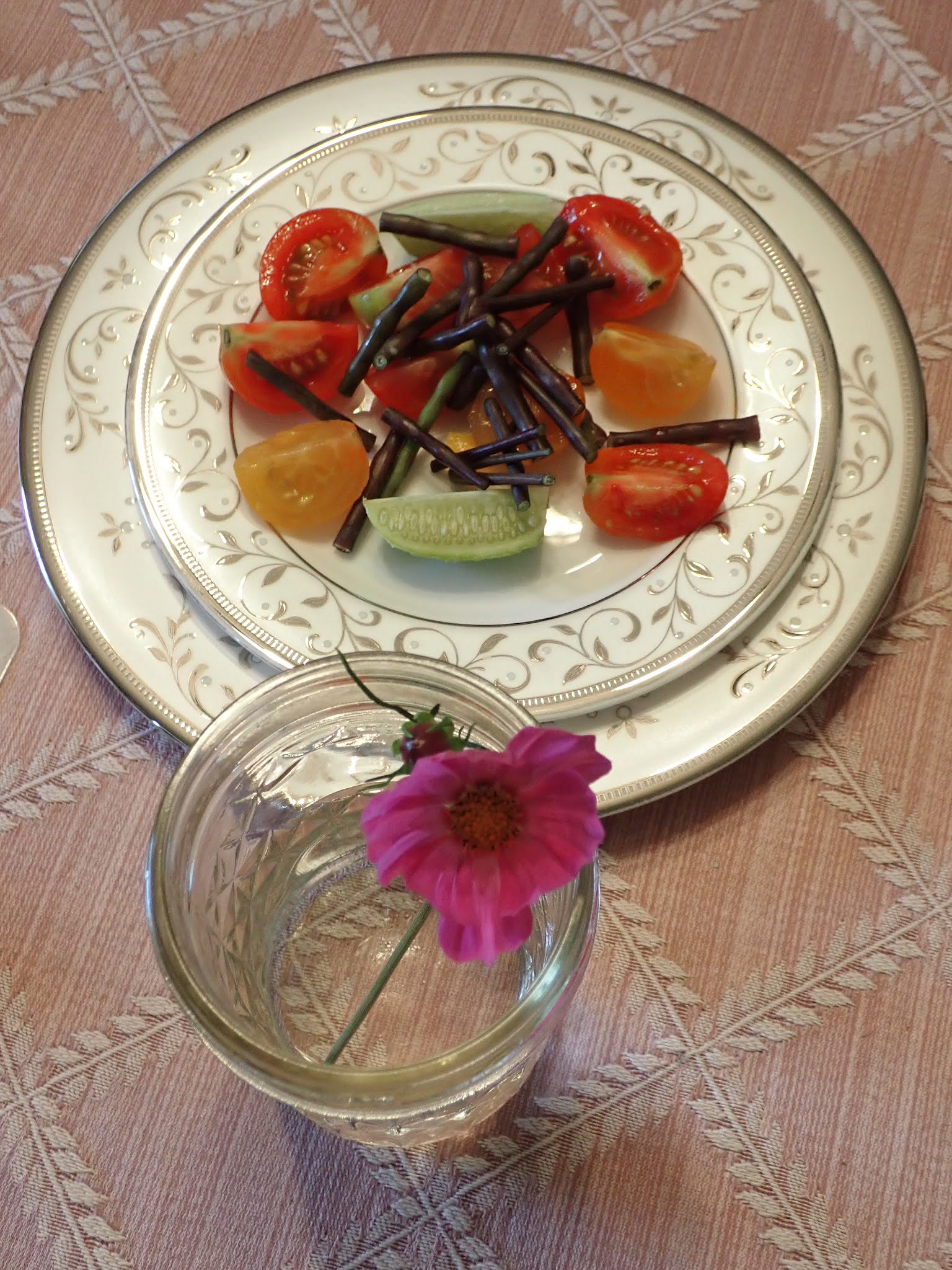
Burr gherkin cut with cherry tomatoes for scale. The purple veggie sliced into this salad are actually rat tail radish seedpods!


I like burr gherkins, but the spines are definitely more intimidating than a typical cucumber's prickles. So far, I have tried rubbing off the burr gherkin's spines under running water using both a thumbnail and the side of a spoon. Both methods seem to work just fine and allowed me to eat the small fruit without attempting to peel it. I haven't tried eating it without removing the spines first. I think it would be painful.


Wednesday, March 10, 2021

These Buds are For You

Some buds are still wrapped tight, but flowers starting to unfurl...

Spring is a time of hope and promise in my Middle Tennessee garden.


Prunus tomentosa (downy cherry, bush cherry) 


Ribes aureum, Ribes odoratum (golden currant, clove currant)


Ribes aureum... I expect the flowers with their delicious clove fragrance to start opening in the next few days. If you're looking for a shrub with early-season yellow flowers, I believe clove currant is a much better choice than the overplanted and garish Forsythia. Clove currant also happens to be native to much of the United States and it produces edible fruit. And then there's the floral fragrance. 👃🏻


Hyacinths! My favorite early spring bulbs. Fragrant, herbivore resistant (in my experience), and reliably perennial even in heavy clay soil in Zone 7.


Acer rubrum (red maple). The flowers are quite beautiful, they are just usually too small and too far up in the canopy for most people to notice.


Liquidambar styraciflua (sweetgum) 


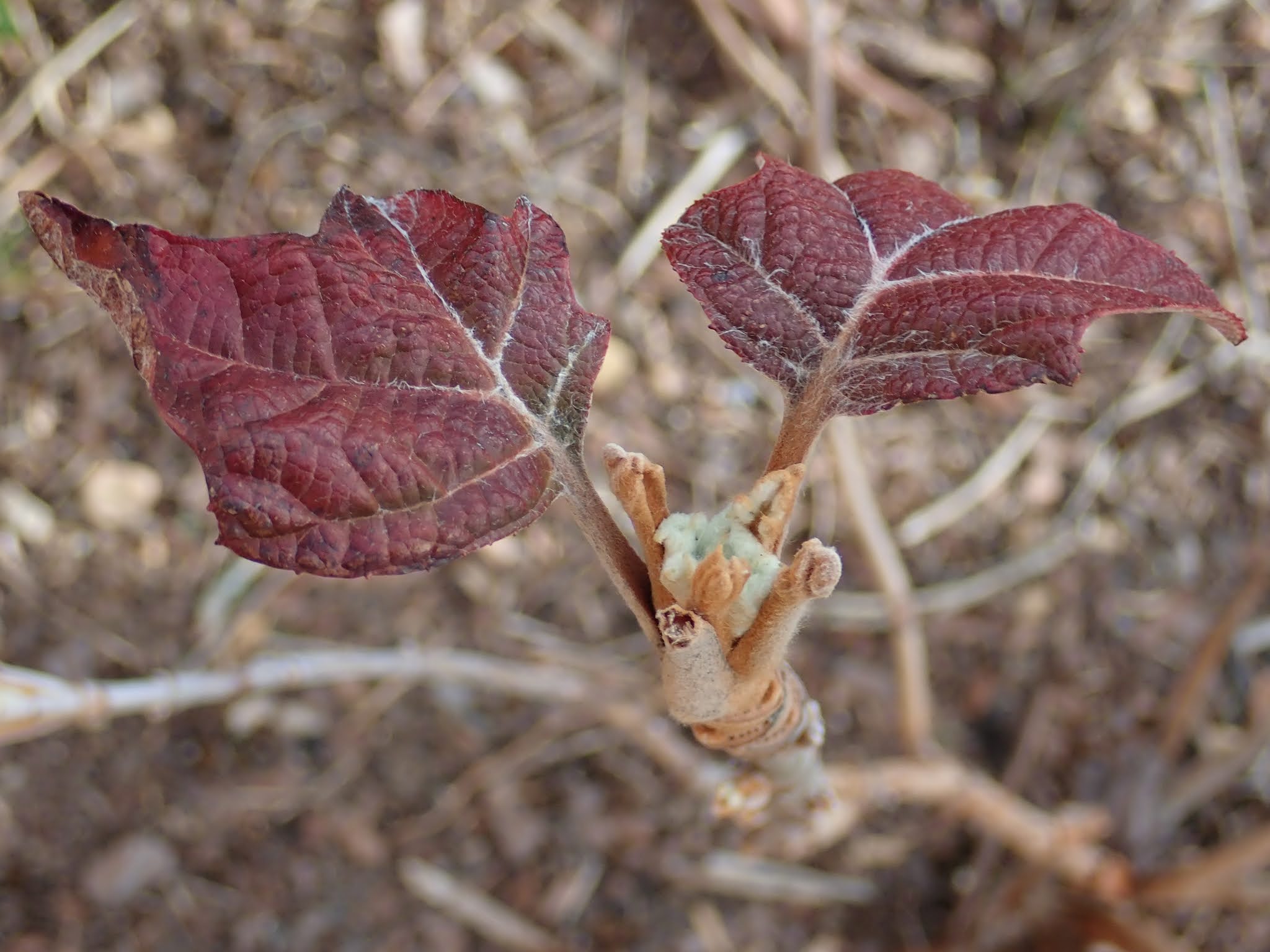
Hydrangea quercifolia (oakleaf hydrangea) ... Some of last year's foliage is still adorning the shrub even as this year's fuzzy new leaves start to emerge


I hope 2021 will be a healthy, peaceful, and beautiful year for you and your loved ones.


Happy Gardening 🌱


Aaron

Wednesday, June 17, 2020

Evenings with a Blue Bird

"Blue Bird" rose of Sharon, that is... 😏

(Mea culpa... I originally identified the shrub below as 'Blue Satin'. There is a 'Blue Satin' rose of Sharon, but the one I have is called 'Blue Bird', as pointed out by Dottie in her comment below.)

Saturday, June 13, 2020

Butterflyweed or Bumblebee weed?


Asclepius tuberosa is commonly known as butterflyweed.

But as this photo shows, that might be a misnomer.

Check out my video on YouTube for other evidence that "bumblebee weed" might be a better name for this marvelous perennial. 😉

Wednesday, June 10, 2020

Penstemon Party

Penstemon digitalis


I've been experimenting with using more Penstemons in the garden recently.

I grew Penstemon digitalis (foxglove penstemon) in the garden years ago and removed it for reasons that I can no longer recall. 

I think in those days I might have been obsessed with long bloom cycles and maybe wasn't impressed that P. digitalis bloomed for 'only' a few weeks in the spring?

Penstemon digitalis

Anyway, nowadays I try to look at the bigger picture, and I value P. digitalis not just for its beautiful bloom and its attractiveness to pollinators, but also for its native characteristic, its attractive foliage, its toughness and (hopefully) its weed-blocking abilities.

I also grow Penstemon calycosus (calico penstemon), which is also native here in Tennessee.

Penstemon calycosus close-up


Penstemon calycosus

Both species are now in their second year in the garden and both seem to be getting stronger and more floriferous.

I also tried Penstemon smallii (Small's penstemon) on a hillside, but it barely survived the winter. I think it likes/wants/needs better drainage than my clay soil offers.

I do have a Penstemon x mexicali, which is very tough and resilient and floriferous in an extremely tough spot by the corner of the house and the driveway. It has been going strong since 2015, surviving both in deep shade (when it got swamped by a Vitex agnus-castus) and now in blazing sun since the Vitex was removed.

Finally, there's an unknown Penstemon which grows taller and has more purple flowers than P. digitalis and P. calycosus and has self-sowed enthusiastically around the patio. I really like its evergreen winter foliage and its beautiful bloom, but it does splay open after the bloom is complete. I cut it back drastically and hope it will fill in with new foliage. 

Stay tuned...

Do you have any Penstemons in your garden? Which are your favorites and how do you use them in your garden? 


Thursday, May 21, 2020

Three Shots in the Garden - May 2020 Edition - Carefree Beauty rose, oakleaf hydrangea, smooth phlox


'Carefree Beauty' rose.
The rose is truly carefree in terms of being tough and self-sufficient, but...
...it can get enormous if not cut back and has vicious thorns...
...so best to take some care when pruning it. 😬 
Oakleaf hydrangea (Hydrangea quercifolia) flower panicles


Smooth phlox (Phlox glaberrima) in bloom


Follow Aaron Dalton on Feedio

Thursday, March 5, 2020

Early spring flowers and foliage -- hyacinths, wild bergamot, hoary mountain mint, redbud buds and more!

Happy 2020.

Yes, it's already March, but frankly there was not much that I wanted to document in my Middle Tennessee garden in January or February.

Now, though, things have changed.


I limbed up some of the volunteer redbuds (Cercis canadensis) this winter. It looks like they should bloom soon. The buds are very pretty.


The hyacinths are blooming. On warm, sunny, still days, the fragrance is very pleasant. These are the most reliable perennial bulbs that I've found for Tennessee. We order them from Brent & Becky's Bulbs.


The basal foliage on Monarda fistulosa (wild bergamot) has looked good all winter.


So has the Pycnanthemum incanum (hoary mountain mint) basal foliage.

Volunteer elderberry (Sambucus canadensis) foliage starts emerging very early -- in January!

I think this is new growth on a volunteer Symphyotrichum oblongifolius (aromatic aster). I used to grow this beautiful aster in my garden, but removed it a few years ago as being too prolific. Now I miss it, so I was delighted to find a volunteer that thrived in difficult conditions last year. I'm hoping that volunteer will spark a resurgence of the plant in my garden, but just in case I scattered some aromatic aster seeds over the winter and will probably buy at least a couple aromatic asters in the spring to add here and there.


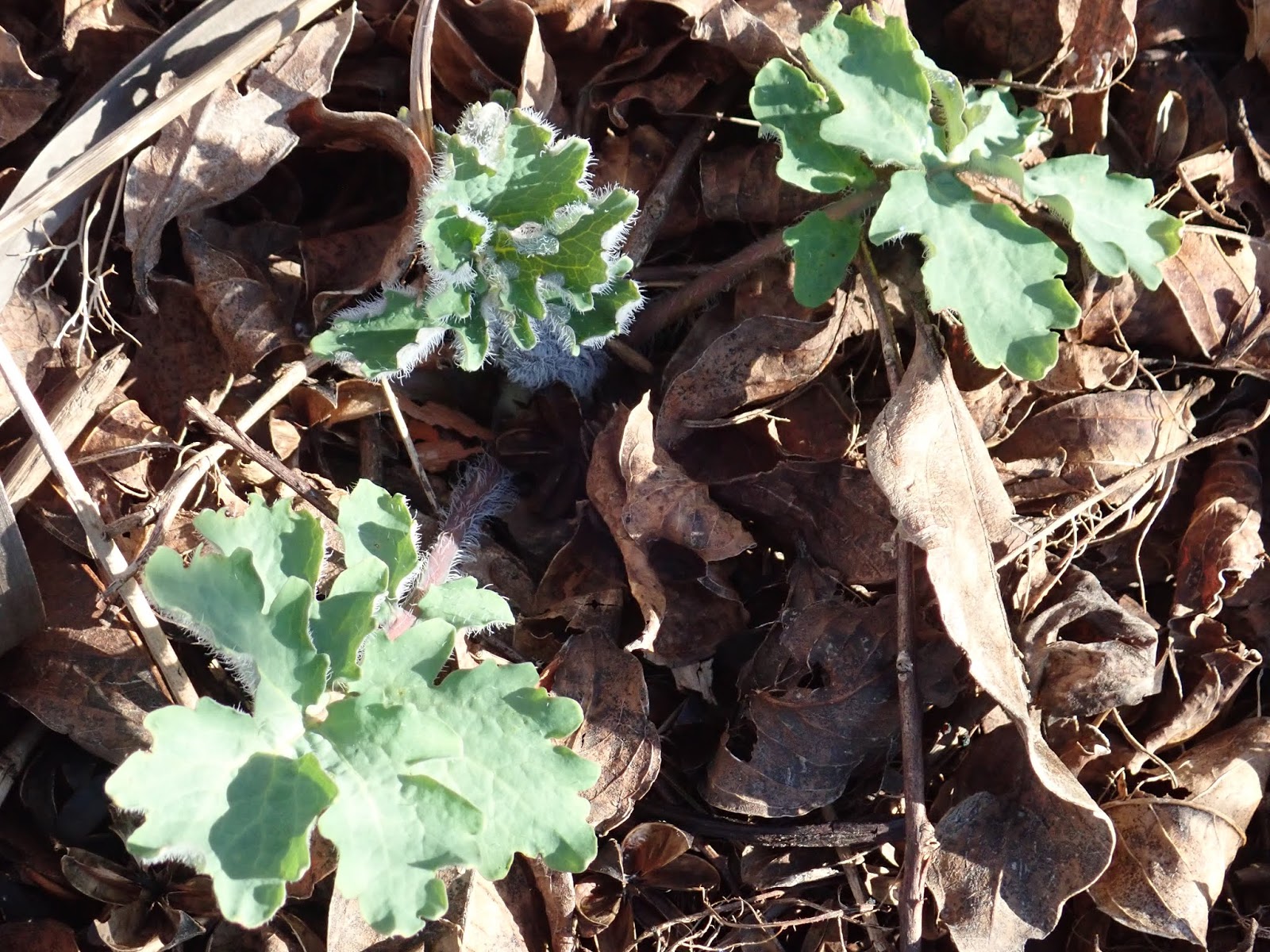
Last spring, a local gardening savante generously gifted me with a few wood poppies (Stylophorum diphyllum) from her garden. I planted them and tried to keep them going through various droughts and heat waves. I'm overjoyed to see that at least one seems to have survived. Beautiful new foliage - and check out those hairy stems!

Monday, July 8, 2019

Bees and Partridge Peas


Every day, I count my lucky stars when I go into the garden and see the buzzing bumblebees in the partridge peas (Chamaecrista fasciculata).


I started with just a few partridge pea seeds - from Kansas Native Plants, I think - and now I have more partridge pea plants than I could count. They do self-seed with abandon, but it's easy to pull any excess volunteers and they're so beautiful and helpful to beneficial insects that I love them regardless.

Follow Aaron Dalton on Feedio

Sunday, April 14, 2019

Rose Petty Rules!


Apologies for the wind noise in the video, but the rose petty (Erigeron pulchellus) flower stalks sway so prettily on a blustery day...


If you garden in this plant's native range, I highly encourage experimenting with it as a groundcover!

Follow Aaron Dalton on Feedio

Tuesday, March 12, 2019

Happy 2019 and Happy Almost Spring!

Happy 2019!

(OK, so it's March, but it's the first blog post of 2019, so I'm sending happy wishes regardless.)

As Spring peeks around the corner, I thought I'd send this encouraging photo of a Camellia japonica blossom.

Camellia japonica in bloom March 2019


You don't see too many camellias around here in Middle Tennessee. They're marginally hardy - susceptible to extreme damage if we have a winter with below-average temperatures. And in the case of C. japonica (which blooms late winter into spring), the flowers and buds can be damaged by late frosts and freezes.

But this one, growing right up against the porch steps, survives year to year. And as you can see, some buds escaped unscathed from a recent stretch of very cold nights (hard freezes in the 18-20 Fahrenheit range) to put on a beautiful show.


Follow Aaron Dalton on Feedio

Thursday, July 19, 2018

Turtle Time

So happy to see this turtle enjoying a walk in the rain on my back patio a couple of days ago:


I'm no herpetologist, but it looks like an eastern box turtle to me.

Do you have turtles in your garden?

Follow Aaron Dalton on Feedio

Friday, June 15, 2018

Another Wonderful Groundcover - Golden Groundsel, Packera species

In April of last year, I profiled one of my favorite groundcovers - Robin's plantain (Erigeron pulchellus).

Well, here's another beauty - golden groundsel.

There's just one problem, I've ordered and planted two species of golden groundsel (they have the same common name) - Packera aurea and Packera obovata.

And I can't tell them apart in my garden. Or perhaps only one species survived? Don't know. But whichever I've got, it's doing lovely, especially on the shady northern foundation next to an arrowwood viburnum, but also in the far back bed where it gets full sun pretty much all day.

Versatile? You bet.

Beautiful? Yep.

I missed taking a pic of the yellow blooms for this post, but I still got the fluffy seedheads and the lovely foliage.

It's more or less evergreen here, though it can get tattered in a harsh winter like the one we just hand. So far) the old foliage seems to decay naturally and unobtrusively, never building up into an unwieldy mush (as with lamb's ears) or hanging on in a frazzled way (as with say cranesbill geraniums).

The yellow flowers attract little pollinators, and the white seedheads that follow are fluffy and charming. It mostly spreads by underground rhizomes, though occasionally I think I've found a seedling or two nearby to the parent plant. It does tolerate transplantation, although it tends to sulk for a while as it gets established.

In my heavy soil, it has spread by a measured pace so far. You can take a look back at this April 2017 post to see just how much ground it has covered in the last 16 months or so.

I do worry that it will be harder to control in the long run. Where it's relatively easy to uproot Robin's plantain, I tried digging up Packera in a couple places where I thought it was not growing so well only to find that I missed root particles that came back stronger than ever. So consider that a bit of a warning.

On the other hand, I don't think I'd mind having a lot of Packera in my landscape. It's certainly low growing enough that I don't think it would compete with bushes, shrubs or even taller, sturdier, deep-rooted perennials like Baptisia or Solidago. But I'm not sure. It will be interesting to see what happens as it starts to bump up against lawn grasses and/or other groundcovers like Erigeron.

For now, it would be one of my top groundcover suggestions to anyone gardening within the native range of the lovely golden groundsels.


Instagram

Follow Aaron Dalton on Feedio

Tuesday, June 12, 2018

A Bevy of June Blooms and Pollinators -- Anise Hyssop, Milkweed, Monarda and More!


It's been a HOT start to summer in Tennessee.

In fact, since mid-May we've been running 5 to 15 degrees above normal every day -- that means lots of days in the high 80s and low 90s with high humidity. At the same time, we've had less rain than usual, so plants are being asked to cope with the double whammy of higher than normal temperatures and less water than usual.

Nonetheless, as you can see from the following photos, most plants are growing and blooming like gangbusters.

(And lest you think I'm stacking the deck, I've watered these plants a grand total of once this year so far.)

What's the secret? It's not amending the soil (although I'm sure the plants would do even better if I had the time, patience, energy and/or money to do that). I think it comes down to picking the right plants for the right place - real tough guys and gals, giving them a good start with proper planting techniques, offering them a little help to get settled and then standing back to let them flourish.

Without further ado, I give you...

The Carefree Beauty rose, lightly reblooming.


Anise hyssop, Agastache foeniulum, beloved of bees and goldfinches

Agastache foeniculum reseeds just the right amount in my garden. It produces plenty of volunteers, but I'd never call it weedy.

I'm digging this fortuitous combo of yellow mustard green (Brassica juncea) flowers with the purple flower spikes of Agastache foeniculum.

Common milkweed (Asclepias syriaca) flowers have a lovely, sweet fragrance. This is a volunteer plant that sprouted near my mailbox. It hasn't spread much over the past few years, but it sure is tenacious. I did try digging it up once it came right back. If stems or leaves are broken, the plant exudes its trademark sticky, latex sap.  Some years, the plant attracts monarch butterflies and provides food for their caterpillars, but I have not seen any monarchs yet this year. The flower umbels are highly attractive to pollinators.


Here's another milkweed that blooms and flowers earlier than its brethren - Asclepias viridis, spider milkweed. For a low-growing plant it produces relatively enormous seedpods that attract startlingly red milkweed bugs.

Southern bush honeysuckle (Diervilla sessilifolia) flowers. It's my first year with this plant and I'm testing it in a difficult spot on a steep hill. It seems to be doing great so far!

It's also my first year with the native annual Monarda citriodora, a.k.a. lemon bee balm.


Monarda citriodora seems to be a big hit with the pollinators. And so far it seems much tougher - more drought tolerant and mildew resistant - than its perennial cousins. Unlike some other monardas (e.g., Monarda didyma) it does not spread by underground stems, but I have heard that lemon bee balm can be a prolific reseeder. The seeds certainly do germinate easily -- I simply scattered them in the garden beds over the winter and let nature handle the scarification / stratification process. 

This is a slowly expanding clump of thin-leaved mountain mint (Pycnanthemum tenuifolium). But wait... Do you see something different in its midst? Or should I say mist? 

Yep, it's a love-in-the-mist (Nigella damascena) seedling. Years after I started trying to remove this rampant self-seeder from my garden, it keeps popping up here and there. 

My carrot crop was a flop, but I left a few carrots in the ground and they have produced these pretty white umbels of flowers that attract small pollinators.


Masses of partridge pea (Chamaecrista fasciculata) seedlings form an effective groundcover. 

Here is the first partridge pea flower that I've seen this year. Soon there will be countless yellow blooms and busy buzzing bees.
The oakleaf hydrangea florets are fading from white to pink.

This is an intermediate stage. Eventually they will change from pink to tan. But for now, they are adorned with a pretty rosy blush.


Instagram

Follow Aaron Dalton on Feedio