Showing posts with label partridge pea. Show all posts

Monday, July 8, 2019

Bees and Partridge Peas


Every day, I count my lucky stars when I go into the garden and see the buzzing bumblebees in the partridge peas (Chamaecrista fasciculata).


I started with just a few partridge pea seeds - from Kansas Native Plants, I think - and now I have more partridge pea plants than I could count. They do self-seed with abandon, but it's easy to pull any excess volunteers and they're so beautiful and helpful to beneficial insects that I love them regardless.

Follow Aaron Dalton on Feedio

Tuesday, June 12, 2018

A Bevy of June Blooms and Pollinators -- Anise Hyssop, Milkweed, Monarda and More!


It's been a HOT start to summer in Tennessee.

In fact, since mid-May we've been running 5 to 15 degrees above normal every day -- that means lots of days in the high 80s and low 90s with high humidity. At the same time, we've had less rain than usual, so plants are being asked to cope with the double whammy of higher than normal temperatures and less water than usual.

Nonetheless, as you can see from the following photos, most plants are growing and blooming like gangbusters.

(And lest you think I'm stacking the deck, I've watered these plants a grand total of once this year so far.)

What's the secret? It's not amending the soil (although I'm sure the plants would do even better if I had the time, patience, energy and/or money to do that). I think it comes down to picking the right plants for the right place - real tough guys and gals, giving them a good start with proper planting techniques, offering them a little help to get settled and then standing back to let them flourish.

Without further ado, I give you...

The Carefree Beauty rose, lightly reblooming.


Anise hyssop, Agastache foeniulum, beloved of bees and goldfinches

Agastache foeniculum reseeds just the right amount in my garden. It produces plenty of volunteers, but I'd never call it weedy.

I'm digging this fortuitous combo of yellow mustard green (Brassica juncea) flowers with the purple flower spikes of Agastache foeniculum.

Common milkweed (Asclepias syriaca) flowers have a lovely, sweet fragrance. This is a volunteer plant that sprouted near my mailbox. It hasn't spread much over the past few years, but it sure is tenacious. I did try digging it up once it came right back. If stems or leaves are broken, the plant exudes its trademark sticky, latex sap.  Some years, the plant attracts monarch butterflies and provides food for their caterpillars, but I have not seen any monarchs yet this year. The flower umbels are highly attractive to pollinators.


Here's another milkweed that blooms and flowers earlier than its brethren - Asclepias viridis, spider milkweed. For a low-growing plant it produces relatively enormous seedpods that attract startlingly red milkweed bugs.

Southern bush honeysuckle (Diervilla sessilifolia) flowers. It's my first year with this plant and I'm testing it in a difficult spot on a steep hill. It seems to be doing great so far!

It's also my first year with the native annual Monarda citriodora, a.k.a. lemon bee balm.


Monarda citriodora seems to be a big hit with the pollinators. And so far it seems much tougher - more drought tolerant and mildew resistant - than its perennial cousins. Unlike some other monardas (e.g., Monarda didyma) it does not spread by underground stems, but I have heard that lemon bee balm can be a prolific reseeder. The seeds certainly do germinate easily -- I simply scattered them in the garden beds over the winter and let nature handle the scarification / stratification process. 

This is a slowly expanding clump of thin-leaved mountain mint (Pycnanthemum tenuifolium). But wait... Do you see something different in its midst? Or should I say mist? 

Yep, it's a love-in-the-mist (Nigella damascena) seedling. Years after I started trying to remove this rampant self-seeder from my garden, it keeps popping up here and there. 

My carrot crop was a flop, but I left a few carrots in the ground and they have produced these pretty white umbels of flowers that attract small pollinators.


Masses of partridge pea (Chamaecrista fasciculata) seedlings form an effective groundcover. 

Here is the first partridge pea flower that I've seen this year. Soon there will be countless yellow blooms and busy buzzing bees.
The oakleaf hydrangea florets are fading from white to pink.

This is an intermediate stage. Eventually they will change from pink to tan. But for now, they are adorned with a pretty rosy blush.


Instagram

Follow Aaron Dalton on Feedio

Saturday, July 1, 2017

Partridge Pea - One of the Best (Self-Sowing) Annuals in my Garden

The bumblebees fly up into the partridge pea (Chamaecrista fasciculata) flowers and then vibrate with a high-pitched buzz... presumably to harvest the pollen? It's fun to observe!

Pollination results in the formation of these long seedpods. When the pods ripen, they turn a dark reddish color and split open to release their seeds, some of which will ideally sprout to create next year's partridge peas.

I scattered ~ 130 seeds outdoors in autumn 2015 from Kansas Native Plants. Last spring, I only had a few plants germinate, but this year I have dozens of plants. I harvested some of the seeds to scatter around the garden and let other seeds fall naturally to the ground beneath the plant. Some seedlings have sprouted in the lawn too, but they don't seem to flower (so far) with regular mowing and are easy to pull, so I'm not too worried about this plant becoming a lawn weed. 

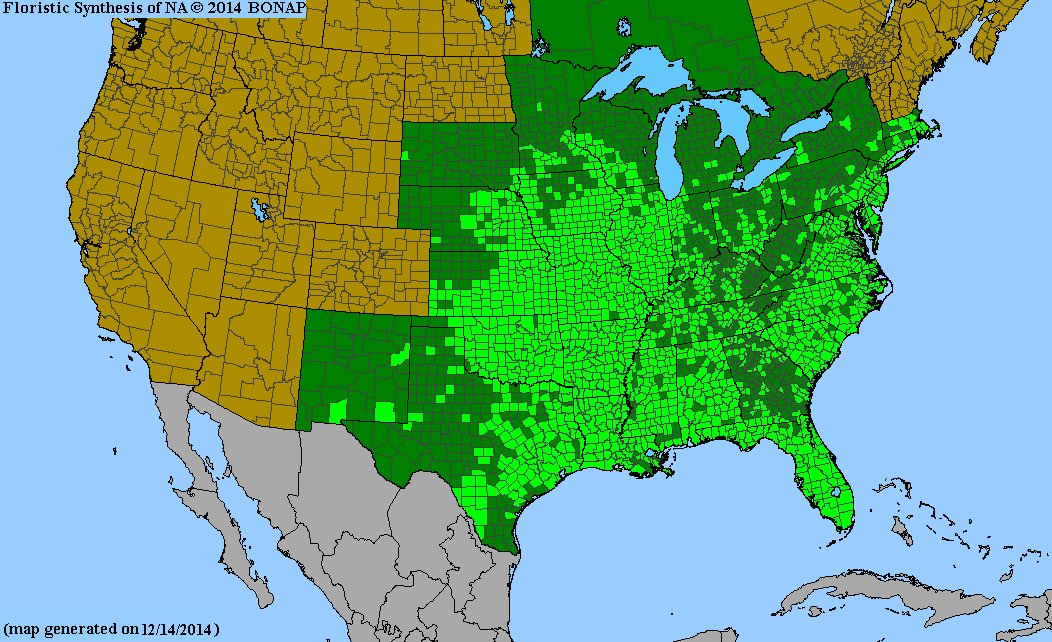
Partridge pea is native to Tennessee and throughout much of the rest of the Central and Eastern U.S.
The only place I've seen it growing wild (and it might actually have been planted there) was alongside a parking lot in a South Florida nature preserve.
These plants are growing in full sun on unamended, compacted clay soil with very little supplemental irrigation. (I think I've watered them by hose a few times so far this year.)  As you can see, they appear to be thriving.
Per the USDA:

[Partridge pea] seed is one of the major food items of northern bobwhite and other quail species because it remains in sound condition throughout the winter and early spring. Partridge pea was found to be one of the most important fall and winter foods of bobwhite quail in Alabama. Partridge pea seeds are high in phosphorus content and protein value, and low in crude fiber and lignin making digestibility generally high.

Seeds of this legume are also eaten by the greater and lesser prairie-chicken, ring-necked pheasant, mallard [and] grassland birds.

Partridge pea often grows in dense stands, producing litter and plant stalks that furnish cover for upland game birds, small mammals, small non-game birds, and waterfowl.

Partridge pea is considered an important honey plant, often occurring where few other honey plants are found. Nectar is not available in the flowers of showy partridge pea but is produced by small orange glands at the base of each leaf. Ants often seek the nectar and are frequent visitors. The common sulfur butterfly lays its eggs on the leaves, and the larvae use the leaves as a food source.

Partridge pea is considered an excellent species for planting on disturbed areas for erosion
control and improving soil fertility. It establishes rapidly, fixes nitrogen, reseeds, and slowly decreases as other species in the seeding mix begin to dominate the site. Nitrogen fixation is greatest during the flowering stage. To help prevent weed establishment and control soil erosion along county roadsides in Iowa, partridge pea is often included in the seed mix with other forbs and grasses.

Per the North American Butterfly Association:

Cloudless Sulphur, Sleepy Orange, and Little Yellow caterpillars all use Partridge Pea as a food source. All three of these butterflies range widely over the southern U.S., with Little Yellow’s range being restricted eastward.

Partridge Pea is also used as a food source by Ceraunus Blue caterpillars which are common in far southern regions, usually late in the summer; found all year long in southern Florida and the Lower Rio Grande Valley, Texas.

Gray Hairstreak caterpillars also include Partridge Pea as a caterpillar food plant in addition to countless other plants.

Instagram

Follow Aaron Dalton on Feedio

Sunday, December 4, 2016

A Time to Sow


So many hopes and dreams in these packets...


After months of drought, the rains have finally arrived.

With rain in the forecast, I rushed to sow the wildflower seeds - some bought, others gathered on my own property - that I had been squirreling away.

I'm taking a multifaceted approach to seed starting this year.

For those seeds that need months of cold stratification, I sowed many outdoors yesterday. After all, I figure that's how these plants propagate themselves in the wild - they drop their seeds, which undergo freezes and thaws all winter, and then they sprout in the spring.

Of course, there are drawbacks to sowing seeds outside so early in the year and letting them fend for themselves. Some seeds may get washed away. Others will probably get eaten. Still others may rot or dessicate. But with thousands of seeds sowed, presumably some will find the 'just right' conditions that allow them to germinate.

As a control, I'm holding other seeds in cold storage (the refrigerator) all winter. In February and beyond, I'll start taking action with those seeds - sowing some outdoors, transferring some into bags of wet sand (that I'll still hold in the fridge), eventually trying to start some seeds in eggshells that I'm already saving, etc.

I'll keep you all posted on the success (or not) of these various experiments.

For now, here's a list of the seeds that have been sown outdoors:

- Allium tuberosum, garlic chives (gathered from my own plant)

- Anemone virginiana, thimbleweed, native (from Missouri Wildflowers Nursery - these seeds are amazingly fluffy! I thought I'd been shipped a piece of wool when I looked into the seed packet!)

- Asclepias tuberosa, butterflyweed, native (from Sow True Seed)

- Chamaecrista fasciculata, partridge pea, native (gathered from my own plants)

- Desmanthus illinoensis, Illinois bundleflower, native (from Missouri Wildflowers Nursery)

- Echinacea simulata, glade coneflower, native (from Missouri Wildflowers Nursery)

- Gaillardia x grandiflora, blanketflower, 1/2 native (the G. pulchella parent is native across the Southern U.S., although rarely present in Tennessee) (gathered from my own plants)

- Heliopsis helianthoides, false sunflower, native (gathered from my own plants)

- Parthenium integrifolium, wild quinine, native (from Missouri Wildflowers Nursery)

- Polanisia dodecandara, redwhisker clammyweed, native (gathered from my own plant)

- Rudbeckia hirta, black-eyed Susan, native (from Sow True Seeds)

- Senna marilandica, wild senna, native (gathered from my own plant)


All of the seeds purchased from nurseries (i.e., all seeds other than those gathered from my own plants) represent my first attempts to grow these species in my garden.

Incidentally, for the first time, I tried mixing the seeds with sand before sowing. As I'd hoped, the sand helped me get better coverage and allowed me to see where seeds had already been sowed.

In colder climates, I've read that some people will wait until it snows and then scatter seeds (sample image). That way, they can easily see where the seeds have been scattered and when the snow melts, the seeds will gently sink into the ground with a ready supply of water.

I don't sow all species outside indiscriminately. Even though zinnias (Z. elegans), for example, do lightly self sow here, I suspect/hope that I'll have better germination waiting until spring to sow those seeds. And I'm also holding off on some other species I've purchased (like Monarda fistulosa, wild bergamot, from Missouri Wildflowers Nursery) where my research indicates that cold stratification does not improve germination. If the seeds will germinate just as well from a spring sowing, I'd rather scatter them then on the reasoning that fewer seeds will be lost, washed away, buried or eaten than with a winter sowing.

Dear Readers -- Do you sow any seeds outdoors in the winter? If so, do you scatter the seeds as I do or use a more controlled sowing method (e.g., something like this)? 

Instagram

Follow Aaron Dalton on Feedio

Monday, February 22, 2016

Class of 2016 -- Chamaecrista fasciculata, partridge pea, sensitive plant

Partridge pea, Chamaecrista fasciculata, photo by Fritz Flohr Reynolds via Wikimedia Commons

Why I'm growing Chamaecrista fasciculata in my garden...

1) It is native to Tennessee and throughout most of Eastern and Central North America.

2) The USDA says that partridge pea seeds provide food for quail, prairie-chickens, pheasants, ducks and other grassland birds, while nectar from glands at the base of each leaf provide nutrition for bees.

3) Although I usually favor perennials, I'm willing to take a chance on this annual. Andrea DeLong-Amaya at the Lady Bird Johnson Wildflower Center told me that partridge pea is a drought-resistant annual that self sows reliably enough to persist in the garden for years.

4) DeLong-Amaya also mentioned that partridge pea is a larval food plant for several species of sulphur butterflies, including the cloudless orange and sleepy orange.

5) In photos I've seen, the flowers, seedpods and foliage all look gorgeous.

Do you grow partridge pea? If so, what has been your experience with this plant?

Instagram