This year is the best bloom yet for the 'Sugar Tyme' crabapple...
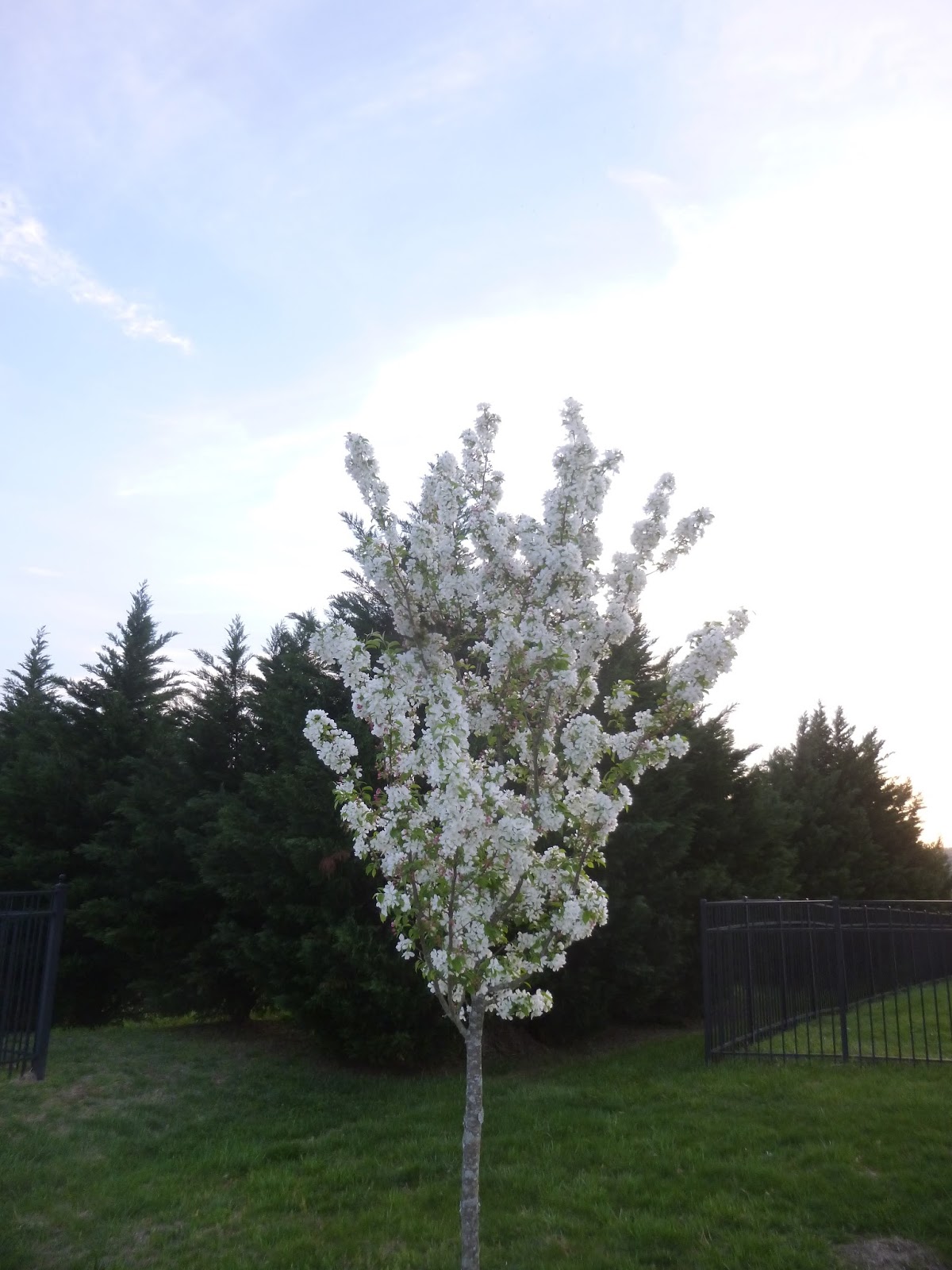


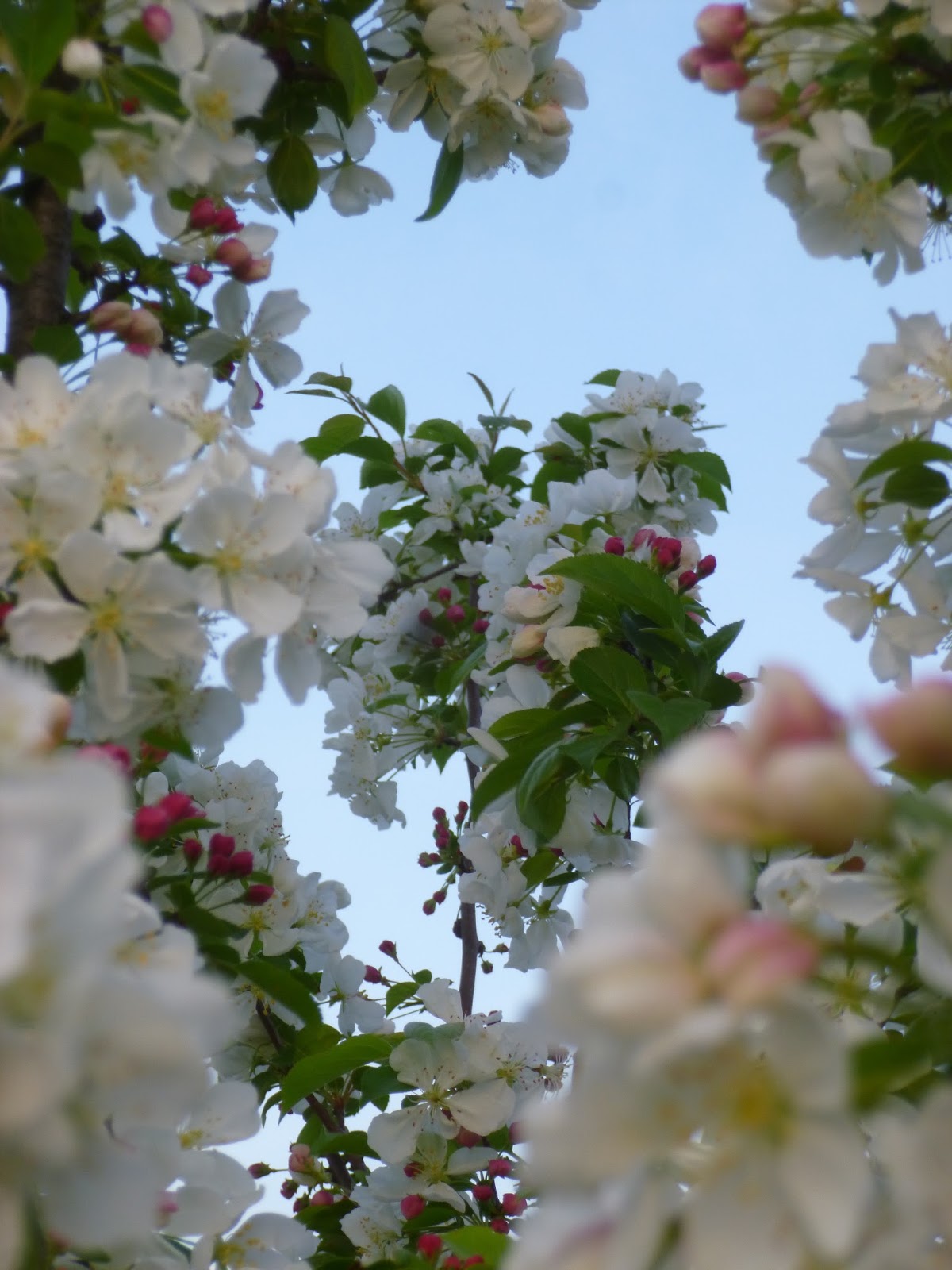
PS - These flowers have a delicious, heady fragrance that wafts across the yard and is intoxicating up close! Also, these flowers attract pollinators 😊


 |
| The clove currant (Ribes aureum) started leafing out in late January. This photo was taken on March 2nd. |
 |
| Yellow flower buds on the clove currant |
 |
| 'Sugar Tyme' crabapple leafing out |
 |
| New leaves on Vitex agnus-castus (chaste tree) are adorable! Chaste tree is native to the Mediterranean. It tends to leaf out a bit later than many of our native trees and shrubs, but the foliage is still susceptible to late frosts and freezes. (Our average last frost date is still two weeks away.) In 2014, temperatures dipped into the high 20s in mid-April, killing back all the newly emerged Vitex foliage. The damage turned out to be just temporary, with Vitex fully leafed out and looking fantastic a month later.) |
 |
| Beautiful new foliage on a native Viburnum dentatum (arrowwood viburnum) |
 |
| Teucrium chamaedrys 'Prostrata' (creeping germander) looking great. A couple of weeks ago I posted a photo (second to last in this post) showing how creeping germander stays semi-evergreen and attractive through the winter. It's fun to see how much it has leafed out and greened up since that previous post. |
 |
| Newly planted Heliopsis helianthoides, our native false sunflower or ox-eye sunflower. (It's not a 'true' sunflower, which would be in the Helianthus genus.) I tried growing a cultivar of this plant a few years back and was never super impressed with its performance. On the other hand, it was well-behaved, tough and did not give me any problems. I decided to give it another chance and planted three specimens of the straight species close together. Last time, I was disappointed that false sunflower did not attract many pollinators. I'm hoping a larger patch of flowers from three plants clustered together will do a better job of catching the attention of bees, butterflies, wasps and other pollinators. |
 |
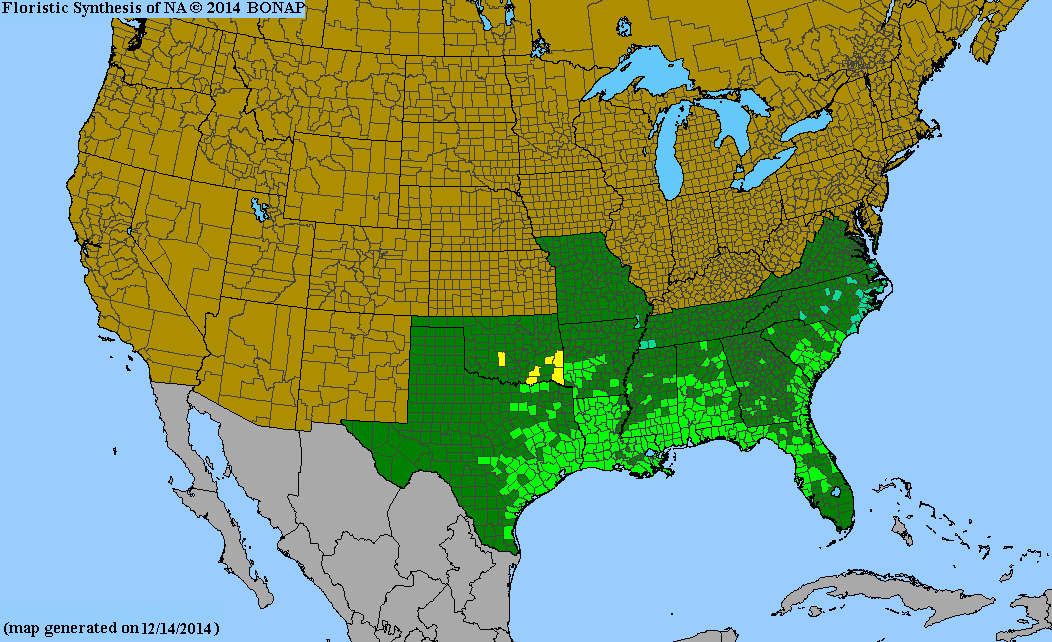
| Newly planted Ilex vomitoria, yaupon holly. According to BONAP, yaupon holly is barely native to Tennessee (there's a waif population in the extreme southwestern corner of the state, around Memphis), but it's certainly a regional native throughout the Deep South. I would have liked to start with a larger plant, but as usual, it's very hard to find natives at our local nurseries, so this is a 1-gallon mail order plant. I find myself charmed by the reddish new foliage and (I believe) flower buds. |
 |
| Physocarpus opulifolia, our native ninebark, I was so unimpressed with ninebark's performance last year that I almost shovel-pruned it over the winter. Still, learning from past mistakes (i.e. overly-hasty judgments), I decided to wait. So far, I'm very pleased with the new foliage on this plant. (For the life of me, I can't recall whether it's the 'Diablo' or 'Summer Wine' cultivar...) |
 |
| Salvia guaranitica, anise-scented sage or hummingbird sage. The new foliage looks better this year than it ever did in the past. (In fact, I was so unimpressed with its first-year performance in 2014 that I shovel-pruned it --- or tried to. It came back anyway in 2015 (typical zombie plant behavior) and I decided to give it a reprieve. Feeling quite good about that decision so far and hoping it will be bigger and better than ever this year. |
 |
| 'Queen of the Night' tulip from Easy to Grow bulbs. Whereas the earlier 'Pink Impression' tulips got chomped by some herbivore (let's blame the deer), so far these seem unmolested. 'Queen of the Night' is a really dark-flowered tulip. I had to use a flash to illustrate the interior of the bloom. I do think it's nice that there are early-flowering and late-flowering tulips so it's possible to spread out the tulip season over a month or more. (I'm guessing the deer might be less interested in late flowering tulips since there's probably more for them to eat in the woods this time of year now that many plants have leafed out.) |
 |
| Crabapple coming into bloom! This 'Sugar Tyme' crab has pink buds that open into white flowers. Charming :) |
 |
| Newly emergent foliage on threadleaf coreopsis Coreopsis verticillata (in this case the 'Zagreb' cultivar) looks like a miniature forest if you get down on the ground and look at it sideways. This is another plant that is a regional native (barely native to far southeastern Tennessee, but quite widespread in the Carolinas and Virginia. |
 |
| Here's a close-up on the newly emergent foliage on the evergreen Aucuba japonica. |
 |
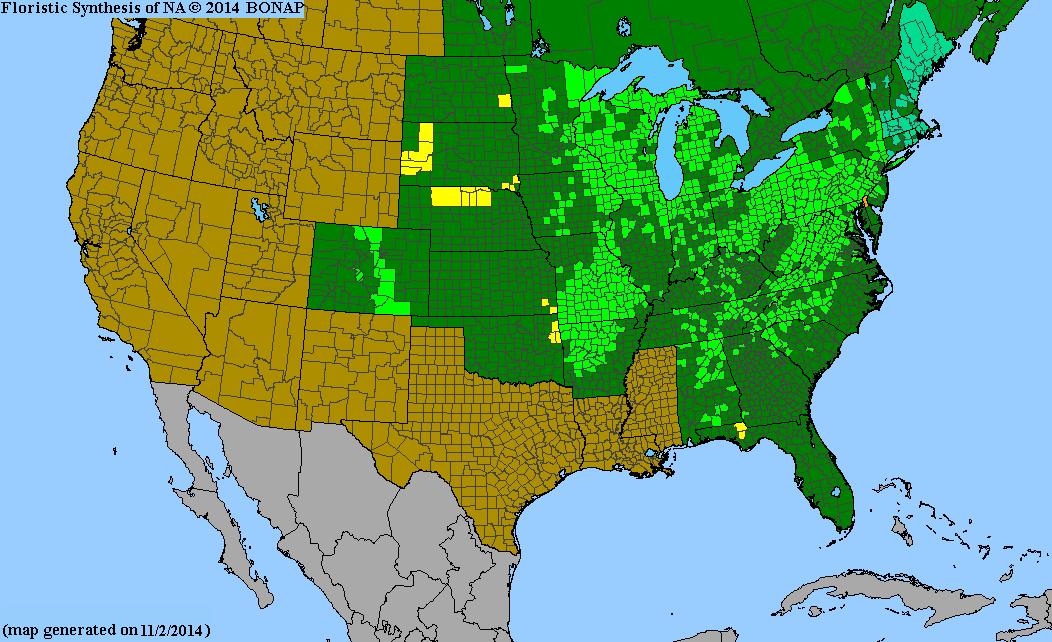
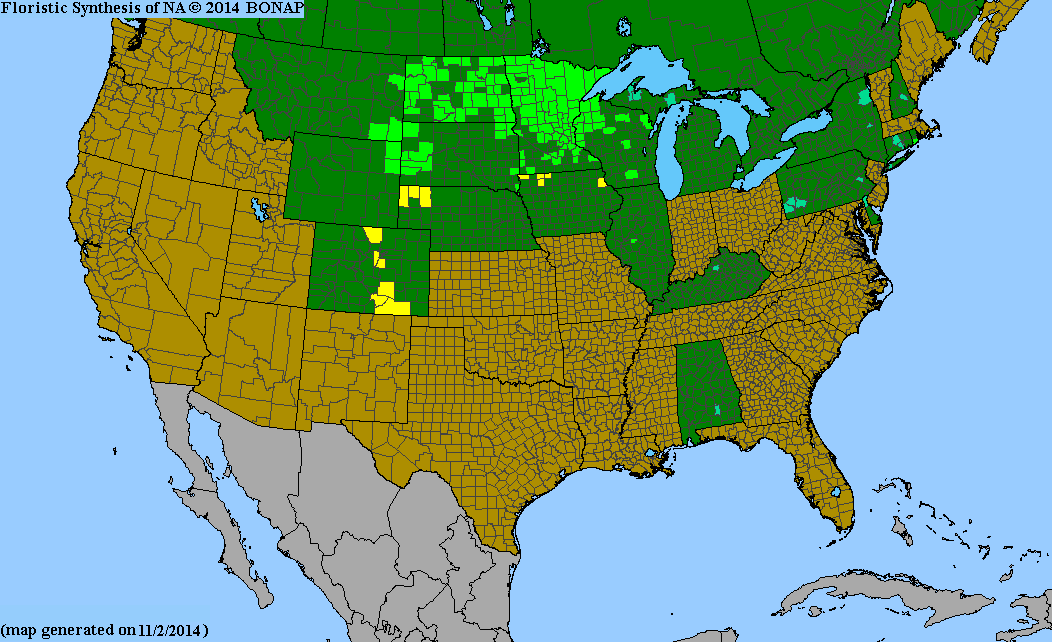
| Love the fresh new foliage on this Agastache foeniculum, anise hyssop. Despite the fact that this plant is native to the far Northern plains, it seems to thrive in Middle Tennessee. Of course, it's no surprise that it survives the winter with flying colors and emerges early in the spring. What is surprising to me is that it seems cool as a cucumber during our hot, humid summers. Based on my experience, the Agastaches are a highly garden-worthy genus, especially if you like to attract pollinators who flock to their long-blooming purple summertime flowers. |
 |
| Each crabapple is adorned with a raindrop... |
 |
| We had this 'Sugar Tyme' crabapple added to the landscape in Spring 2014. It was not all that exciting last year -- well, except for the gorgeous stinging rose caterpillars that showed up. They were pretty awesome. Anyway, this year, Sugar Tyme was smothered in pink buds that have opened into these lightly scented white flowers. Beautiful!! (That cold snap we had a week ago with temperatures in the low 20s didn't seem to hurt the crabapple or its buds one bit.) |
 |
| There were lots of little bees (and perhaps other insects) buzzing around the crabapple, but they were moving too fast for my rudimentary digicam to capture any images of them. But this big bumble bee paused to pry open this flower, which gave me a chance to capture his posterior for posterity. |
 |
| 'Honey Bee Blue' Agastache (I believe A. rugosa). Purchased three from a local nursery last year, they all seem to be coming back nicely. |
 |
| I'm pretty sure this is Agastache foeniculum 'Golden Jubilee' (anise hyssop), but the leaves should be emerging a chartreuse color. So perhaps the original plant has died and the seedlings have reverted to the species A. foeniculum? (Prairie Nursery does call the species a biennial.) I'll post an update later in the year as to the foliage color as these seedlings mature. |
 |
| Shoots and flower buds on Ajuga genevensis (blue bugle, Geneva bugleweed) |
 |
| Sedum telephium (I believe the 'Autumn Joy' cultivar) |
 |
| I'll admit it, generally I think boxwoods (Buxus) are boring and overplanted. Yet, the thing I like most about boxwoods is probably what other people overlook - not their bland evergreen foliage, but their sweetly-scented spiky flowers that attract pollinators such as bees and (as you can see here) other insects including flies. Flies don't get much respect, but I'm sure they have a bigger role to play in the world than landing on our picnic lunches. |
 |
| And here's a bee (honeybee?) buzzing in the boxwood. |
 |
| Clematis 'Crystal Fountain' -- got to do some judicious pruning here... |
 |
| Aquilegia (columbine) self sows with abandon here. I love it and encourage it. Originally I planted a few different columbine species including the European A vulgaris and a hybrid called 'Winky', but I've decided to focus on adding and encouraging reseeding by the native species A. canadensis (wild columbine) |
 |
| Purple coneflowers (Echinacea purpurea) are coming up throughout the garden, both as returning perennials and new seedlings. Again, love and encourage the reseeding. I'm also happy that the new seedlings are easy to spot and identify, unlike some species where you have to wonder for a while whether you're growing a desirable plant or nurturing weeds. |
 |
| Look closely at the base of these stems and you could spot new growth emerging on Baptisia australis (blue false indigo). Although B. australis reportedly prefers well-drained soil and full sun, it seems to have done pretty well for a couple of years now in our heavy clay soil with a bit of shade from a neighboring crape myrtle tree. Note that the new growth can look a little bit like asparagus, but there is evidence that Baptisia is poisonous (for people) and should not be eaten! So to avoid a potentially dangerous misidentification, don't plant this anywhere near your asparagus patch! |
 |
| Beautiful foliage and buds on the 'Sugar Tyme' crabapple. This is the one where I don't know whether I should try to provide some protection from the upcoming cold snap or stay true to my Darwinian ethos. |
 |
| First cheerful blue flowers are appearing on 'Georgia Blue' speedwell (Veronica peduncularis) |
 |
| Daffodils! |
 |
| Most of the year I'm neutral-to-negative on daylilies (overplanted, high-maintenance, don't seem to have much wildlife value), but I always appreciate the lush, fresh new foliage in March that leaps out of the ground when many other perennials are still snoozing. |
 |
| Dianthus gratianopolitanus 'Firewitch' (cheddar pink) - I was thinking of planting more cheddar pinks as a groundcover, but I'm a bit concerned that this one could be dying off in the center after a few years, which would not speak well for its potential as a long-term groundcover. I think I'll wait to see how/whether it recovers over the next few weeks... |
 |
| Geranium sanguineum (bloody cranesbill) - planted three tiny specimens of the 'Vision Violet' cultivar last year. They struggled a bit as they had to compete with a rampant patch of cherry tomatoes, but they all seem to have returned bigger and stronger than last year, so that's a good sign. |
 |
| Added a couple of hellebores to the garden last month. Of course, I planted them just before our temperatures crashed below average and stayed there for weeks with temperatures dipping into the single digits multiple times. Since these had been growing in an unheated greenhouse and hadn't had a chance to harden off, I assumed they would be goners. I covered them cardboard boxes (weighted down by bricks) that subsequently got soaked by rain and collapsed by ice. When I gathered the courage to remove the boxes after a few weeks, the hellebores looked fit as a fiddle. These are some tough plants! |
 |
| Alchemilla mollis (lady's mantle) |
 |
| Stachys byzantina 'Helene von Stein' (lamb's ear) |
 |
| Lily |
 |
| Philadelphus x virginalis 'Natchez' (mock orange) - Bought this from a sale section in autumn 2013 and got a great bloom last May. Then the plant just say there all last year, not growing an inch. I worried as to whether it had exhausted itself with the bloom and was on the road to ruin. Then late in the season, it sent up a sucker about six inches with fresh new leaves. Was that a good sign or did it mean all the old growth had died off? Well, so far, things look good. I'm seeing all the old growth (and the new sucker) leafing out. I'll remain optimistic on the mock orange. |
 |
| I don't know much about mosses, but I think they're fantastic from both a visual and tactile standpoint, so I try to encourage them in the garden. I don't know how to identify this moss, but it seems to be entering its reproductive stage where sporophytes will release spores that will hopefully help the moss spread around the garden! |
 |
| Symphyotrichum oblongifolium 'October Skies' emerging from under a winter blanket of leaves. I'm pleased to see that all three clumps of October Skies aromatic aster seem to have expanded nicely. |
 |
| Phlox paniculata (garden phlox) 'David' - As with the daylilies, I think the sight of the fresh green foliage emerging in early spring may be my favorite think about garden phlox. The foliage always seems to get pretty tattered (and sometimes mildewed) later in the season. Still, it's a tough plant that has come back reliably year after year, so I should probably learn to appreciate it more. (I think there are some little Agastache seedlings growing alongside it this year.) |
 |
| Viburnum 'Pragense' (Prague viburnum). I had five of them planted last year. This is the most impressive one of the bunch and I'm still not impressed. |
 |
| Here are two of the less impressive Prague viburnums (Viburnum 'Pragense') |
 |
| I'm pretty excited to see that this Salvia greggii (autumn sage) survived the winter. It's only marginally hardy in our zone and supposedly dislikes poorly drained soil (which is a big problem with our heavy clay). Still, it's one tough cookie and I'm pleased to see that it's back for another round. The other autumn sage I planted last spring seems to have died back closer to the ground, but I still see some new leaves near the base of that plant. |
 |
| Native to the Mediterranean, Teucrium chamaedrys (wall germander) supposedly needs (prefers?) well-drained soil, but it seemed to cope pretty well in lightly amended heavy clay. All three clumps survived the winter and stayed partially evergreen. I cut off some of the damaged foliage to reveal this fresh new growth. The clumps seem to be expanding at a measured, moderate pace. |
 |
| Myrica cerifera (southern waxmyrtle) not looking good. This is another marginally hardy plant in our zone. It's mainly native to sandy soils in the Coastal Plain of the Deep South. Perhaps I should have planted it in the spring to give it a chance to get established before it had to face near-zero winter temperatures and ice storms? I may have been doing a bit of excessive zone pushing with this one...(To add insult to injury, I walked by yesterday - after this photo was taken - and saw that deer had chomped off most of the branches. They didn't eat it, they just decapitated the plant, said 'Blech!' and moved on.) |
 |
| Jasminum nudiflorum (winter jasmine). I'd read that winter jasmine might flower as early as December or January, and perhaps it would if we'd had a couple weeks of warm weather, but with temperatures at or below normal, it started flowering around the same time as the forsythia in mid-March. Bloom was sparse this year, with some of the buds frozen before they had a chance to open. The flowers are cheerful and I like the green stems, but the plant has a reputation for being aggressive in the garden. I'm not terribly enthusiastic after the first winter, but I'll take a wait and see approach and hope I'm bowled over next year (in a good way). |