Thursday, November 13, 2014

Travel Report - Rhine River Valley, Pumpkin Sculptures, Elvis Presley, Red Squirrel Sighting, Steep Vineyards and Sheep


From eastern Germany, we traveled south and west along the Rhine River on our way to the Netherlands. Here are some natural and horticultural photos from along the journey:

You might think of Germany as being the Land of Beer, but the Rhine is all about Wine!
In many places - as here in the town of Bacharach - you'll see steep hillsides blanketed with vineyards.
Just climbing this hill seems like it would be a challenge, never mind planting, tending and harvesting the grapes!
Here and there, you see sheep on the hillsides...   :)


The town of Ludwigsburg, Germany claims to have the World's Largest Pumpkin Festival. Typically, more than 400,000 pumpkins are pressed into service to make larger-than-life sculptures.
Here two medieval pumpkin knights on horseback prepare to joust before a royal audience (and a cafeteria).


Some of the pumpkin kings are of the playing card variety...
(although wouldn't Jack say he was the real Pumpkin King?)


And then there's the King of Rock and Roll!


Have you ever seen such a conical tree?!
And with a statue sheltering beneath it like an umbrella?
This is not my taste at all, but I had to admire the moxie of the designer and/or pruner in this palace garden in Wurzburg, Germany.


Grey squirrels are super common in the States.
In fact, my mother used to get her exercise chasing squirrels off our back porch. (They were always trying to steal from the birdfeeders.)
But if you want to see a Red Squirrel, you have to head to Europe.
And even then, you better keep your eyes open, because the red squirrel seems much more shy, elusive and rare than its grey North American counterpart.
Here was my best attempt at snapping a pic of a red squirrel in a Wurzburg garden.
Now I know how those photographers feel when they try to convince people that their photos really do depict Bigfoot or the Loch Ness Monster.
Honestly folks, that blur is a red squirrel!
(Incidentally, Germans apparently cannot say the word "squirrel".)


Beautiful vista from this formal hilltop garden in Wurzburg, Germany
And on that exposed hilltop garden was a palm tree!
(The palm was surrounded by a very nice patch of Sweet Alyssum.)
I'm no expert, but I think this could be a Chinese Windmill Palm (Trachycarpus fortunei).
What do you think?

Finally, a field of orange flowers (poppies? marigolds?) makes a delightful carpet leading up to this Wurzburg palace.


Monday, November 10, 2014

On Snout Houses, Vast Lawns and Deafening Blowers

I find the sound of leaf blowers a bit grating...
Photo courtesy of Guian Bolisay

This post will be a (brief) rant.

I came across a couple of interesting blog posts on the Interwebs recently.

One dealt with the phenomenon of what we might politely call car-centric architecture. Or bluntly call a Snout House.

The other showcased a comparison of American suburban streetscapes (sprawling, dominated by lawn) and European streetscapes (compact, no front lawn to speak of).

Both posts were fun, trenchant reads.

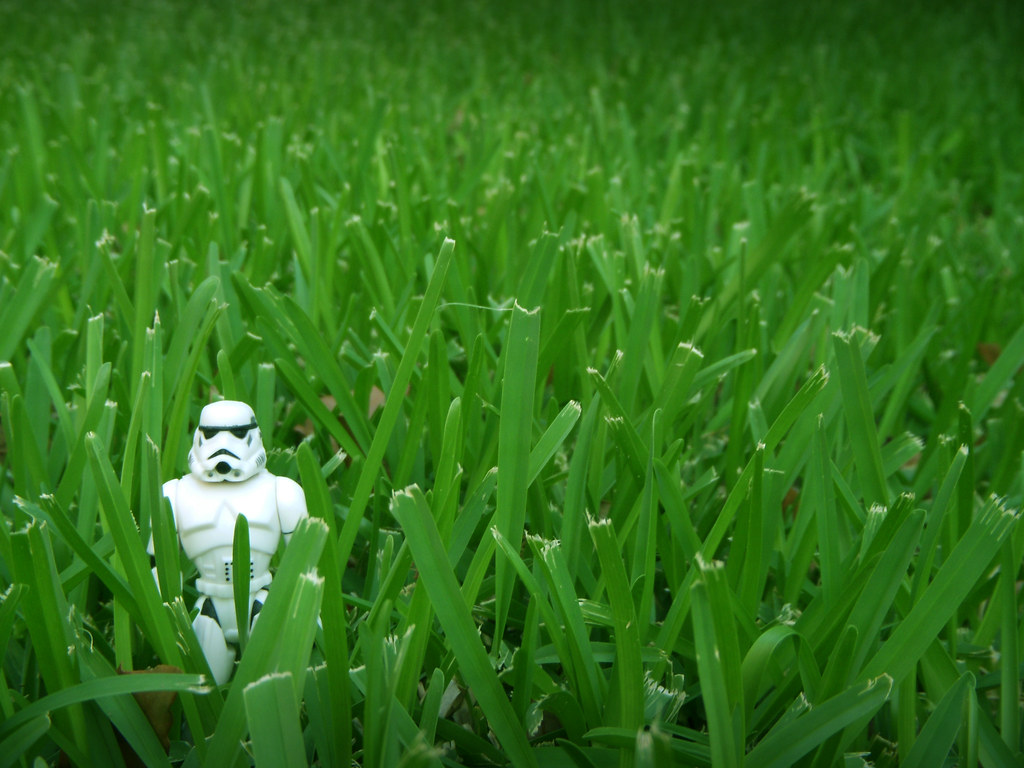
Storm Trooper in the grass
Apparently lawns are only able to support plastic life forms...
Photo courtesy of JD Hancock

So, here's my question to you all:

Is it too late?

Is this the ideal landscape for many Americans?
Photo courtesy of Tiger Pixel

Are we too far gone down that path of suburban soullessness where each house shall be fronted by a sea of green grass (or weeds) to be beaten each week into submission by the loud, whirring, pollution-spewing lawnmower (+ edger/trimmer + blower)?


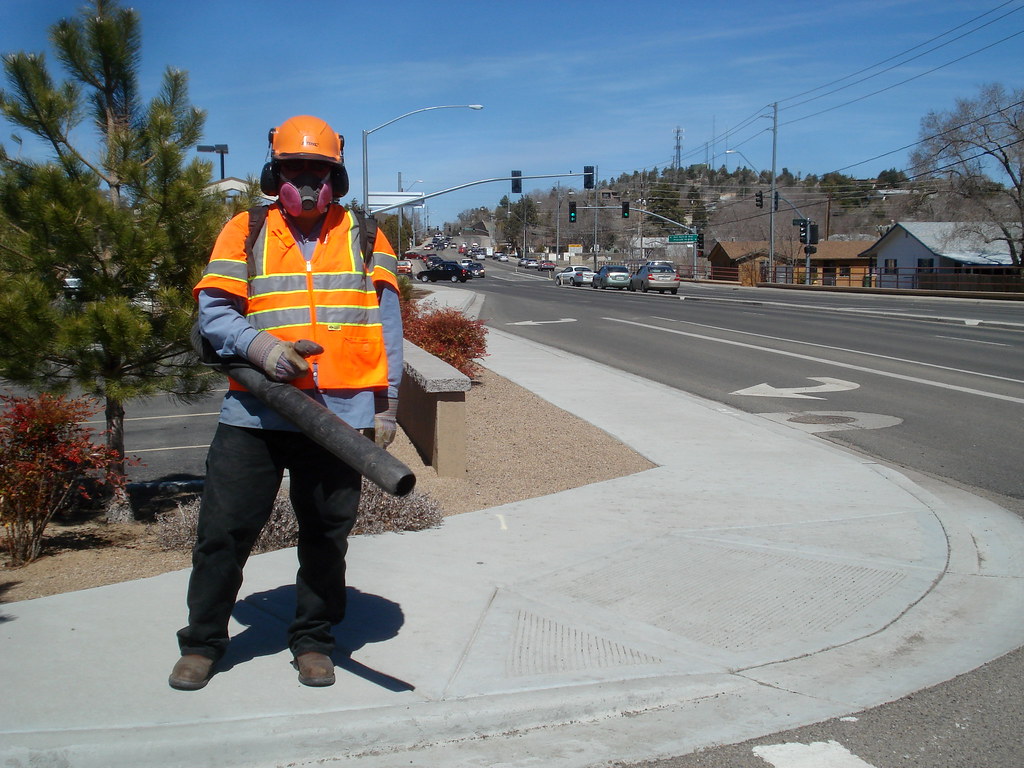
Just blowing some leaves...and dirt...and perhaps some dust, fecal matter, fungi, chemicals, spores, lead, etc. etc.
Photo courtesy of Dale


Or is there a chance that someday these green carpets - lifeless except for the amputated grass blades, drenched with fertilizers and pesticides and herbicides - will be replaced with a rich array of trees, shrubs and perennials buzzing and twittering (not Tweeting) with life?

I know which future I'd prefer. But I suspect I'm in the minority.

Attack of the Blower People?
Someone call Mulder and Scully!
Photo courtesy of Surat Lozowick

Friday, November 7, 2014

Travel Report - Potsdam Karl Foerster Garden


Ah the famous and eponymous Feather Reed Grass, Calamagrostis acutiflora "Karl Foerster" at the Karl Foerster nursery in Potsdam, Germany
Karl Foerster (1874-1970) was a famous German plantsman and nursery owner. Apparently, he and some friends are the ones who propagated and popularized the Goldsturm rudbeckia. He also is credited with finding and propagating the Feather Reed Grass that was named after him - Calamagrostis acutiflora "Karl Foerster".

While taking a daytrip from Berlin to Potsdam to see the palaces there, we made a detour to the Karl Foerster garden. It turned out to be a longer detour than expected, because the bus was not running that day, which meant we had to take a rather loooooooooooooong walk.

Nonetheless, it was an interesting visit. Here are some of the plants and sights that stood out:

The striking "Bishop of Llandaff" dahlia.  The dark foliage with the red flowers makes for a stunning color combination.
I believe this is some sort of Japanese Anemone, but I couldn't find a plant label to confirm my belief or provide any further detail.

I never saw such nice Bergenia cordifolia before visiting Germany and the Netherlands. It seems to be a favorite groundcover / filler over there and appears to be very happy in the climatic conditions. 

These yellow flowers were not labeled. They look to me like some sort of perennial sunflower, but I certainly appreciate a specific ID if any clever readers would like to chime in. I took this photo in large part because I thought it was a very effective and beautiful combination of sculpture, foliage and flowers in the garden. 
Japanese Forest Grass - Hakonechloa macra. I tried growing some of this in 2014, but I think it needs a shadier and cooler setting than I could offer in Tennessee. Love the combination and foliar contrast of the Bergenia growing alongside the Forest Grass. 

A towering stand of Miscanthus floridulus, at least 8-feet tall! 
A wall of morning glory in the garden. I believe this vine is an annual, so presumably this is a single season's foliage! 
No name on this plant in the parking lot. But I love the rainbow colors on the foliage. 
This was a lovely fragrant and floriferous rose called Angela.  
A cat keeps a close eye on things from a window.  
This is the actual working nursery part of the operation. It was closed when we visited, but a sign on the fence listed the hours as being Monday to Saturday from 9-7 and Sunday from 11-4. If you're planning to shop there, you might want to check in advance to make sure these hours have not changed according to the season. 


Finally a bit of whimsy. It's a little hard to tell from this angle, but I think whoever trimmed this boxwood was aiming to create a bunny topiary. Can you see the ears and the tail ;-)

Wednesday, November 5, 2014

New Plants - Glossy Abelia, Forsythia, Winter Jasmine and Heavenly Bamboo


I'd like to introduce the newest inhabitants of the Garden of Aaron:
Glossy Abelia (Abelia x grandiflora)
I added both the species - which reportedly can grow as large as 10-feet tall - as well as a cultivar called Rose Creek that is supposed to stay much smaller. I planted them for their reputed toughness, semi-evergreen nature (fully evergreen in warmer zones) and ability to attract bees and butterflies over a long flowering season.
Photo courtesy of Tatters

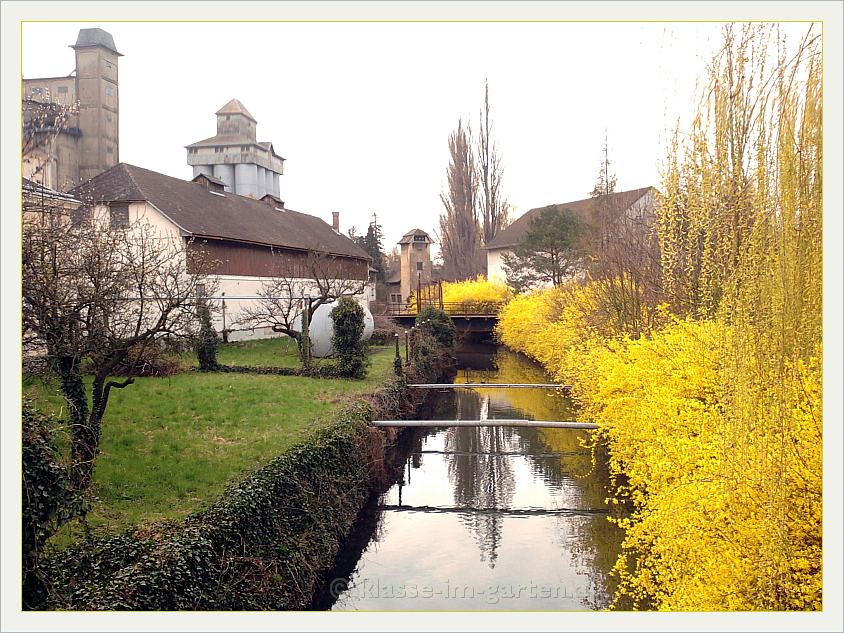
Forsythia x intermedia
Photo courtesy of Klasse im Garten
I planted a variety called Lynwood (also known as Lynwood Gold) that should grow up to 8-10 feet tall by 6-8 feet wide.
I'd like to add another groundcover variety called Gold Tide, but I'm having a devilish time trying to find one at any local nurseries.

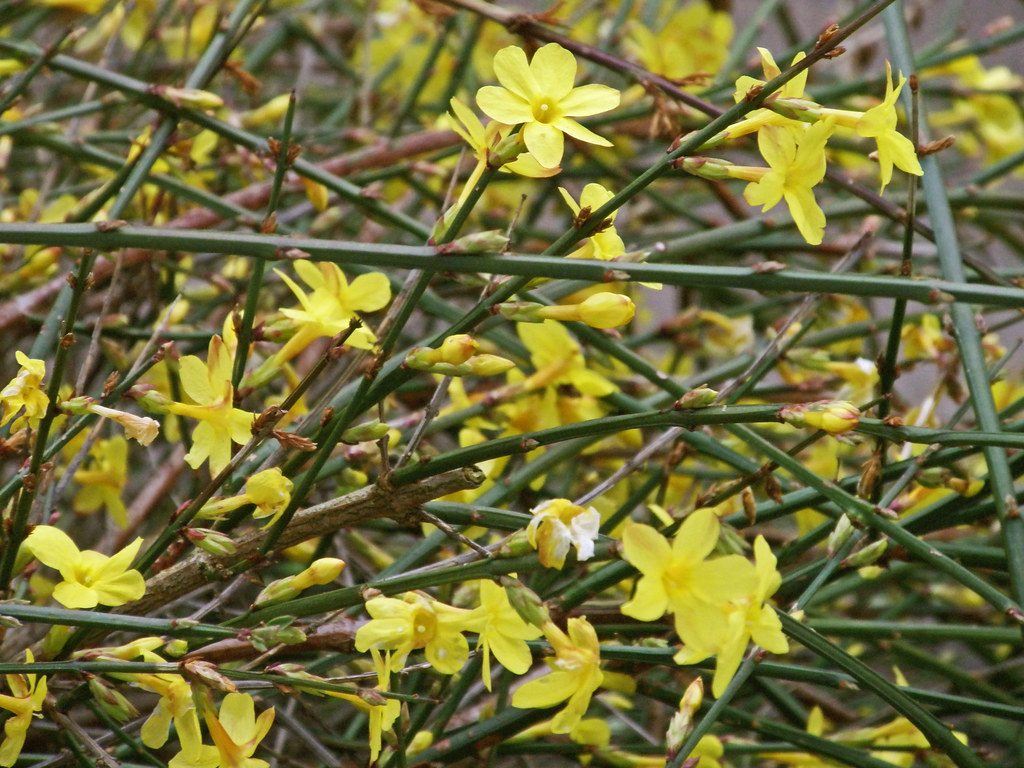
Winter Jasmine (Jasminum nudiflorum)
Photo courtesy of Amanda Slater

Heavenly Bamboo (Nandina domestica), Gulf Stream variety
Photo courtesy of hollysuewho


Now I know these picks are not going to win me any praise from native plant enthusiasts.

Heck, I'm a native plant enthusiast, ergo I feel a bit guilty about my choices.

But I was careful to choose plants that do not have any reputation for invasiveness.

Well, to be clear, Heavenly Bamboo does have a reputation for being invasive in the Southeastern United States, but the Gulf Stream variety that I planted reportedly produces hardly any berries.

Since Nandina reportedly spreads invasively when birds eat its berries and disseminate its seeds, it stands to reason that a berry-less plant like Gulf Stream could not be invasive.

As far as I know, Forsythia and Abelia are not on any invasive species lists. I think Winter Jasmine can 'invade' in the sense of spreading aggressively and vigorously through tip-layering, but I don't believe it spreads long distances by seeding.

So why plant exotics and why these specifically?

All of these have a reputation for being extremely tough and versatile, able to handle drought, heat, cold, wind, clay soil and rampaging dinosaurs. (OK, I made that last one up.)

I'm not sure that they all can handle compacted, poorly-drained clay soil, but I've planted the Nandina and the Winter Jasmine on a bit of a slope where I hope the soil will drain a little better. And I've tried planting all of these shrubs a little bit on the high side, which I've read can help when dealing with compacted clay soil.

Why not just bring in massive amounts of soil to create a raised bed or heavily amend the soil I've got?

I have a couple of reasons, but a big part of it revolves around a gardening mantra I read recently in The New American Landscape: Don't Fight the Site.

I believe there's a good deal of wisdom in those four simple words. My land encompasses around 3/4 of an acre and nearly all of it is heavy, compacted clay.

But I'm not alone. Many, many other people in the United States face similar "soils". And these soils are not all bad. From what I understand, clay can hold a lot of nutrients. We clay gardeners don't need to worry about water draining through the soil so fast that plants can't capture it (a worry, as I understand it, of those gardeners blessed/cursed with sandy soil).

I want to encourage sustainable, low-input, low-cost gardening. I don't want gardening to only be for those people who can afford to have good soil trucked in. And I know that there are often a lot of ecological costs behind the scenes to creating, packaging (sometimes) and transporting that soil.

I'd rather work with what I've got.

And some plants, I'm discovering, seem to be able to thrive in heavy clay. Others can cope with it. And as I discover which plants are OK with clay, and as I add more of them to the garden, I believe that their roots and their decomposing leaves, and all the insects and worms and tunneling animals that live in the garden will work the soil for me and gradually make it better and more friable.

Some of the plants (e.g., the Abelias) I've also chosen for their 'ecological services' (ability to attract and feed bees and butterflies over a long flowering season.

One (the forsythia) I've chosen for its reputed ability to provide rapid screening in an area where I could really use some privacy.

I picked the Winter Jasmine in my continuing quest to explore potential groundcovers that could free me (and many other gardeners and homeowners) from the endless cycles of mowing and mulching that currently afflict suburbia.

Both the Forsythia and the Winter Jasmine I also chose unabashedly for their reputed ability to produce cheerful yellow flowers in late winter or early spring -- a time of year when I could really use a pick-me-up.

The Nandina I picked really just for ornamental reasons -- it's got beautiful fall color -- and reputed toughness. I understand it may spread a little through underground stems, but (if it survives/thrives) I expect it to function more as an accent than as a large scale solution in the garden.

Oh and of course there's another major reason I bought and installed these plants -- they're what I could find.

I have plenty of ideas for other tough plants, many of them natives, that I'd like to try, but they're impossible to find locally. I've just ordered some via mail order from a regional nursery and hope that I'll be able to plant and introduce them shortly. Hopefully they'll arrive soon and I'll have some more newcomers to introduce to you all.

Monday, November 3, 2014

Travel Report - Berlin Streetscapes with Lantana and Pyracantha!

Lantana camara "trees" in Berlin
I was walking down the street on Museum Island in Berlin, Germany, when I spotted these street trees with colorful flowers blooming on a grey September day. As you can see, the trees are not installed in the ground, but rather are grown in large planter boxes. Anyway, I decided to take a closer look, so I moved in and found that the trees actually appear to be...

...Lantana camara! That's right, Lantana, which I've never grown (though I have plans to add it to the garden next spring), but which I think of as a dieback perennial in zone 6/7. I was under the impression that Lantana only grew to tree size in tropical climates. So perhaps Berlin takes these tree boxes into a greenhouse in the winter? Or can Lantana survive and grow into a street tree even in temperate settings? The mind boggles.

Pyracantha coccinea hedge in Berlin
The streets of Berlin were also chock-a-block full of this pretty, but dangerous flowering shrub. If I'm not mistaken, this is Pyracantha coccinea, known colloquially as Firethorn for its painful sharp thorns. It's used sometimes in the States -- I've seen it at the Nashville Zoo to keep visitors out of certain aras -- but I've never seen it on a streetscape. It's undeniably attractive and presumably the berries will help feed Berlin's birds in the winter (although truth be told I didn't see many birds in the German urban landscape). And most of the pyracanthas I saw seemed to be thriving, even in challenging urban settings with lots of air pollution, so it's clearly one tough cookie. I was seriously tempted to add some to my garden, but I'll probably chicken out due to those forbidding thorns. 

Friday, October 31, 2014

First Taste - Sweet Potato Greens!


Sweet potato leaves make one heck of a good side dish.
They're served here with purple mustard greens (self-sown fall crop -- several generations removed from seeds I sowed back in spring 2012!) and sliced green pepper.
A couple of months ago, I let some sweet potatoes (Ipomoea batatas) sit too long in the closet. And they sprouted vines.

Hm. What to do? I could throw them out or plant them in the garden.

So I dug some shallow holes in the sun-baked clay soil, dropped in the sweet potatoes, gave them a little bit of water and basically forgot about them.

Fast forward to this week. The vines were a couple of feet long and covered with healthy-looking leaves.

As University of Arkansas Cooperative Extension reminded me, sweet potato leaves are not only edible, they also may be healthful and nutritious.

(Note - Be sure you are picking SWEET potato leaves, because regular (white) potato leaves are POISONOUS! Also be sure you're picking the leaves of a sweet potato and not some other member of the Ipomoea family such as Morning Glories, as sources suggest that many other Ipomoea species contain toxic alkaloids.)

So, I strolled to the garden, picked some of the soft and tender sweet potato leaves from their vines, brought them inside, rinsed them off and tossed them in a frying pan with some freshly-picked mustard greens and some sliced green pepper.

I drizzled a tiny bit of olive oil into the pan and cooked the whole shebang over low heat for a couple of minutes.

The verdict? Delicious!

In fact, I'd say it's much better tasting than spinach with sweet undertones and none of the oxalic acid sourness you find in spinach or chard.

Here are some other blog posts about the virtues of sweet potato leaves via The Slow Cook and Show Me Oz. And here's a YouTube video showing an alternate method of preparing (blanching) sweet potato leaves.

Thursday, October 30, 2014

Travel Report -- Berlin Botanical Garden: Papaya, Zigzag Goldenrod, Lady's Mantle, Male Fern, Firecracker Vine and more!


Perennial beds at the Berlin Botanical Garden

With all the historical sights and great museums in Berlin, I doubt that many international visitors make it to the Botanical Garden (officially the Botanischer Garten und Botanisches Museum Berlin-Dahlem).

That's a shame, because it's a huge place filled with an array of interesting plants. Here were some of the highlights for me:

A nice specimen of Dryopteris filix-mas, also known as Male Fern. It's actually native to much of the United States, but I've never seen it in a garden here. Funny how sometimes you have to go half way around the world to find a plant that's appreciated as an 'exotic' ornamental! 

Bee on aster at the Berlin Botanical Garden

A nice dense patch of Epimedium x versicolor "Sulphureum" showing its potential as a shady groundcover

Bee visiting a dahlia. I noticed a lot of dahlias in both German and Dutch gardens. And I have to say that I was impressed. I must admit that I'm not too familiar with dahlias, but I plan to do a lot more research to see if I can find a way to incorporate one or more in my garden. 

Gorgeous swath of nasturtiums. I once tried (and failed) to grow nasturtiums here in Tennessee. They seem to thrive in Berlin.
This is Mina Lobata, the Firecracker Vine. Native to Brazil and only hardy to zone 12, it's clearly being used as an annual here, but to tremendous effect. I'd seen it online before, but this was my first time seeing it in person. Color me very impressed.
Bee on a lovely stand of Verbena bonariensis. 

Another really interesting design choice. Berlin Botanical Garden shows the potential of Lady's Mantle to serve as the defining plant in an herbaceous border.


Here's yet another plant that I'd heard about, but never seen in person before. This is Solidago flexicaulis, commonly known as Zigzag Goldenrod. Yep, it's another North American plant that I had to travel to Europe to see in a garden! Anyways, we tend to think of goldenrods as sun-loving plants, but as you can see here, the Zigzag Goldenrod is actually happy in a shady forest setting!


I like papaya juice and I've seen papayas in the supermarket, but I'd never seen papayas growing on a tree before. Here you can see how they cluster along the trunk of the Carica papaya, a tree that is native to tropical areas of Central and South America.

Monday, October 27, 2014

Travel Report - Berlin Mystery Shrub?!

Unknown mystery shrub in a planter box on Berlin street. Can anyone ID it?

Well, they say travel broadens the mind.

But sometimes it just mystifies the mind.

At least that was the case when I came upon this landscaping shrub on the Berlin streetscape - in a prominent spot on Museum Island to be precise.

Anyone have a clue as to the identity of this mysterious (to me) shrub?


Close up on Berlin mystery shrub flower. Does this help any plant sleuths out there?


Detail of mystery shrub seedpod. Surely this must jog somebody's memory?


Update 10/28/14 - After cross-posting my "Please help with plant ID!" request to Google+, I received help from a few friends over there ( +Eric Hunt+Tatjana Tijan and +Teresa Schoellkopf) letting me know that this is most likely Oleander -- or more scientifically, Nerium oleander, as Lynn points out in the comments below. As I wrote to Eric, I was kind of amazed that Berlin is using the shrub for street landscaping, considering its poisonous reputation, but Eric told me that in fact oleander is used heavily in California as a landscaping shrub, and Tatjana chimed in to say that it also grows in profusion around the Medtierranean. Teresa then mentioned another potential drawback with oleander, saying that her experience with the shrub in Galveston, TX leads her to believe that it has an aggressive root system capable of breaking through PVC pipe and damaging sewer lines. Yikes. Do you think folks should still be planting oleander given these drawbacks and the fact that it seems to have few ecological benefits