|
| No rain in 2 months? If you're Salvia greggii (autumn sage), apparently you don't care. |
We're going through a dry spell.
A no-rain-in-two-months kinda dry spell.
I recognize that's no big deal in some parts of the country (e.g., California, Arizona, heck even Pacific Northwest in the summertime), but it's quite unusual in the Southeast.
Still, I guess I'd rather have a drought now than in the Spring. At least this time of year, plants are getting ready to go dormant for winter anyway so many of them just call it quits and shut down a little sooner in the case of a drought.
(At least, I'm hoping that's the case. Clearly I won't know whether there's any more serious damage until the shrubs leaf out and the perennials emerge from dormancy - or not - next spring.)
Nonetheless, with only minimal amounts of supplemental irrigation, some plants in the garden continue to put on a fantastic show, attracting and supporting beautiful wildlife...
 |
| Balloon flower (Platycodon grandiflorus) |
 |
| More balloon flowers still to come! They're budding and getting ready to bloom as we head toward mid-November! |
 |
| Bee on the blanket flower (Gaillardia x grandiflora). This is a volunteer blanket flower. I like how this photo shows the multiple stages the flower goes through. On the bottom right, you have a bud just starting to open. After the flower blooms, the petals fall off to reveal a yellow puffball. Eventually, you have the smaller silver starbursts that fade to tan. It's hard to think of a flower that looks prettier at every stage of its life! |
 |
"This flower ain't big enough for the two of us."
"Um...yes it is." |
 |
| Blue mistflower (Conoclinium coelestinum), a native that's been blooming for months and attracting small clouds of skipper butterflies on warm days. (This was a cool, breezy morning. No butterflies in sight.) |
 |
| Unknown Camellia sasanqua and honeybee. This plant and a few Russian sages are the favorite plants for honeybees in my autumn garden. |
 |
| Aronia arbutifolia (red chokeberry). The berries are pretty, but birds don't seem interested in them. And having tried them, I can tell you there's a reason they're called chokeberry - their astringency is off the charts. I may actually be removing this plant from the front foundation once these berries have fallen off. The foundation planting is a little overcrowded and I'd rather give more space to the adjacent oakleaf hydrangea (Hydrangea quercifolia). |
 |
| A few pretty fruits on the 'Sugar Tyme' crabapple. I think this crab gets ravaged by cedar-apple rust fungus spread from all the nearby eastern redcedars that I planted (Juniperus virginiana). It's a pity. Maybe it would do better on decent soil with irrigation, but it's surviving (and sending up suckers) on heavy clay in hot baking sun all day. |
 |
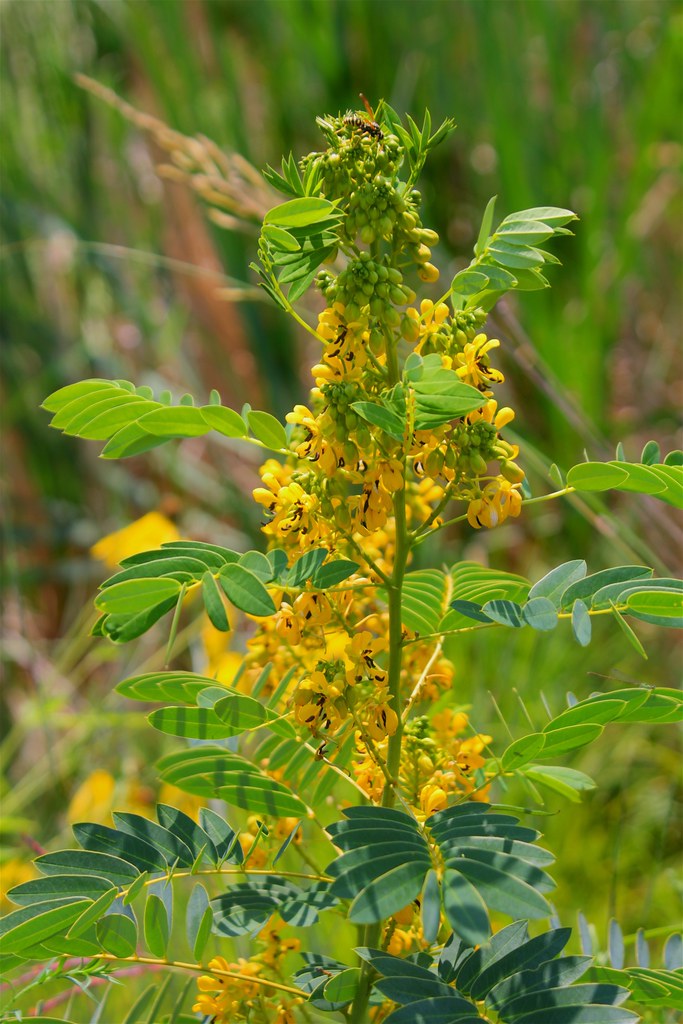
| Senna marilandica (wild senna) seedpods. Lots of seedpods on this plant. I harvested many of the seeds, but have left these to dry on the plant (and hopefully provide some volunteers). |
 |
| Tomatoes in November?! Well, we have had record warmth recently... This is an unnamed volunteer cherry tomato that sprung up next to the house. I didn't harvest many fruits from it this year, but the chipmunk(s) got some. |
 |
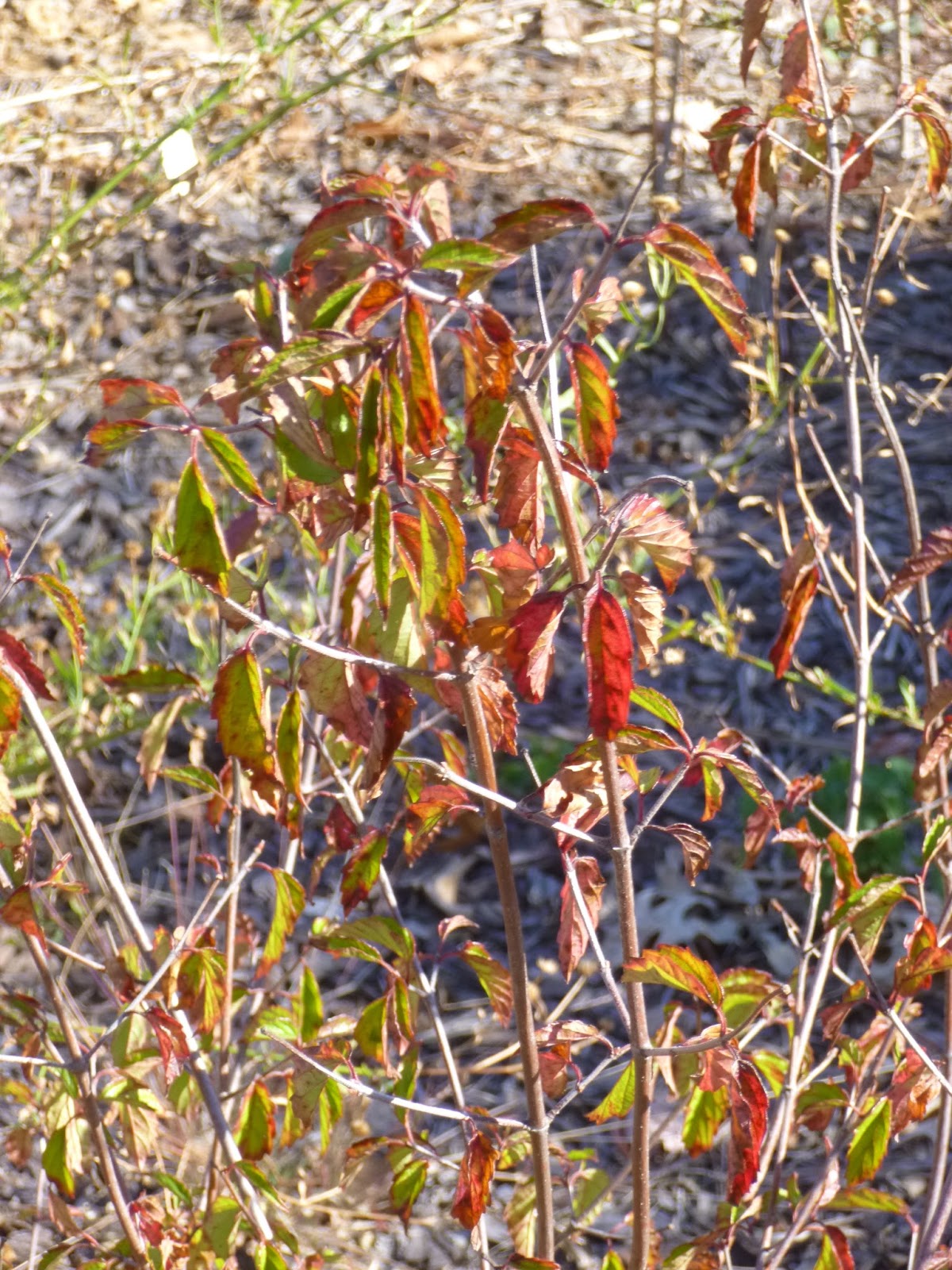
| The autumn drought has meant that leaf colors have been muted for the most part, but this Viburnum ashei is putting on a good show. Love the reds! |
Wish you a beautiful month and a happy, hopeful, peaceful holiday season ahead...