Showing posts with label false sunflower. Show all posts

Sunday, December 4, 2016

A Time to Sow


So many hopes and dreams in these packets...


After months of drought, the rains have finally arrived.

With rain in the forecast, I rushed to sow the wildflower seeds - some bought, others gathered on my own property - that I had been squirreling away.

I'm taking a multifaceted approach to seed starting this year.

For those seeds that need months of cold stratification, I sowed many outdoors yesterday. After all, I figure that's how these plants propagate themselves in the wild - they drop their seeds, which undergo freezes and thaws all winter, and then they sprout in the spring.

Of course, there are drawbacks to sowing seeds outside so early in the year and letting them fend for themselves. Some seeds may get washed away. Others will probably get eaten. Still others may rot or dessicate. But with thousands of seeds sowed, presumably some will find the 'just right' conditions that allow them to germinate.

As a control, I'm holding other seeds in cold storage (the refrigerator) all winter. In February and beyond, I'll start taking action with those seeds - sowing some outdoors, transferring some into bags of wet sand (that I'll still hold in the fridge), eventually trying to start some seeds in eggshells that I'm already saving, etc.

I'll keep you all posted on the success (or not) of these various experiments.

For now, here's a list of the seeds that have been sown outdoors:

- Allium tuberosum, garlic chives (gathered from my own plant)

- Anemone virginiana, thimbleweed, native (from Missouri Wildflowers Nursery - these seeds are amazingly fluffy! I thought I'd been shipped a piece of wool when I looked into the seed packet!)

- Asclepias tuberosa, butterflyweed, native (from Sow True Seed)

- Chamaecrista fasciculata, partridge pea, native (gathered from my own plants)

- Desmanthus illinoensis, Illinois bundleflower, native (from Missouri Wildflowers Nursery)

- Echinacea simulata, glade coneflower, native (from Missouri Wildflowers Nursery)

- Gaillardia x grandiflora, blanketflower, 1/2 native (the G. pulchella parent is native across the Southern U.S., although rarely present in Tennessee) (gathered from my own plants)

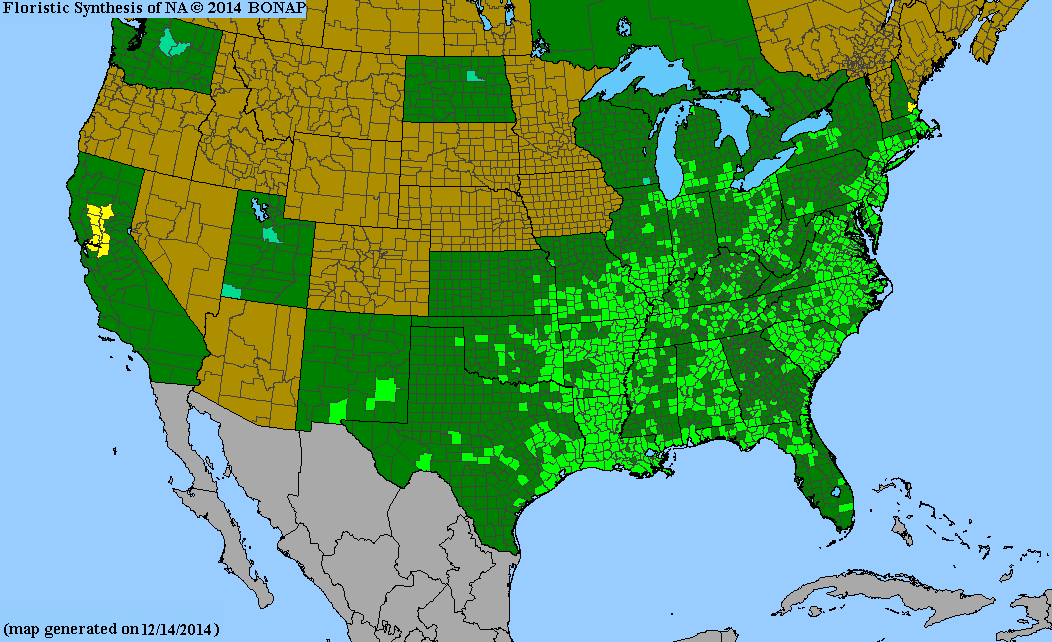
- Heliopsis helianthoides, false sunflower, native (gathered from my own plants)

- Parthenium integrifolium, wild quinine, native (from Missouri Wildflowers Nursery)

- Polanisia dodecandara, redwhisker clammyweed, native (gathered from my own plant)

- Rudbeckia hirta, black-eyed Susan, native (from Sow True Seeds)

- Senna marilandica, wild senna, native (gathered from my own plant)


All of the seeds purchased from nurseries (i.e., all seeds other than those gathered from my own plants) represent my first attempts to grow these species in my garden.

Incidentally, for the first time, I tried mixing the seeds with sand before sowing. As I'd hoped, the sand helped me get better coverage and allowed me to see where seeds had already been sowed.

In colder climates, I've read that some people will wait until it snows and then scatter seeds (sample image). That way, they can easily see where the seeds have been scattered and when the snow melts, the seeds will gently sink into the ground with a ready supply of water.

I don't sow all species outside indiscriminately. Even though zinnias (Z. elegans), for example, do lightly self sow here, I suspect/hope that I'll have better germination waiting until spring to sow those seeds. And I'm also holding off on some other species I've purchased (like Monarda fistulosa, wild bergamot, from Missouri Wildflowers Nursery) where my research indicates that cold stratification does not improve germination. If the seeds will germinate just as well from a spring sowing, I'd rather scatter them then on the reasoning that fewer seeds will be lost, washed away, buried or eaten than with a winter sowing.

Dear Readers -- Do you sow any seeds outdoors in the winter? If so, do you scatter the seeds as I do or use a more controlled sowing method (e.g., something like this)? 

Instagram

Follow Aaron Dalton on Feedio

Friday, September 9, 2016

Bees, Soldier Beetles, Cats and Butterflies - Oh My!

Carpenter bee on reblooming Vitex agnus-castus (chaste tree)


Can you spot the Very Fuzzy Caterpillar?

How about now? It's a milkweed tussock moth (a.k.a. milkweed tiger moth) on a swamp milkweed (Asclepias incarnata)

Two milkweed tussock caterpillars also seem happy to feed on a different species of milkweed - Asclepias viridis (green antelopehorn)

Soldier beetle on false sunflower (Heliopsis helianthoides)


Butterflies like to feed on false sunflower too!

They also feed on blanket flower (Gaillardia x grandiflora)


Instagram

Follow Aaron Dalton on Feedio

Saturday, July 23, 2016

Shots in the July Garden - A Bevy of Blooms for Bees and Butterflies!


It's been a bit of a challenging year to garden so far.

We had a really dry spring (a 7 inch rainfall deficit at one point).

Then we made that up with torrential rains in July, but we've settled (like much of the country) into an uncomfortably hot and humid weather pattern.

So even though I don't want to toot my horn, I must say I'm rather pleased that the garden has been looking pretty good - - and with very little supplemental water (I think I've only watered with a hose about 4 times this year, plus other occasional spot waterings with a can.)

Without further ado, here are some scenes that caught my eye when I was in the garden on July 20th.

Lantana camara

Gaillardia x grandiflora and bumblebee

Gaillardia x grandiflora and a teeny-tiny bee (not its real name)

Hibiscus moscheutos, this is the straight species version of our native hibiscus. (I also have the 'Luna Pink Swirl' hybrid or cultivar of H. moscheutos.) This is my first year growing the straight species. It's in full sun on an unamended clay hillside and seems to be thriving, despite the fact that it would probably prefer wet-to-moist conditions.

Perovskia atriplificolia, Russian sage. I moved three Russian sages to more of a full sun location and generally they seem much happier and more floriferous in their new spot. That said, I've still seen some of the yellowing foliage and even wilting of entire branches that I've noticed when they were in partial shade. It's my opinion that they do not like our humidity (which has been especially high this summer) or the heavy clay soil. The Russian sage flowers seem highly attractive to pollinators, especially honeybees.

Coreopsis verticillata 'Zagreb', attracts lots of little pollinators

French marigold, Tagetes patula 

Hibiscus syriacus, rose of Sharon, 'Diana' cultivar

Cosmos bipinnatus and bee.

Agastache foeniculum (anise hyssop) and bee

'Red Rocks' penstemon and bee. I have three of these Red Rocks penstemons. I cut back two of them after the main bloom and left the third one (this one) uncut. They're all starting to rebloom a little now, which makes me think that it may not make any difference (at least in terms of stimulating more flowers) whether or not you cut them back. That said, I'll keep an eye on the plants over the next month or two to see whether there's any difference in terms of flower quantity or overall form between the penstemons that were pruned and those that were left au naturel.

Lagerstroeima indica 'Natchez' (crape myrtle). In bloom for about two months now. The flowers attract lots of pollinators. (Not every crape myrtle seems equally attractive to pollinators. I rarely see any pollinators on my pink-flowered crape, but these white-flowered Natchez crapes are often buzzing with bees all day.)

Cosmos bipinnatus with skipper butterfly. White-flowered 'Diana' rose of Sharon (Hibiscus syriacus) in the background.

Glandularia canadensis (rose verbena)

Large milkweed bug (Oncopeltus fasciatus) on rose milkweed (Asclepias incarnata)

More Cosmos bipinnatus with bumblebee


If you look very closely, you can see lots of pollinators crawling through the flower cluster on this Asclepias incarnata (rose milkweed). Oh and there's a large milkweed bug hanging out beneath a leaf in the lower part of the picture! 

Coreopsis lanceolata (lanceleaf coreopsis)


Coreopsis tinctoria (plains coreopsis) with pollinator

Heliopsis helianthoides (false sunflower) with bumblebee


Polanisia dodecandra (redwhisker clammyweed)

Helianthus annuus (sunflower) with bees

Ailanthus webworm moth on Agastache foeniculum (anise hyssop)

Aralia racemosa (American spikenard), those are the tiny greenish-white flowers -- not very showy, but they do seem to attract a lot of little pollinators. The plant itself is in morning sun and afternoon shade. It's hanging tough, but it doesn't seem all that happy. I plan to try to transplant it to a shadier spot this autumn.
 
Just a pretty, colorful tableau - sweet alyssum (Lobularia maritima) in the front, 'Rozanne' cranesbill geranium behind it and a few blue balloon flowers (Platycodon grandiflorus) peeking into the upper left corner.


Hope you enjoyed this quick tour through the July garden.

What are some of your favorite summer flowers blooming in your garden right now? 

Instagram

Follow Aaron Dalton on Feedio