Showing posts with label butterflies. Show all posts

Saturday, July 1, 2017

Partridge Pea - One of the Best (Self-Sowing) Annuals in my Garden

The bumblebees fly up into the partridge pea (Chamaecrista fasciculata) flowers and then vibrate with a high-pitched buzz... presumably to harvest the pollen? It's fun to observe!

Pollination results in the formation of these long seedpods. When the pods ripen, they turn a dark reddish color and split open to release their seeds, some of which will ideally sprout to create next year's partridge peas.

I scattered ~ 130 seeds outdoors in autumn 2015 from Kansas Native Plants. Last spring, I only had a few plants germinate, but this year I have dozens of plants. I harvested some of the seeds to scatter around the garden and let other seeds fall naturally to the ground beneath the plant. Some seedlings have sprouted in the lawn too, but they don't seem to flower (so far) with regular mowing and are easy to pull, so I'm not too worried about this plant becoming a lawn weed. 

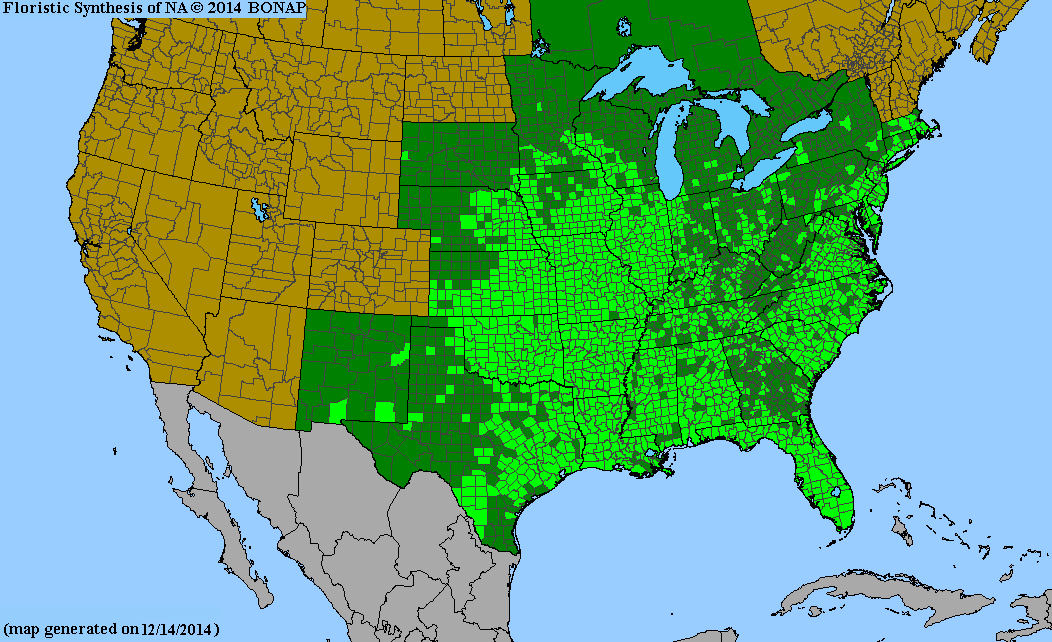
Partridge pea is native to Tennessee and throughout much of the rest of the Central and Eastern U.S.
The only place I've seen it growing wild (and it might actually have been planted there) was alongside a parking lot in a South Florida nature preserve.
These plants are growing in full sun on unamended, compacted clay soil with very little supplemental irrigation. (I think I've watered them by hose a few times so far this year.)  As you can see, they appear to be thriving.
Per the USDA:

[Partridge pea] seed is one of the major food items of northern bobwhite and other quail species because it remains in sound condition throughout the winter and early spring. Partridge pea was found to be one of the most important fall and winter foods of bobwhite quail in Alabama. Partridge pea seeds are high in phosphorus content and protein value, and low in crude fiber and lignin making digestibility generally high.

Seeds of this legume are also eaten by the greater and lesser prairie-chicken, ring-necked pheasant, mallard [and] grassland birds.

Partridge pea often grows in dense stands, producing litter and plant stalks that furnish cover for upland game birds, small mammals, small non-game birds, and waterfowl.

Partridge pea is considered an important honey plant, often occurring where few other honey plants are found. Nectar is not available in the flowers of showy partridge pea but is produced by small orange glands at the base of each leaf. Ants often seek the nectar and are frequent visitors. The common sulfur butterfly lays its eggs on the leaves, and the larvae use the leaves as a food source.

Partridge pea is considered an excellent species for planting on disturbed areas for erosion
control and improving soil fertility. It establishes rapidly, fixes nitrogen, reseeds, and slowly decreases as other species in the seeding mix begin to dominate the site. Nitrogen fixation is greatest during the flowering stage. To help prevent weed establishment and control soil erosion along county roadsides in Iowa, partridge pea is often included in the seed mix with other forbs and grasses.

Per the North American Butterfly Association:

Cloudless Sulphur, Sleepy Orange, and Little Yellow caterpillars all use Partridge Pea as a food source. All three of these butterflies range widely over the southern U.S., with Little Yellow’s range being restricted eastward.

Partridge Pea is also used as a food source by Ceraunus Blue caterpillars which are common in far southern regions, usually late in the summer; found all year long in southern Florida and the Lower Rio Grande Valley, Texas.

Gray Hairstreak caterpillars also include Partridge Pea as a caterpillar food plant in addition to countless other plants.

Instagram

Follow Aaron Dalton on Feedio

Friday, September 9, 2016

Bees, Soldier Beetles, Cats and Butterflies - Oh My!

Carpenter bee on reblooming Vitex agnus-castus (chaste tree)


Can you spot the Very Fuzzy Caterpillar?

How about now? It's a milkweed tussock moth (a.k.a. milkweed tiger moth) on a swamp milkweed (Asclepias incarnata)

Two milkweed tussock caterpillars also seem happy to feed on a different species of milkweed - Asclepias viridis (green antelopehorn)

Soldier beetle on false sunflower (Heliopsis helianthoides)


Butterflies like to feed on false sunflower too!

They also feed on blanket flower (Gaillardia x grandiflora)


Instagram

Follow Aaron Dalton on Feedio

Thursday, May 12, 2016

Class of 2016 -- Oenothera fruticosa, sundrops


The sundrops have opened! Today is the second day I've seen flowers on Oenothera fruticosa.  
These are really bright, cheerful flowers that are visible way across the garden.
And the red buds provide extra appeal alongside the flowers.


Why I'm growing Oenothera fruticosa in my garden...

1) It's native to Tennessee and throughout much of the Eastern U.S. from Mississippi and Florida in the south all the way up to Michigan and New Hampshire in the north.

2) Virginia Native Plant Society calls it drought tolerant and deer resistant, able to grow on hot sites in poor dry soils with diurnal flowers that attract butterflies

3) Nicole Selby, a Gardener at The Scott Arboretum in Pennsylvania told me that O. fruticosa (which is also known as "narrowleaf primrose") seems to be a good plant for wildlife with insects visiting the flowers to feed on nectar, birds eating the seeds and mammals nibbling on the roots.

(That last bit about mammals eating the roots could be worrisome, but since O. fruticosa has a reputation of spreading both by seed and roots, perhaps the mammals just help keep the plant in check?)

4) Asheville Botanical Gardens says that sundrops can bloom for two months, attracting pollinators including sphinx moths, hummingbirds, honeybees and bumblebees. The foliage may have an evergreen reddish presence in winter. 

Do you grow sundrops? If so, what has been your experience with this plant?

Instagram

Follow Aaron Dalton on Feedio

Monday, October 12, 2015

What a Difference Six Months Makes -- Lantana camara 'Miss Huff'


This is my first year growing Lantana camara, a flowering plant from the tropical regions of Central and South America.

It's my understanding that L. camara grows into a large shrub in its home range or other tropical environments, but here on the border of USDA zones 6 and 7, it's only marginally hardy. It's my understanding that it will die to the ground this winter and (hopefully!) resprout in the spring. Even if it does act as a perennial here, I doubt it would get bigger than it did this year (about 2-3 feet tall and wide).

I chose the 'Miss Huff' cultivar because it is reportedly the most cold hardy L. camara available.

My wife was skeptical at first, which is understandable because the two plants we purchased looked like this when we first brought them home in April and stayed about the same size into May:

Lantana camara in spring 2015, first year in the garden


Today, they look like this:


Lantana camara in October 2015, still first year in the garden! These flowers have bloomed non-stop for months.

It took the butterflies a little while to discover the plants, but especially in late summer and into early autumn (August, September and October), the two L. camara plants have been aflutter with butterflies throughout the day.

Not only are the flowers pretty to people, but clearly they are the cat's meow to butterflies.
Hopefully, 'Miss Huff' will survive the winter and come back next year (I'll let you know!), but regardless these plants offer so much beauty throughout the summer and autumn that I'm planning to add a few more to the garden next spring. Even if they only behave as annuals, I think they'd still be worth having in your garden.

Lantana camara does seem to prefer a good bit of sun. The plant that was in a mostly sun setting flowered and grew a bit better than the one that received afternoon shade from a Vitex agnus-castus (chaste tree).

With just a bit of supplemental water early in the summer to help them get established, both plants proved extremely heat and drought tolerant. The flowers are self-cleaning (i.e., there's no need to deadhead) and the plants bloom profusely and cheerfully for months and months.

I do believe that L. camara is invasive in various tropical or subtropical parts of the world, including in parts of the U.S., especially along the Gulf Coast. In Texas, the problem seems to be limited so far to Austin and points south. In Florida, it is considered a Category I invasive as it displaces or hybridizes with native plants.

As far as I know, it is not considered at all invasive here in Tennessee. As I said, I think it's only marginally hardy here to start.

If you live in a warmer zone and feel you must have Lantana camara to feed butterflies, please look for a cultivar that is considered sterile or seedless.

Actually, per Clemson, I see that 'Miss Huff' is supposed to be sterile! Hooray!! This makes me feel even better about growing this cultivar. I also suppose it explain why I haven't seen any fruit on Miss Huff despite lots of pollinating action going on. Good deal.


Instagram
Follow Aaron Dalton on Feedio

Thursday, December 4, 2014

Travel Report from Amsterdam - Hortus Botanicus Garden


One of the horticultural highlights of my three-week trip to Europe was visiting the Hortus Botanicus botanical garden in Amsterdam.

Though the garden is quite petite by U.S. botanical garden standards (only 3 acres), but it does manage to pack an impressive 4,000 species into that space. It also definitely has an edge over North American botanical gardens in terms of longevity since it was founded back in 1638, more than a century before the United States declared its independence from Great Britain.

Here are some of my favorite sights from the Hortus Botanicus in Amsterdam:

As soon as we stepped into the garden, my wife noticed this frog hopping across a gravel path. Always a good sign when the local garden ecosystem can support frogs!


New England Aster (Symphotricum novae-angliae), it's a pretty plant if you focus on the tippy-top and ignore the 5-6 feet of dead and dying foliage underneath. Also note that the garden had to corral the plants with a cord to keep them from flopping all over the place. In short, a vivid illustration of why there might be better ex-Asters for your garden. 
Honeybee hive hidden in a corner of the garden

This is Decaisnea fargesii, an Asian tree known colloquially (for obvious reasons) as Blue Bean, Blue Sausage Fruit or the unforgettable Dead Man's Fingers. Having only read about this in books, it was fun to see it in person for the first time! Not only does it make a eye-catching ornamental, but the fat long blue seedpods can be split open to reveal an edible and potentially sweet pulp (along with reportedly inedible seeds). I did not sample the fruit in Amsterdam. Unfortunately, Blue Sausage tree apparently cannot tolerate drought or hot summer climates, which I suppose explains why it's growing in cool Amsterdam and why I've never seen it in Tennessee.
Hortus Botanicus Amsterdam has a marvelous Butterfly Greenhouse. Here you can see butterflies emerging from their chrysalises. 

The butterflies are raised on site in a separate greenhouse that's normally off-limits to the public (although I was able to sneak a peak). These are some Very Hungry Caterpillars!
I had a chance to pet this fuzzy caterpillar and see the chrysalis that this species builds. The caterpillar felt soft as a teddy bear. (But don't assume that any fuzzy-looking caterpillar is safe to touch -- some of them can pack a hidden punch!)


I believe this is the same species of butterfly as in the photo directly above. Notice how the colors fade with age. 

Here are some amazing Glasswinged butterflies with transparent wings that appear to have just emerged recently from their chrysalises.


One of my favorites - the Owl Butterfly!

Another Owl Butterfly


Zebra Longwing butterfly, I believe


This was a rather interesting tree. First, as you can see, it's been grafted and the graft is quite obvious since the very bottom of the trunk looks dramatically different from the rest of the tree. I don't remember the identity of the rootstock, but the scion (the top part of the plant) is apparently a species called Manna Ash or Plume Ash (Fraxinus ornus). I'd never seen this kind of tree before and outside of its handsome ornamental characteristics, I was interested to read that the tree apparently produces a sugary sap (known as Manna) that can be used as a gentle laxative!

This is a robust clump of Kalimeris pinnatifida, also known as Double Japanese Aster. Highly recommended by Allan Armitage at University of Georgia. I hope to try this in my garden at some point. Clearly it seems to have a flopping problem, at least when grown in a somewhat shady spot. (Maybe it's more upright with more sunshine?) Regardless, the foliage certainly looks much better than that of the New England Aster.


This is Osmanthus heterophyllus, also known as False Holly for obvious reasons. I'd like to try some of this in my garden, but it's very hard (impossible?) to find locally except for the highly variegated "Goshiki" variety. Goshiki is nice and I may end up buying that by default, but I wish that some of the local nurseries started carrying one of the green cultivars.
Finally, I bring you a Plant Behind Bars!
Yep, it's a caged Wollemi Pine.
Don't worry - the plant is not dangerous to people!
Rather, it's people that might be dangerous to the plant, and since this is a very rare and endangered species -- once thought to be extinct -- the Hortus Botanicus is determined to protect it.
It was quite a neat experience to see this so-called living fossil, a link to a faraway era.


Thursday, September 4, 2014

A Species Is a Species Is a Species (Except When It's a Cultivar)

Dr. Douglas Tallamy
Professor & Chair of Entomology and Wildlife Ecology at the University of Delaware
I recently had the privilege of speaking with one of my horticultural heroes - University of Delaware professor Dr. Douglas Tallamy - to discuss his ongoing research on cultivars conducted in partnership with the renowned Mt. Cuba Center.

In addition to his scientific research, Tallamy is a darn-good writer and author of the wonderful book Bringing Nature Home, which opened my eyes to the importance of biodiversity in our own backyards and showed us all of us can make a difference by supporting vibrant ecosystems in our gardens.

Tallamy is working with Mt. Cuba Center to research cultivars of native plants. What is a cultivar? I'll answer that question by quoting extensively from Mt. Cuba's Executive Director, Jeff Downing:

The newfound popularity of native plants seems like very good news for the environment. But it’s complicated. The thing is, the vast majority of native plants available in the trade are cultivars. A cultivar is a plant that has been selected for a particular attribute or combination of attributes that can be maintained through propagation. Cultivars are often selected (or created through hybridization) for characteristics like flower color, hardiness, disease and/or drought resistance, interesting foliage, or any other noteworthy feature. In order to perpetuate a distinguishing characteristic, most cultivars are propagated clonally. As a result, for many cultivars, every plant is genetically identical.

Sometimes funny things happen when plants are selected for particular attributes. When roses were bred for disease resistance and floral beauty, they lost their scent (which prompts the question: Would a rose, by any other name, smell like anything?). When the Red Delicious apple was selected for its attractive shape and color, we sacrificed flavor.

And that is where it gets interesting. Are native plant cultivars that have been selected for particular attributes as attractive to insects and pollinators as the naturally occurring species? As gardeners we hope so, since these ecological benefits are a big part of what we hope to gain by choosing native plants. But the reality is that we don’t know, because the ecological value of native plant cultivars hasn’t been widely studied. Until now.

Mt. Cuba Center has funded two graduate student fellowships to research the ecological value of native plant cultivars and Doug Tallamy is participating in part of that research. Along with Mt. Cuba Center Fellow Emily Baisden, he's looking at whether cultivars of native woody plants attract as many leaf-eating insects as naturally occurring species.

(But wait, I hear you cry, why on Earth would I want to attract leaf-eating insects? Well, I'll give you two reasons - some of those leaf-eating insects will turn into beautiful butterflies and moths. And some of them will provide food for birds.)

Here's a snapshot of my conversation with Dr. Tallamy:

Garden of Aaron (GOA): Can you tell me a little about your motivation for conducting this research?

Tallamy: Lots of people tell me that they would like to increase the percentage of native plants in their yard, but all they can find at nurseries are cultivars. So people ask me, "Are they as good as the species?"

The answer is that no one has compared straight species to cultivars in terms of their impact on pollinators or on caterpillars eating their leaves. If you are putting plants in your yard to encourage complex food webs, to support insects who will feed the birds, you want to know whether these plants will be as good in those ways. That's the motivation for the Mt. Cuba project. I've made some predictions for 5-7 years now about the impact of cultivars, but it will be nice to have some data to see what's really happening.

GOA: What are the parameters of your research?

Tallamy: It's impossible to test every cultivar, so we're looking at the typical types of genetic changes that create cultivars. Some cultivars take a green leaf and make it purple or variegated. Others take a fat plant and make it skinny or a tall plant and make it short.

Then there are lots of selections involving changes to the flowers, mostly changing the shape, the petal size, the colors and so forth. What will that do to pollinators?

Finally you have cultivars that are focused on disease resistance. If you important resistance into a a plant, does that also impact the insects that pollinate or feed on it?

GOA: Which plants are you investigating?

Tallamy: We are looking at five different cultivars of Cornus sericea [Red Osier Dogwood]. We are looking at flowering dogwood, blueberries, red cedar, red maple, sweetgum, stag-horn sumac, arrowwood, winterberry and a disease-resistant Princeton Elm.

GOA: How is the study structured?

Tallamy: All comparisons are within a species - that is, we are comparing the straight species to the cultivars. They're all growing at a common garden in Mt. Cuba Center with five plants of the parent species growing in a circle. Then we plant the cultivars in clumps around that circle. If an herbivore can find one plant, it should be able to find the others too. Essentially they're located in the same space and planted on the same day.

GOA: How did you choose which plants to include in the study?

Tallamy: We picked plants that we know have insects associated with them. So for instance, Itea [e.g., Itea virginica, Virginia sweetspire] does not have any caterpillar association. Elm trees are high in caterpillar associations. We are looking specifically for caterpillars and vacuuming for anything else. Actually, we're finding more insects than we had thought we would. We've conducted a couple of samplings so far, but it's still early in the study.

GOA: Do you care to make any predictions as to what the study will uncover? Do you have any hypotheses at this point?

Tallamy: If you make a green leaf purple, you're adding anthocyanins. These could affect feeding behavior.

Variegated leaves take away chlorophyll, so my prediction would be that those plants would support fewer lepidoptera [i.e., moths and butterflies].

In terms of changing a plant's habit - making it shorter or taller - unless that genetic change also alters leaf chemistry, I don't see why it should be a factor for herbivores, so I would predict no change in terms of the caterpillars it would attract.

Disease resistance could certainly affect herbivores. When a plant manufactures a chemical to protect itself from disease, there could be some crossover into deterring herbivores.

It's easy to predict how changing the shape or color of a flower might impact pollinators. Flower energy budgets are tight. When you make petals bigger, you're probably reducing nectar. Double flowers remove the flower's reproductive organs and turn them into petals [i.e., if the flower is sterile and does not produce pollen, there is no reason for pollinators to visit].

In terms of changing colors, I don't know how that will affect the UV spectrum [that many species of insects can visualize]. It could have an impact on pollinators.

GOA: Would it be possible for the horticultural industry to produce cultivars that might attract more pollinators than a straight species?

Tallamy: Sure, you could select for traits that enhance pollination or produce greater nectar load. It might not make the plant prettier, but you could advertise it by saying it would help gardeners to attract more butterflies. I'd say that it's almost certain it would sell for that reason alone.

GOA: What do you hope will be the impact of this research?

Tallamy: I hope that people to will start to think about selecting plants based on their function, not just on their aesthetics. If we can accomplish that goal, I'd be happy.

I'd also love to see traits moved along in ways that don't involve cloning. It would be good if we could have some kind of breeding program that would cross plants and still maintain desirable traits while preserving genetic variability. Red maples are naturally swamp plants that hate dry city climates, but if you're looking for a red maple that will do well under city conditions, you can go to the mountains of Pennsylvania and find selections that have already been made for you. There you'll find red maples growing that have been bred through natural selection to survive heat, drought, wind, cold and very little water. You could collect a number of those, interbreed them and produce plants that have the same survival traits without relying on cloning.

We need to do that kind of native plant exploration for harsh city conditions. It makes no sense at all to say that only plants from China will grow in urban conditions. You can look around city lots and see lots of native plants growing. Washington DC, for instance, is filled with oaks and elms, so it's just an urban legend that native North American plants won't grow in our cities.

GOA: To get back to a statement you made at the start of our interview, why is it so hard to find straight species plants instead of cultivars in the nursery trade?

Tallamy: It's a question of supply and demand. If nurseries thought they could sell the straight species, they would do it. But they have spent a century with the mindset that consumers will only buy plants with fancy names and that you have to introduce new plants every single year like the fashion industry.

Now there's growing consumer demand for natives that will do something in our yards instead of just looking nice. Of course, to find a plant that does both - that looks nice and supports the food web - would be the best option.

GOA: Thank you for your time, Dr. Tallamy. Good luck with your research!


Editorial note -- Dr. Tallamy has compiled a spreadsheet called "Host Plants" showing which tree genera host the most Lepidoptera species. According to the spreadsheet, Quercus (oaks) top the list, attracting more than 500 species of lepidoptera, most of them native. Presumably the spreadsheet is targeted for North American audiences when it characterizes genera and lepidoptera species as native or exotic.