Showing posts with label Viburnum dentatum. Show all posts

Wednesday, May 23, 2018

In the Merry Month of May...


...there are arrowwood (Viburnum dentatum) buds...

Flower buds on arrowwood viburnum (Viburnum dentatum)


...and blooms.

Flower clusters on arrowwood (Viburnum dentatum)


An arrowwood viburnum volunteered next to the oakleaf hydrangea (Hydrangea quercifolia) in the front foundation, which is fortuitous since they both have complementary white flowers and bloom around the same time...

Flower panicles blooming on oakleaf hydrangea (Hydrangea quercifolia)


I planted that oakleaf hydrangea way too close to the house. (I was young and foolish in those days. Unlike now, when I'm a bit older and still foolish.) As a result, I had to trim back some of the stems to the ground over the winter, and I can see where I'll probably need to do more trimming next winter. But for now, I end up with lovely vignettes of the white flowers blooming against the white porch railing...

White flowers of oakleaf hydrangea (Hydrangea quercifolia) blooming against white porch railing


There are no flowers yet on the new oakleaf hydrangea that I planted last autumn, but it seems to be settling in nicely. I sited this one in the understory shade of a crape myrtle, where I'm hoping it will thrive with filtered sunlight all day...


Nearby Clematis 'Crystal Fountain' has been putting a great show for weeks and weeks. I completely failed in my attempt to get this to climb into the crape myrtle, but it sprawls charmingly and forms an attractive groundcover. I cut this back near the ground over the winter, so this is pretty much all new growth. I grumble a little about Crystal Fountain since I don't believe it provides any benefits to wildlife, but even wildlife gardeners need a few purely aesthetic marvels in their gardens, right? (Just a reminder - Crystal Fountain clematis flowers can look lovely for at least a week floating in a bowl of water on the breakfast table...


The 'Carefree Beauty' rose really does live up to its name. It's the only rose I grow and all I've needed to do so far is prune it back to keep it from swallowing up the sidewalk. I don't fertilize, I don't spray, I rarely water it, and I still get two powerful flushes of blooms in spring and autumn. I'm really just winging it when it comes to rose pruning. I cut it back fairly hard this winter and got a wonderful spring bloom, but all the soft lush foliage got a bit floppy. I think some gardeners try for the floppy look, but (grass always being greener and all that) I sort of wish the bush was a bit more upright and structured. So I may prune it back again when this bloom finishes. I'll let you know whether that works or can go into my bulging file of Not So Great Ideas.


I totally gave up on rose verbena (Glandularia canadensis). It's got a reputation for being floriferous, but finicky. And it's certainly lived up to that reputation in my garden, flowering its heart out and then vanishing. But a couple of rose verbena plants have either come back from the roots or volunteered, and this one has put on a fantastic show this year.


Finally, I don't remember planting this penstemon and have no idea what type or species it may be, but it sure is pretty!


What are some of the shining stars in your May garden? 

Instagram

Follow Aaron Dalton on Feedio

Tuesday, September 27, 2016

Doomed Caterpillars

Caterpillar (perhaps hummingbird clearwing moth, Hemaris thysbe) with braconid wasp cocoons on Viburnum dentatum 'Chicago Lustre'


In my last post, I talked about looking for a caterpillar and finding a small tree frog on an arrowwood viburnum (Viburnum dentatum 'Chicago Lustre').

Today, on the same shrub, I found two large caterpillars that had been attacked by some sort of parasitoid wasps.

The wasps - which I believe belong to one of the 15,000-plus known species of 'braconid wasps' - lay their eggs in the caterpillars. The larvae mature inside the caterpillar, then emerge to construct cocoons on the caterpillar's back, where they can metamorphose into wasps and continue their life cycle.


Incidentally, I believe the caterpillars are the larvae of the hummingbird clearwing sphinx moth (Hemaris thysbe). The adult moth is quite beautiful.


Instagram

Follow Aaron Dalton on Feedio

Tuesday, September 20, 2016

Looked for a Cat, Found a Frog


A couple of days ago, I spotted this green caterpillar nicely camouflaged as it munched away on an arrowwood (Viburnum dentatum) leaf.

Unknown caterpillar snacks on arrowwood (Viburnum dentatum 'Chicago Lustre') leaf


So this morning, I thought I would take another look at the shrub to see if I could spot the caterpillar again.

Couldn't find it, but I did discover this little fella looking quite at home on a leafy perch!

I think this might be a young eastern gray treefrog, but I'm no herpetologist!


I was so happy to see a frog in my garden for the first time ever! :)

Instagram

Follow Aaron Dalton on Feedio

Monday, October 19, 2015

Cultivars vs. Straight Species -- Viburnum Dentatum / Arrowwood Viburnum


So where do you stand on the whole cultivar vs. species issue?

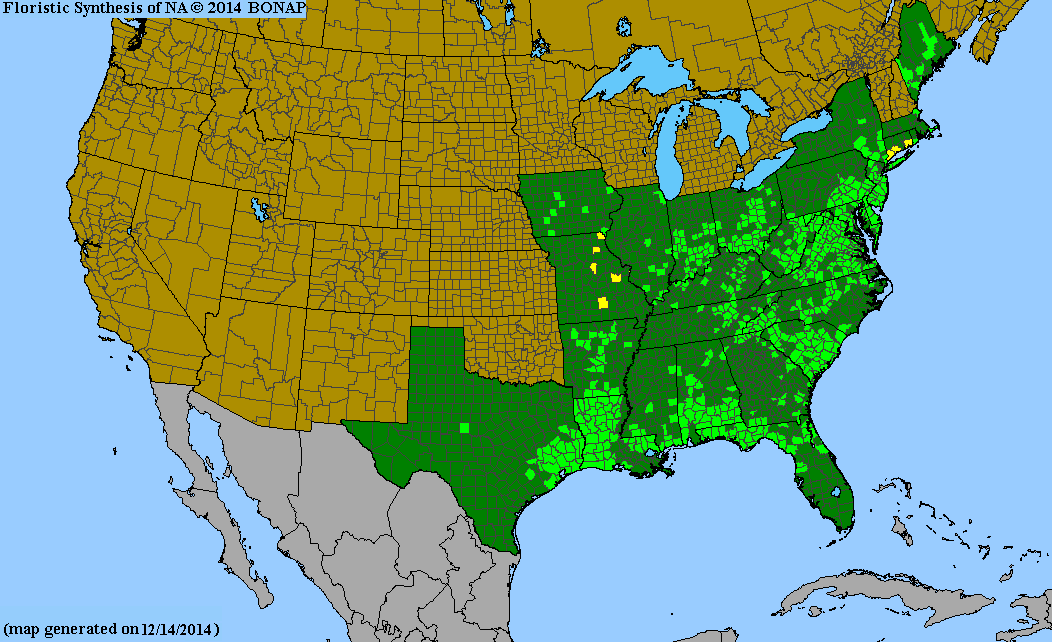
Here at Garden of Aaron, I grow three types of Viburnum dentatum (arrowwood viburnum), which is native throughout much of the Southeast, Midwest and Mid-Atlantic and up into New England.

Here is how the straight species looked in early October:

Here is the form of a Viburnum dentatum (straight species), growing in full sun and awful solid clay 'soil' (1st year in the garden)

Here's a close-up of the foliage, which I'd say still looks pretty darn fresh for early October!


Here is how the 'Pearl Bleu' cultivar looked at the same time:


Here's V. dentatum 'Pearl Bleu' -  as you can see, much of the foliage has folded in half and quite a few leaves have burnt edges.


And here is the 'Chicago Lustre®' cultivar, also on the same day:

By contrast, the foliage on the 'Chicago Lustre' cultivar of V. dentatum looks fresh, lush, healthy and deep green. 

Remember, these are all the same species - just different cultivars - growing in very similar conditions.

In fact, here's a side-by-side shot to show you that 'Pearl Bleu' and 'Chicago Lustre' are growing literally side-by-side. They're both on the northwest side of the house, which gets mostly shade all morning, but bakes in a surprising amount of sun on summer afternoons. In fact, I'd say 'Chicago Lustre' may actually get more of the afternoon sun and perhaps provides a bit of shade to its 'Pearl Bleu' companion.

'Pearl Bleu' on the left, 'Chicago Lustre' on the right. Both shrubs were planted at the same time. Both actually died back to the roots (after I stored them in the garage over the winter and shamefully neglected them), but 'Chicago Lustre' has clearly roared back more vigorously than 'Pearl Bleu'...


Interestngly, the straight species produced more fruit this year than either of the cultivars (although the berries on Chicago Lustre appeared to be larger and more plump than those on the species). All the Viburnum dentatum berries on the species plant and 'Chicago Lustre' have already been devoured by the birds. (I suspect that a mockingbird and a blue jay divided the ones on the species plant.)

I'm planning to add a few more V. dentatum cultivars to the garden this autumn (from Classic Viburnums nursery, which has an amazing selection of the genus), so perhaps I can report back in a year to give a comprehensive overview of the relative strengths of the different cultivars vs. the species.

Oh and then there's this little seedling that popped up on the corner of the house right near where 'Chicago Lustre' and 'Pearl Bleu' could have canoodled. I've transplanted it to someplace where it will have a bit more room to spread its wings...

I'm fairly sure that this is a Viburnum dentatum seedling. It seems to have taken the transplantation well. You'll notice that the foliage is lighter-green and has more of a matte finish, but otherwise seems just as clean and healthy as the 'Chicago Lustre' foliage. 


How about in your garden?

Do you like growing straight wild species plants or do you seek out cultivars?

Personally, in some cases I favor the straight species and in other cases I see the merits of cultivars.

For instance, I chose to grow the 'Miss Huff' cultivar of Lantana camara because it is supposed to have better cold hardiness than the species and I was worried that the straight species would not survive here in Tennessee. (Actually, I'm not sure one can even find a straight species Lantana camara at nurseries. The only ones I've seen for sale are different cultivars.)

With Viburnum dentatum, the jury is still out for me. I'd say that the species has done much better so far than 'Pearl Bleu', but I quite like the 'Chicago Lustre' cultivar.

In other cases - for instance with Echinacea purpurea (purple coneflower) - I only grow the straight species. For one thing, I've read that the species is tougher and has greater longevity than the cultivars.

The cultivars of many flowering plants are bred to have bigger, fancier, 'double' flowers. But if you garden to help the bees and other pollinators like I do, you're probably better off choosing a plant with simpler, single flowers. As GardenersWorld.com says: "Most double flowers are of little use [to bees], as they're too elaborate. Some are bred without male and female parts, while others have so many petals that bees can't get to the nectar and pollen. So single dahlias are popular with many bees, while doubles are usually ignored."


Instagram
Follow Aaron Dalton on Feedio

Monday, September 21, 2015

Weed Alert! Beefsteak Plant / Perilla frutescens

Perilla frutescens is a pretty weed, but apparently here in Tennessee, it's pretty toxic to cattle and other grazers. FYI, the shrub in the background is Viburnum dentatum 'Pearl Bleu'. The herbaceous plants covering the ground are mostly native columbine (Aquilegia canadensis).


Since I don't put mulch heavily or put down any weed-suppressing chemicals, I tend to have a lot of plants pop up in my garden beds.

Some of them are the usual weedy scourges (crabgrass, spurge, clover, oxalis, etc.), but sometimes there are plants I don't recognize and have never seen before.

Sometimes, these unknown seedlings can be exciting volunteers -- like my discovery of a Sassafras albidum seedling this summer! And I'm pretty sure that my Viburnum dentatum (arrowwood) shrubs have produced a seedling, which I'll try transplanting in the weeks ahead.

But then there are discoveries that initially seem exciting, but ultimately turn to disappointment.

Such is the case with the plant shown above. I thought it might be one of the Scutellaria (skullcap) native wildflowers. I've only seen photos of those plants online, so I wasn't sure what would look like in person.

Anyway, I had my doubts (the flowers from the Scutellaria photos looked much bigger than the blooms on my mystery plant), so I checked with an extremely helpful local expert (Amy Dismukes, UT/TSU Williamson County Extension Agent) and she identified the seedling as Perilla frutescens (beefsteak plant).

Now Perilla is native to Asia and unfortunately, it turns out that it is invasive in parts of the U.S., including Tennessee (according to the National Park Service).

So I ripped it out.

A closer look at Perilla frutescens (beefsteak plant, shiso) before it met an untimely demise at my hands

Could I have eaten it? I'm not sure. In parts of Eastern Asia (e.g., Japan, Korea, China and Vietnam), I believe that Perilla frutescens is used as an herb/seasoning. I'm pretty sure that I've eaten  the occasional shiso leaf (as Perilla is called in Japanese cuisine) as an accompaniment to sashimi or chirashi. It had a very strong, distinctive flavor - not unpleasant, but I can't imagine eating more than a few leaves at a time.

On the other hand, I presume/suspect that I was eating a Perilla cultivar that had been bred for edibility. University of Tennessee says that the plant is highly toxic to cows and horses, and in fact causes more cattle deaths in the state than any other plant.

Meanwhile, a Purdue University paper cites research showing that a chemical compound called a ketone (Perilla ketone, to be specific) may be the culprit as far as the toxicity is concerned. Interestingly, Purdue notes that this ketone was found in P. frutescens samples from Tennessee, but not in seed from Oklahoma plants nor in commercial samples from Japan.

What does this all mean? As I see it, there might be at least a few plausible interpretations of this data:

1) P. frutescens is evolving new chemical defenses here in North America.

2) Perhaps wild P. frutescens has always had chemical defenses, and the cultivated versions grown in East Asia had those defenses bred out of them by humans over a period of hundreds or thousands of years? In that case, perhaps the presence of the ketone in the Tennessee specimens is a reversion to a defense that had been lost? Wikipedia notes that wild North American shiso often has lost the fragrance that makes it a desirable herb and that these wild, weedy plants are not suitable for eating (due to the presence of the Perilla ketone).

3) Perhaps there is great variability in the species (the fact that seeds from wild P. frutescens plants in Oklahoma did not seem to contain this ketone lends credibility to this hypothesis) and it's luck-of-the-draw as to whether a given P. frutescens plant contains Perilla ketone or not.


So, would I personally nibble a wild Perilla frutescens plant growing in Tennessee?

No, I would not.

And since this is a weedy, exotic invasive plant in at least some parts of the U.S., should you (North American readers) come across it growing in your yard, field or garden, I'd encourage you to remove it.

Get more free advice (worth at least what you pay for it!) by subscribing to Garden of Aaron by email. You'll get a quick update whenever I publish a new post. What could be nicer? (A weed-free garden. Yep, that would be nicer...)

Friday, April 10, 2015

No Damage, No Cry


The last weekend of March, we had a big old cold front sweep through Middle Tennessee, sending temperatures plunging into the low 20s where I live (as low as 17 degrees a bit west of Nashville in a community called Kingston Springs).

I was worried.

Many of the perennials and trees were starting to leaf out. Would they come through the cold snap OK?

I'm not sure why I was quite so worried. Last year, we had an even later cold snap in April and most of the plants managed just fine, with the exception of some exotics like rose of Sharon, boxwood, vitex and crape myrtle.

We were probably ~6 degrees colder this time, but since the cold snap arrived weeks earlier, none of those sensitive plants mentioned above had even leafed out yet (except the evergreen boxwood of course, but I didn't notice any damage on those...perhaps they haven't pushed new foliage yet?)

Anyway, here are pics (taken April 3rd) of a bunch of plants from around the garden that seem to have made it through the freezing temps just fine. If you're looking for strong, resilient perennials, I present these for your consideration:

Typically I don't much care for plants with yellow or golden foliage, but I've made an exception for Abelia x grandiflora 'Rose Creek'. Just planted last autumn, this is its first spring in the garden. (Update - As Tammy at Casa Mariposa points out, this is probably not 'Rose Creek', which actually has green foliage. So unfortunately I don't know which Abelia cultivar I have here...)

Ajuga genevensis, blue bugle, Geneva bugleweed

Platycodon grandiflorus, balloon flower

Baptisia australis, blue wild indigo, this is its third spring in the garden and I'm happy to see a number of stems emerging. Baptisias have a reputation as long-lived perennials that can take a few years to establish a presence in the garden. I'm a little worried that three other small baptisias that I planted last autumn have not yet emerged from dormancy. I hope they're OK...

Amsonia 'Blue Ice' (a hybrid of unknown parentage). I have a feeling this is a better garden plant than the much-hyped Amsonia hubrichtii, Arkansas blue star.

Clematis 'Crystal Fountain' embarking on its fifth year in the garden. I love the fact that this plant has fully leafed out and budded by late March / early April!

Coreopsis verticillata 'Zagreb' -- this is its second year in the garden and I'm pleased to see that it seems to have multiplied and spread exponentially. You're looking at two clumps here, each of which only had a few stems last year.

Juniperus virginiana 'Grey Owl' - this relatively low-growing eastern red cedar that typically has bluish foliage, but now it seems frosted with golden highlights, which makes me think perhaps it is about to push new growth

Pleased and surprised to see new growth emerging on the Hakonechloa macra, Japanese forest grass. It didn't perform well last year and I thought it might not survive the winter, but I'm glad to be proven wrong. I've been told these grasses can also take a few years to get established, so perhaps it will do better this year with a bit of pampering.

Could this be new growth from Hosta 'Golden Tiara'? Not sure. I planted a few specimens of this hosta last spring and I thought they had all croaked, but again, I may have been far too quick to write off these plants. Can't imagine what else this could be...

New growth suddenly emerged on this Hypericum densiflorum, planted last autumn

Seemingly overnight, the lilies that I transplanted to a sunnier spot in the backyard with absolutely awful heavy clay soil (pottery quality) have pushed up thick gorgeous stems. (This was one of the few plants that suffered some foliar damage from the freezing temperatures the last weekend in March. You can see a few dead brown leaves on the ground that got blasted by the cold, but they seem to have been rapidly replaced by new growth.)

Hydrangea quercifolia, oakleaf hydrangea 'Snowflake' embarking on its third full year in the garden (planted November 2012). Oakleaf hydrangeas have some of the most beautiful foliage of any plants, IMHO.

After much anticipation, I was overjoyed to see new growth at last on the Rhus aromatica, fragrant sumac 'Gro-Low'

Here are some buds coloring up on the Gro-Low sumac. This is the second year in the garden for my three Gro-Low shrubs.

Viburnum dentatum, arrowwood viburnum -- I was so pleased with the performance of two arrowwood cultivars (Pearl Bleu and Chicago Lustre) last year that I ordered and planted a straight species arrowwood last autumn. I'm really charmed by this fresh new foliage with the rusty tinge on the edges.

I have to admit I was a little bummed that I only had a couple of flowers on my Jasminum nudiflorum (winter jasmine), another plant that I just added to the garden last autumn. Still, so far I'm liking the shape and color of the new foliage.

This is the time to shine for Veronica peduncularis, speedwell 'Georgia Blue'. This clump just keeps getting bigger and better every year. I wish the flowers attracted some pollinators, but at least Douglas Tallamy says that the genus serves as host for 6 native species (and 1 exotic species) of Lepidoptera.

Monday, May 19, 2014

15 Great Foliage Plants: Arrowwood Viburnum, Hidcote Lavender, Japanese Painted Fern, Gro-Low Sumac and More!


Viburnum dentatum, Arrowwood Viburnum, I believe this is the Chicago Lustre variety

Everyone loves flowers, but I'll go out on a limb (pun intended!) and state that only gardeners go gaga over foliage.

Think about it - no one buys their love a bouquet of leaves on Valentine's Day. (Well, except maybe a valentine from one gardener to another.)

Why does foliage matter so much to me? Perhaps because flowers are transient - first a dream, then a brief vision, finally a cherished memory. On the other hand, you can enjoy foliage for months and months -- all-year round in some cases.

In addition to the Viburnum dentatum shown above, here are 14 more of my favorite foliage plants as of mid-May in the Garden of Aaron:

Vitex agnus-castus (Chaste Tree) leaves

Sedum Vera Jameson, I believe
Russian Sage foliage
Russian Sage, nicely recovered from its sorry state just a few weeks ago

Hibiscus syriacus, Rose of Sharon foliage

Redbud leaves
Redbud leaves

Platycodon grandiflorus, Balloon Flower foliage
Platycodon grandiflorus, Balloon Flower foliage 
Oakleaf hydrangea foliage

Brassica juncea, Mustard Green foliage

Lemon Queen hybrid perennial sunflower foliage

Lavandula officinalis "Hidcote" foliage

Eupatorium dubium "Baby Joe" foliage

Athyrium nipponicum, Japanese Painted Fern "Pictum"

Hibiscus moscheutos, Hardy Hibiscus foliage

Rhus aromatica, Fragrant Sumac "Gro-Low" foliage

Stay tuned for more great foliage plants later this week!!