Showing posts with label clematis. Show all posts

Wednesday, May 23, 2018

In the Merry Month of May...


...there are arrowwood (Viburnum dentatum) buds...

Flower buds on arrowwood viburnum (Viburnum dentatum)


...and blooms.

Flower clusters on arrowwood (Viburnum dentatum)


An arrowwood viburnum volunteered next to the oakleaf hydrangea (Hydrangea quercifolia) in the front foundation, which is fortuitous since they both have complementary white flowers and bloom around the same time...

Flower panicles blooming on oakleaf hydrangea (Hydrangea quercifolia)


I planted that oakleaf hydrangea way too close to the house. (I was young and foolish in those days. Unlike now, when I'm a bit older and still foolish.) As a result, I had to trim back some of the stems to the ground over the winter, and I can see where I'll probably need to do more trimming next winter. But for now, I end up with lovely vignettes of the white flowers blooming against the white porch railing...

White flowers of oakleaf hydrangea (Hydrangea quercifolia) blooming against white porch railing


There are no flowers yet on the new oakleaf hydrangea that I planted last autumn, but it seems to be settling in nicely. I sited this one in the understory shade of a crape myrtle, where I'm hoping it will thrive with filtered sunlight all day...


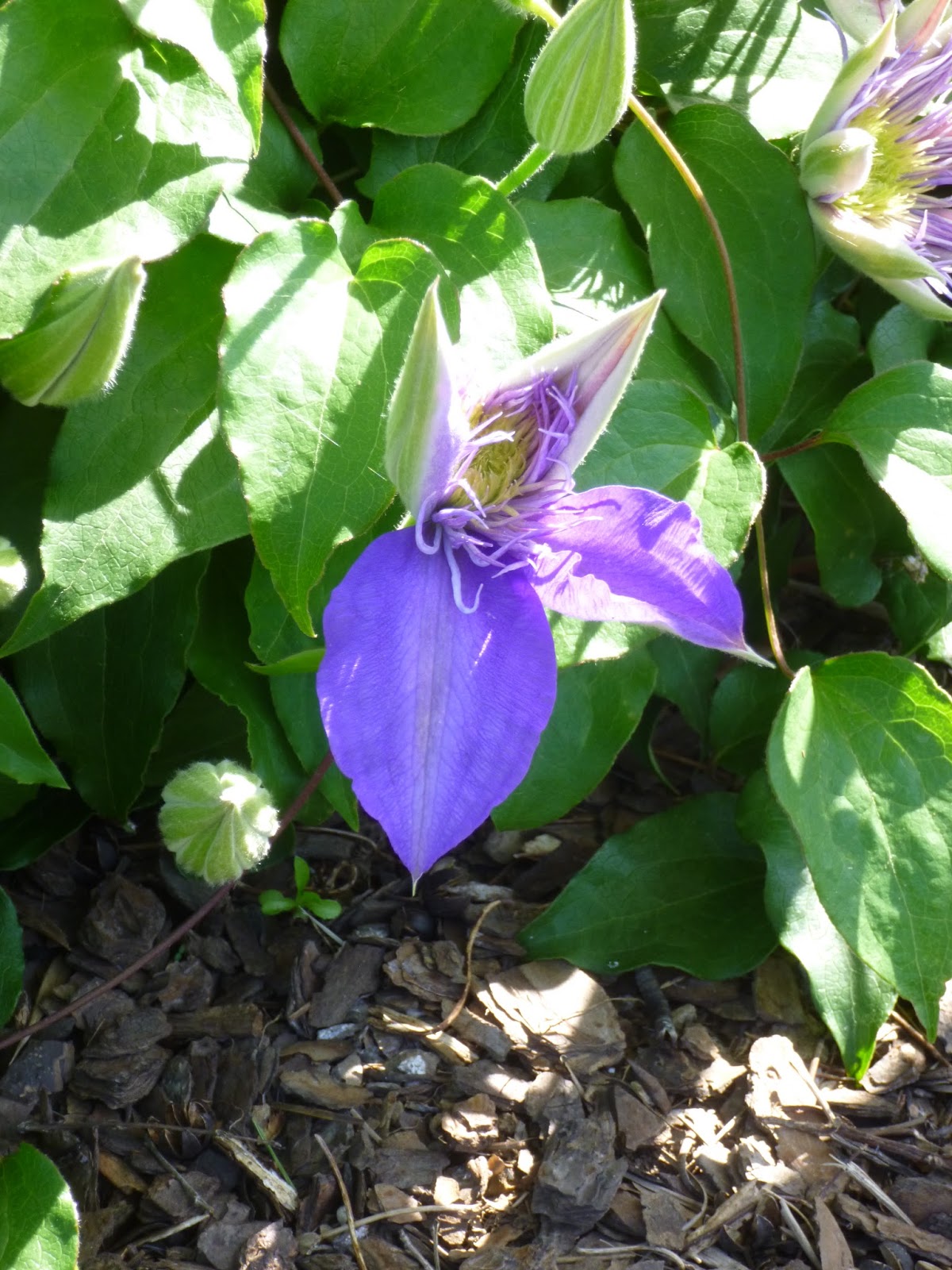
Nearby Clematis 'Crystal Fountain' has been putting a great show for weeks and weeks. I completely failed in my attempt to get this to climb into the crape myrtle, but it sprawls charmingly and forms an attractive groundcover. I cut this back near the ground over the winter, so this is pretty much all new growth. I grumble a little about Crystal Fountain since I don't believe it provides any benefits to wildlife, but even wildlife gardeners need a few purely aesthetic marvels in their gardens, right? (Just a reminder - Crystal Fountain clematis flowers can look lovely for at least a week floating in a bowl of water on the breakfast table...


The 'Carefree Beauty' rose really does live up to its name. It's the only rose I grow and all I've needed to do so far is prune it back to keep it from swallowing up the sidewalk. I don't fertilize, I don't spray, I rarely water it, and I still get two powerful flushes of blooms in spring and autumn. I'm really just winging it when it comes to rose pruning. I cut it back fairly hard this winter and got a wonderful spring bloom, but all the soft lush foliage got a bit floppy. I think some gardeners try for the floppy look, but (grass always being greener and all that) I sort of wish the bush was a bit more upright and structured. So I may prune it back again when this bloom finishes. I'll let you know whether that works or can go into my bulging file of Not So Great Ideas.


I totally gave up on rose verbena (Glandularia canadensis). It's got a reputation for being floriferous, but finicky. And it's certainly lived up to that reputation in my garden, flowering its heart out and then vanishing. But a couple of rose verbena plants have either come back from the roots or volunteered, and this one has put on a fantastic show this year.


Finally, I don't remember planting this penstemon and have no idea what type or species it may be, but it sure is pretty!


What are some of the shining stars in your May garden? 

Instagram

Follow Aaron Dalton on Feedio

Thursday, April 21, 2016

Shots in the Garden April 2016 Edition - Ajuga, Erigeron pulchellus, Agastache, Ninebark, Epimediums, Clematis, Viburnums, Blanket Flower and More!

All photos taken in the Garden of Aaron on April 20, 2016...


New redbud (Cercis canadensis) leaves against a cerulean sky.
Some of the Ajuga flowers spikes (here on A. tenorii 'Chocolate Chip') are starting to fade ... 

But the flowers of other Ajuga (such as this large patch of A. genvensis and A. reptans) are still going strong. Strangely, while Ajuga flowers seemed to attract bumblebees last year, I have not seen any bees visiting the Ajuga this year, despite the fact that the patches have grown in the interim and that larger flower patches usually do a better job of attracting pollinators.

One more patch of Ajuga (A. genevensis). This patch is in shade most of the day, although it does get strong late  afternoon sun. The other photos above were of Ajuga in mostly full sun situations. As you can see, this is an adaptable genus that grows well (in my experience) in sun or shade. I've had pretty good luck with all three species, although A. genevensis seems more dependable and a bit more cold-hardy than the common A. reptans. Ajuga reptans also seems somewhat susceptible to sudden (fungal?) dieback, whereas I have not had this problem so far with either A. genevensis or A. tenorii. All three seem to do a pretty good job of blocking weeds. I'm not sure yet whether they will play nicely with other perennials, although strong growers (such as Platycodon grandiflorus, balloon flower) seem to be able to push right through the Ajuga.


Flower clusters on Prague viburnum (Viburnum x pragense). Although the flowers are pretty, they are unscented and do not seem to attract any pollinators. Still, Prague viburnum seems to be a tough, largely evergreen (in zone 7) and fast-growing plant that has a place in border / privacy plantings.

First flower opening on Gaillardia x grandiflora (blanket flower).

Most of the emerging foliage looks fantastic on the chaste tree (Vitex agnus-castus)...

....but I have notice some stunted, curled and blasted looking foliage among the healthy leaves. Any idea what could be causing this problem?

Love this soft, ferny, feathery patch of Coreopsis verticillata (threadleaf coreopsis), a regional native.

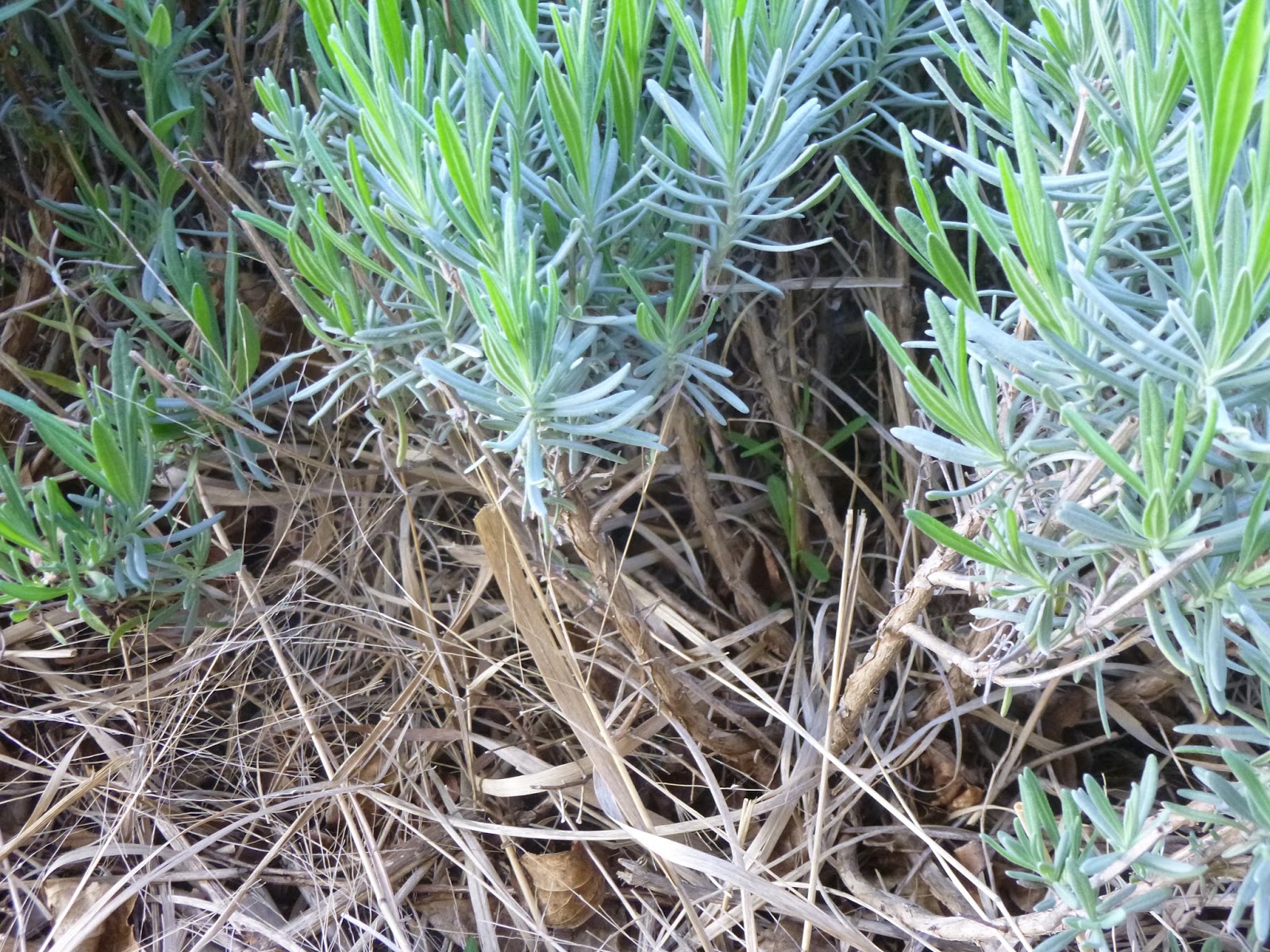
On casual inspection, this lavender hedge looks full, lush and healthy...

But peek behind the hedge, and you'll find lots of woody growth with foliage just on the tips.

I do wonder if I should have pruned my lavender back hard earlier in the spring? There was one section of the shrub that was mainly dead branches, though I did notice a bit of fresh growth near the base. So I gave that section a rejuvenation pruning as a test, and now I can see loads of fresh new growth emerging from the hard-pruned area. It makes me think I should try giving the whole shrub a hard prune next spring. Or is it not too late? Maybe I should/could still give it a hard prune now?

Any idea what this might be? Whatever it is, it's getting swamped by a large patch of Symphyotrichum oblongifolium (aromatic aster). 

The 'Crystal Fountain' clematis is starting to bloom...

Here's one 'Crystal Fountain' flower that is unfolding in an unusual asymmetrical fashion.


A month ago, lamb's ear looked like something the cat dragged in. I asked for advice on whether to prune selectively or leave it alone. By default (I got sick and was unable to work in the garden for a couple of weeks), I left it alone. As you can see, it now looks fantastic without any intervention on my part.
I love the fresh new foliage on the Alleghany viburnum (Viburnum x rhytidophylloides 'Alleghany'). Although some flower clusters on this plant have already bloomed, here you can see a cluster of buds that are getting ready to burst. In other words, the shrub has a nice, extended flower season. (Although as with the Prague viburnum, the flowers have no detectable scent and do not seem attractive to pollinators in my garden.)

Does this spell trouble? I suspect that voles have tunneled under the Alleghany viburnum. I hope they don't start snacking on its roots. Well, maybe it's just a chipmunk? Or a mouse hole?
Here's a cute little patch of self-sown Johnny jump-ups! 

The Natchez mock orange (Philadelphus x virginalis) is loaded with buds this year. This will be its third year in the garden. It's grown a good bit since I bought the rootbound 1-gallon shrub in the bargain section of a local nursery. Here's a look at the mock orange during its first year in the garden in 2014.  I'm pretty impressed with its toughness and perseverance. It tends to leaf out relatively early, which is also nice.

The pink azaleas (not sure of the variety since they were here when we bought the house, but they are repeat bloomers) are in bloom. Pretty flowers, but apparently have zero interest to pollinators.

Here's a shot you won't see in any nursery catalogs. I like to show not just the pretty side of a plant, but also its drawbacks. This is the same azalea, and as you can see, it's still hanging onto dried, dead flowers from last autumn. Not a pretty sight. IMHO, the tendency of azaleas (at least exotic evergreen azaleas like the ones I have) to hold onto their persistent dead flowers is a significant aesthetic demerit. 

Epimedium x perralchicum 'Frohnleiten' in flower and with lots of beautiful new rosy foliage. In previous years, I've followed the suggestions of many published experts to cut back the old foliage before the new growth emerges. This year, I decided to experiment with cutting back the old foliage on half the patch and leaving the old foliage on the other half. Well, as you can see, the old foliage (solid green in the photo, a bit tattered) does not seem to have hurt or hindered the emergence of new foliage. Although, it is also true that the new foliage is more prominent and thick on the edges of the patch, rather than in the center where I left the old growth. It will be interesting to see whether the old foliage persists throughout this year or fades away and decomposes as the new growth takes center stage. I'll try to report back later on the results of this experiment.

Here's another Epimedium species I planted last year. I think this one is Epimedium x versicolor 'Sulphureum'. The new foliage is quite charming on this one too. Unlike Frohnleiten, I think Sulphureum went totally deciduous last winter.


The 'Natchez' crape myrtles (Lagerstroemia 'Natchez') are leafing out really nicely this year.

From a distance, I'm not sure if I like the ultra-dark foliage on this 'Diablo' ninebark (Physocarpus opulifolius 'Diablo'), but the golden highlights on the emergent foliage against the dark background of mature leaves sure is gorgeous up close.

Now that the blooms have faded, I'm having fun finding the adorable baby crabapples (including one here with stamens still attached) on the 'Sugar Tyme' crabapple tree.

It's been a long wait, but I've spotted new growth emerging on the native rose mallow (Hibiscus moscheutos). This is the 'Luna Pink Swirl' cultivar that I've had for a few years. I planted a straight species plant in more sun last autumn. Looking forward to seeing how that one performs this year. I think these plants love wet areas, but they seem to have surprisingly decent drought tolerance in my garden too. Even though this plant dies to the ground each year, I like to leave some of the old stems standing both because it helps mark the location of the plant (important especially since this plant emerges a bit late in the season - I don't want to accidentally forget where I planted it and dig it up while trying to plant something else in the same spot) and also because I think the sturdy old stems might offer some protection to the soft, tender emergent new growth.

Beautiful ruby-red new growth on this unknown crape myrtle.

Amsonia hubrichtii (Arkansas blue star) took a couple of years to settle in, but it seems to emerging strongly this year. It looks like it might even flower for the first time in my garden! 

Need a little (or a lot) of chartreuse in your garden? You can't go wrong with Agastache foeniculum 'Golden Jubilee' (anise hyssop) - tough, dependable, beautiful, with long-lasting lavender flower spikes that attract pollinators, seeds that attract goldfinches and incredible minty-scented foliage. I like the straight species just as much. Not only does Agastache come back year after year, but it also self-sows, giving you new volunteers that seem to accept transplantation well. I suppose some people might think Agastache self sows a bit too enthusiastically, but that has not been my experience. In any case, it's easy to grub out any unwanted seedlings. And even established plants can be pulled with little effort.

I'm going to finish on a high note with Erigeron pulchellus (Robin's plantain), a native groundcover in the aster family. I've been a bit discouraged/worried this spring by the relative lack of pollinators I've seen in the garden. Even plants that usually attract pollinators (Ajuga, redbud, crabapple) don't seem to have drawn in many bees, wasps, flies or butterflies. So I was really overjoyed to see lots of pollinator activity around this cheerful patch of Robin's plantain. (Note the bright yellow pollen on the pollinator pictured above!) In my experience, Robin's plantain will spread at a moderate rate. The foliage gets tattered by the end of the winter, but it stays semi-evergreen here in Tennessee and does a good job of protecting the soil and suppressing weeds. It does not seem to suffer much damage from herbivores, perhaps because the stems and foliage are pubescent (covered in downy fuzz).  So far, I've only trialed this plant in partial shade settings, where it has thrived. Missouri Botanical Garden says it is easily grown in full sun, so I guess I'll try that next - probably transplanting pieces from this main clump in the fall and perhaps buying some more quarts via Missouri Wildflowers Nursery, one of my favorite mail order plant sources. Missouri Wildflowers recommends light to medium shade for Erigeron pulchellus, so I don't know who to believe, but I think it's worth trialing it in some sunnier spots.

Incidentally, there's a wild Erigeron (I think perhaps the native E. annuus, eastern daisy fleabane) that has popped up in my garden too this year. I see the same flower (I think) growing wild along some of the roadsides near here. It's very pretty, and although some people would probably call it a 'weed', I think I'll let it stay in my garden. (Though perhaps I'll come to regret that...)


Instagram

Tuesday, April 29, 2014

April Showers Bring Lots of Flowers

Clematis "Crystal Fountain", purchased from Brushwood Nursery in 2012, growing very happily at the base of a Natchez Crape Myrtle
Clematis "Crystal Fountain", purchased from Brushwood Nursery in 2012. I seem to have failed at training this clematis into a crape myrtle, but nonetheless it is growing very happily at the base of that tree.

OK, it's not quite May yet (ergo I can't call these "May flowers"), but the recent torrential downpours we've been receiving in Middle Tennessee and throughout the South seem to be unleashing pent up Spring energy. Suddenly numerous flowers dot the garden landscape with a brilliant backdrop of lush green foliage.

Here are some of the late April highlights at Garden of Aaron:

Side view of flower spikes on Ajuga genevensis (partial shade setting)

Overhead view of flower spikes on Ajuga genevensis (full sun setting)

Aquilegia vulgaris "Winky Rose", purchased from Bluestone Perennials in 2011

This is the first year I have an Aquilegia vulgaris "Winky Rose" self-sown seedling!

Aronia melanocarpa, still full of flowers and pushing new growth

Unknown pink azalea flower
The pink azaleas in the front of the house have begun to flower. They were here when we moved in, so I don't know the variety. Below the fresh new green leaves you can see quite a bit of damage on the older leaves, but this variety fared much better than another variety (possibly Encore?) that I shovel-pruned.


Baptisia australis (Blue False Indigo) flower spikes
This is the second year in the garden for Baptisia australis (Blue False Indigo) and the first year it has produced flower spikes. Very exciting! I didn't really plan it, but the flowers appear around the same and blend nicely with the blue Ajuga genevensis flowers growing (just out of the picture) nearby.

Lonicera sempervirens (Coral Honeysuckle) flowers, close-up

Lonicera sempervirens, Coral Honeysuckle, growing at the foot of the front porch steps
Lonicera sempervirens (Coral Honeysuckle) growing at the foot of the front porch stairs. I hard-pruned this last winter so nearly all of what you're seeing here is new growth!

Dianthus gratianopolitanus "Firewitch". Remember how I included Firewitch on last year's list of failed plant relationships? Well, going against the advice of Taylor Swift, Firewitch and I are getting back together!

Epimedium x perralchicum "Frohnleiten", beautiful new foliage

Gaillardia x grandiflora "Sunset Cutie"
Gaillardia x grandiflora "Sunset Cutie", new addition from Mary's Greenhouse. Looking a little bedraggled, but bravely blooming nonetheless.

Chrysogonum virginianum, Golden Star, Green and Gold, "Allen Bush" flowers
Chrysogonum virginianum, Golden Star, Green and Gold, "Allen Bush" variety. Hardy to zone 5 and described as semi-evergreen, the foliage on this plant still burned badly without any snow cover during this past harsh winter, but it has recovered nicely and makes a charming (though diminutive) plant. 

Flower buds on Spigelia marilandica, Indian Pink
Another new addition to the garden from Mary's Greenhouse, these are the buds on Spigelia marilandica, Indian Pink, a Tennessee native whose flowers reportedly attract hummingbirds!

Fresh new Liatris spicata (Blazing Star, Gayfeather) foliage emerges

Beautiful new foliage on a Cercis canadensis (Redbud) tree.
(This is another plant that I was too quick to jilt. We're getting back together too.)

Cercis canadensis, Redbud seed pod
When the Redbud has finished its floral show, pollinated flowers may produce these beautiful seed pods

New foliage emerges on Rose of Sharon alongside frost-killed leaves
Two weeks after its newly emerging leaves were destroyed by a late freeze, Rose of Sharon is giving it another shot and pushing out fresh new foliage.

New leaves on Vitex agnus-castus, Chaste Tree
The new Vitex agnus-castus (Chaste Tree) leaves were also killed by the mid-April cold snap, but the plant has produced a second round of new foliage.


Flower spikes on Salvia nemorosa, Woodland Sage
Salvia nemorosa, either "May Night" or "Blue Hill". I'm tempted to get back together with Woodland Sage, but then I remember how it looked last August...

Helianthus "Lemon Queen" perennial sunflower foliage
This miniature forest of foliage is a second-year Helianthus "Lemon Queen" perennial sunflower. The foliage in the lower right corner of the photo is Phlox paniculata "David"

Tiarella cordifolia "Pink Skyrockets" flower spikes
Yep, here's another relationship I might have ended too soon. Tiarella cordifolia "Pink Skyrockets" seems to have weathered the winter with ease and is looking good in the late April garden.