Showing posts with label Clematis Crystal Fountain. Show all posts

Friday, May 6, 2016

Shots in the Garden - Late April 2016 Edition -- Swamp Milkweed, Mock Orange, Blanket Flower, 'Crystal Fountain' Clematis and More!

I know I just did a "Shots in the Garden" post a couple of weeks ago, but there were so many more exciting images I wanted to share with you all, that I decided to throw caution to the wind and publish another "Shots in the Garden" post. All photos here were taken on April 27, 2016.

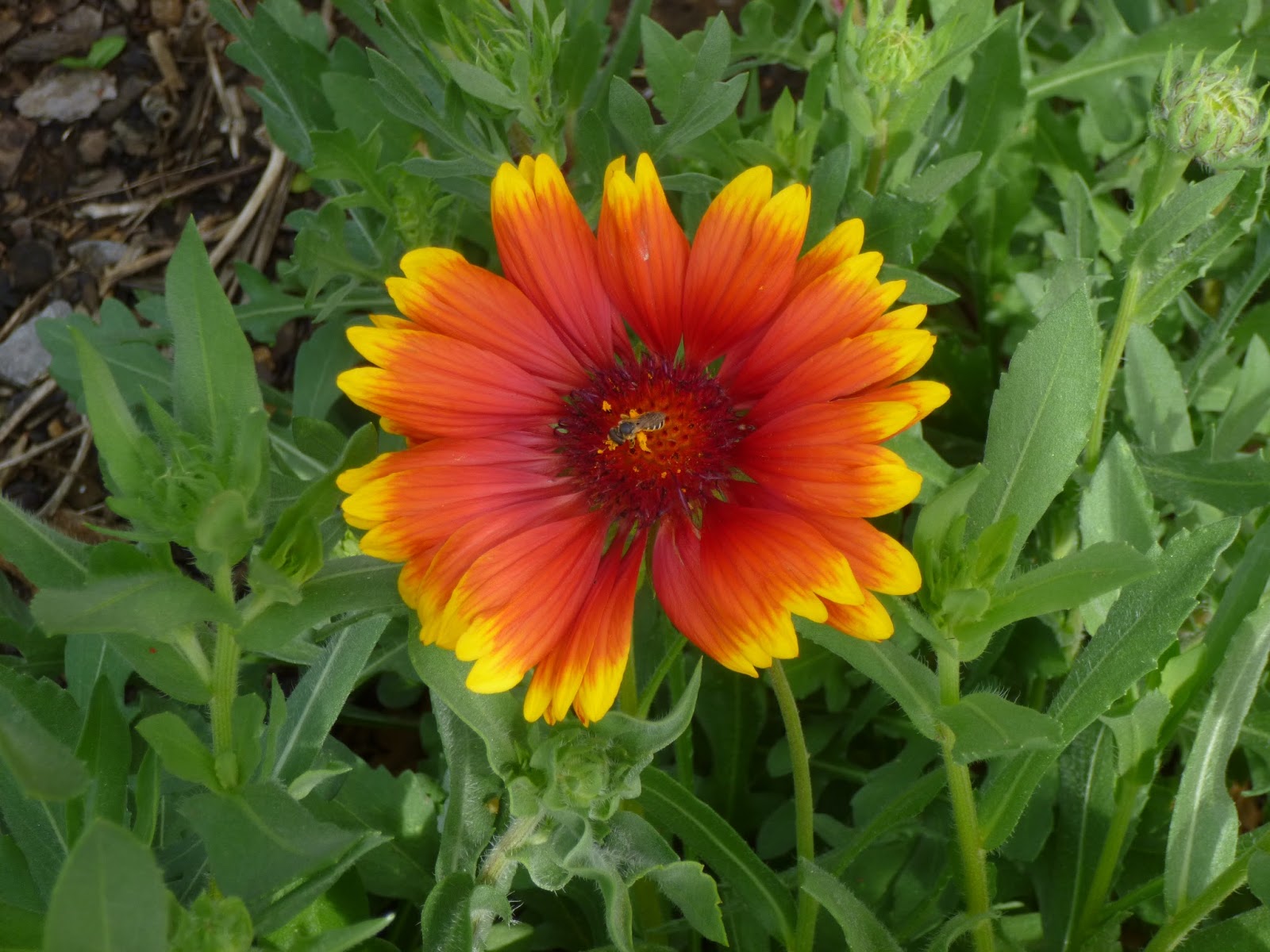
Gaillardia (blanket flower) has come into full bloom and is now attracting pollinators. Once it starts, Gaillardia x grandiflora often will bloom straight through until frost (!) with little or no deadheading required.

Clematis 'Crystal Fountain' in full bloom

Likewise, the 'Natchez' mock orange (Philadelphus x virginalis) is blooming its heart out. I detect a bit more fragrance this year and have seen a few pollinators. (In previous years, the pollinators seemed to bypass this shrub, but as the flowering show gets bigger and bigger each year, perhaps they're starting to take more notice?)

Epimedium x perralchicum 'Frohnleiten' looking fantastic. The new growth has effectively swamped and hidden the old foliage on those parts of the clump that I did not cut back this winter (as most gardening sources suggest doing).

Love the incongruous touch of bronze in the spring garden, courtesy of the new growth on Dryopteris erythrosora (autumn fern, Japanese shield fern)
This corner of the front foundation border is looking quite ferny thanks to (from left to right) lady fern (Athyrium filix-femina), eastern wood fern (Dryopteris x australis) and Japanese painted fern (Athyrium niponicum var. pictum).  

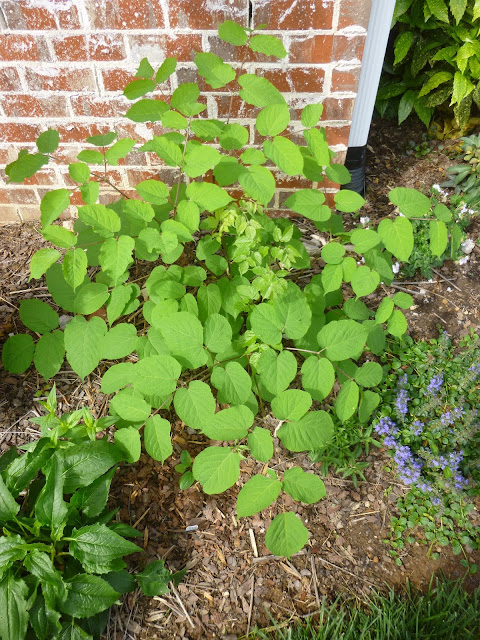
Can you believe all this new growth sprang to life in just a few weeks? Aralia racemosa (American spikenard) only emerged from dormancy in early April. Three weeks later, it was already the size of a small shrub. At maturity, I've heard this native perennial can reach 6 feet tall or even higher!

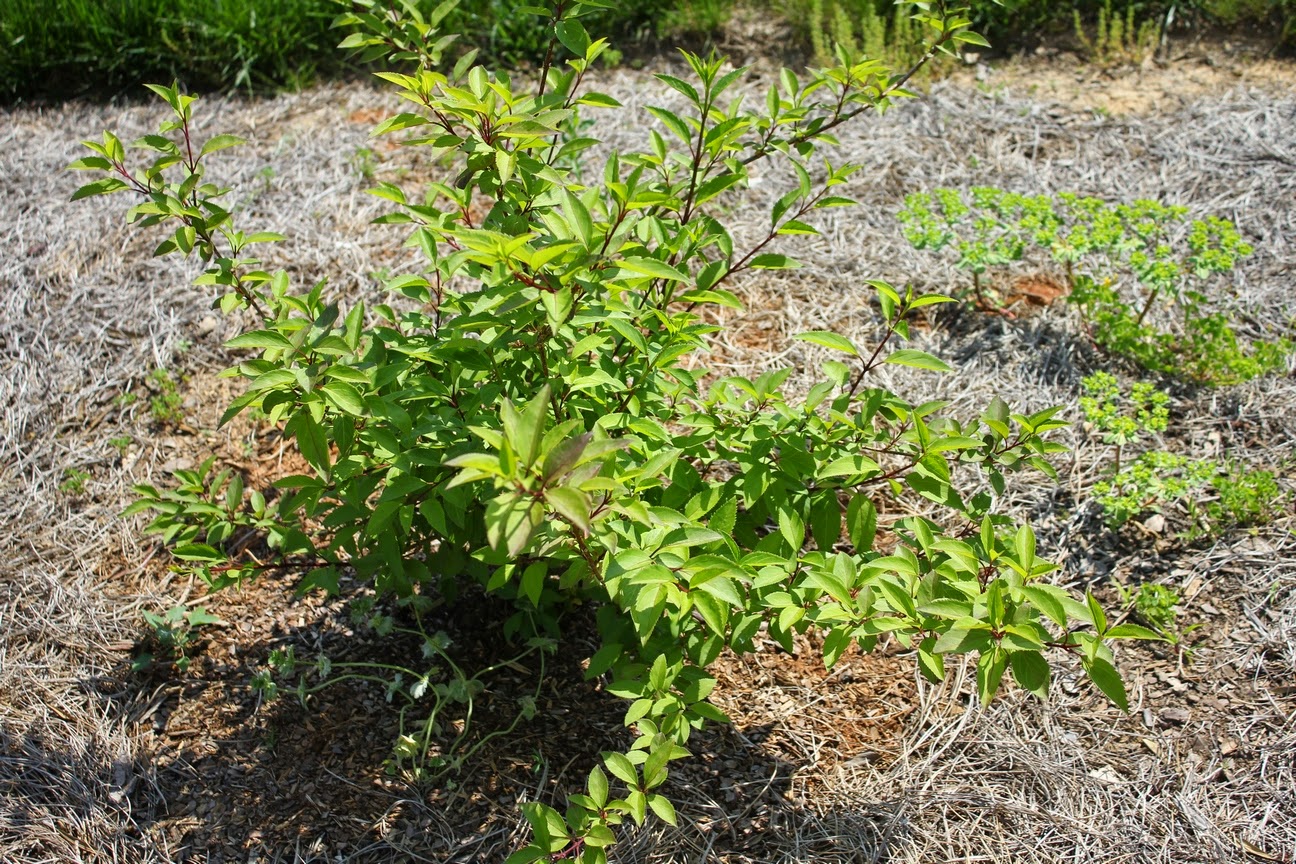
I profiled Cornus amomum (silky dogwood) as a new addition to the garden back in February with a photo off a mature shrub loaded with berries. Well, here's the shrub I planted last autumn. As you can see, it has leafed out nicely. I really like the tinge of red on the new growth!

I was really excited to see the native Asclepias incarnata (swamp milkweed) emerge from dormancy in early April. As you can tell, it seems to be doing really well, with lots of healthy-looking foliage and strong stems emerging from the base of the plant. 

I tried scattering lots of silky seeds from the Asclepias incarnata pods last autumn. And what's this? It looks like I have successful germination throughout one of the beds in the back of the garden! Exciting!! The monarch butterfly caterpillars and lots of other critters made a home on my single swamp milkweed plant last year. If these are in fact all swamp milkweed seedlings, I can't wait to see how much insect life turns up around the plants this year! (I did also scatter seeds from Asclepias viridis, green antelopehorn, last autumn, so some of these milkweed seedlings could be from that species, but the leaves look a bit narrower and more pointed than the photos of A. viridis seedlings I've seen online. It also looks as though A. viridis has wavy leaves, but the leaves on these seedlings don't seem wavy to me, so I'm guessing that they are A. incarnata seedlings. We shall see if/when they bloom! 
Instagram

Tuesday, May 5, 2015

In Full Swing - Clematis, Penstemon, Sumac, Sage, False Indigo and More!


Things are in full swing in the garden - bees are buzzing, flowers are blooming, leaves are expanding, plants are growing, everything there is life (except where there is death).

I apologize for the lull in posting photos. My camera is currently traveling overseas (along with my wife), but my kindly neighbor Christian generously lent me his camera so that I could capture some scenes from the early May garden.

(There are a lot of photos, so I'll split them into two posts. This post will focus on the back garden, the next one on the front and side gardens.)

Abelia x grandiflora, dwarf cultivar. I'd thought it was 'Rose Creek', but I think it was mislabeled, so I'm not sure of the cultivar. Whatever it is, it seems to be settling in nicely during its first year in the garden. I don't usually like bright yellow plants, but I like the contrast here against surrounding greenery.

My favorite plant in the garden these days is Baptisia australis (blue wild indigo). In its third full year in the garden, it has sent up multiple stalks of pretty blue flowers that (as you can see here) attract bees!

The Burkii eastern red cedars (Juniperus virginiana) are loaded with berries/cones. The branches were coated with rust fungus earlier during our wet spring, but that issue seems to have abated (at least for now) as the weather has turned drier and warmer.

Clematis 'Crystal Fountain'. We had this clematis tied up into the crape myrtle tree with biodegradable twine. The twine degraded in some rain storms this spring and the vine fell to the ground, but it doesn't seem too much worse for the wear and actually makes a rather nice groundcover. Make lemonade from lemons and all that...

Nothing too exciting here - Forsythia x intermedia 'Lynwood Gold'. But I must admit that the shrub looks very healthy. The foliage was a lovely shade of green earlier in the spring. I'm not over-the-moon on Forsythia. It's totally overplanted and the flowers seem relatively useless in terms of supporting wildlife, but I have to give it props for toughness.

What happened here!? 'Lemon Queen' perennial sunflower is not looking her best.  I need to investigate further, but my initial suspicion is some sort of fungal rot. It's not a pretty picture, but I believe gardening blogs should honestly show the good, the bad and the ugly.

Lantana camara 'Miss Huff', first year in the garden, first blooms.

Panicum virgatum (switchgrass) 'Northwind' -- This is my second year with switchgrass in the garden. I cut back the old stems myself in March. It seems to me that in a normal-to-harsh winter here, I could easily wait until the end of March or even the beginning of April to make such a cutback. The old stems look good all winter and into spring, so the cutback is only needed to make way for new growth. But that new growth doesn't start in earnest until mid-April. Cut back your grasses too early, and you have relatively unattractive stubble mocking you for a month.

Penstemon x mexicali 'Red Rocks', first year in the garden

Acer rubrum (red maple), not sure which cultivar, but whatever the name, it's turning into quite a nice little tree. As long as the deer don't try ripping up the bark again (like they did a couple of winters back), I hope it will be OK.

Fuzzy berries forming on fragrant sumac (Rhus aromatica) 'Gro-Low'. The small yellow flowers that preceded the berries seemed to be a big hit with all sorts of small pollinators (probably a motley crew of bees, wasps and flies).

Salvia greggii (autumn sage), not sure whether this is 'Flame' or 'Rose Pink', but in either case both survived the winter (I was holding my breath since they're rated marginally hardy in Mid-Tennessee) and have started blooming. Last year, the autumn sage flowers attracted hummingbirds.

As with the azaleas I inherited at the front and side of the house, I feel like this ornamental sage ('May Night'?) looks good for a couple of weeks and then looks like Death warmed over the rest of the year. Still those brief bursts of beauty - especially in the Spring - have won it a place in the garden for now. The lamb's ear 'Helene von Stein' in the background looks good most of the year, including now.

Looks like there should be lots of crabapples this year on the 'Sugar Tyme' crab.

This is not too impressive, but I'm just happy that my wax myrtles (Morella cerifera) survived the winter. Although evergreen further South, they pretty much defoliated here. Then again, I probably shouldn't have planted marginally hardy plants in November. Both plants almost made it through the winter intact, but one got chomped by a deer (I presume) right before Spring arrived. This is the one that didn't get chomped. (The other is still alive, but only barely.)

Purple coneflower (Echinacea purpurea) wilting in early May. Not a good sign of drought tolerance when we're still 5-6 weeks away from the official start of summer.

As with the 'Lemon Queen' sunflower, I'm not sure what happened here, but a portion of the Hyssopus officinalis (hyssop) seems to have wilted out practically overnight. Hyssop is a fast grower, so I'll try just trimming out the damaged section and hoping for a recovery.

Stay tuned, more photos coming soon from the front garden!

Friday, April 10, 2015

No Damage, No Cry


The last weekend of March, we had a big old cold front sweep through Middle Tennessee, sending temperatures plunging into the low 20s where I live (as low as 17 degrees a bit west of Nashville in a community called Kingston Springs).

I was worried.

Many of the perennials and trees were starting to leaf out. Would they come through the cold snap OK?

I'm not sure why I was quite so worried. Last year, we had an even later cold snap in April and most of the plants managed just fine, with the exception of some exotics like rose of Sharon, boxwood, vitex and crape myrtle.

We were probably ~6 degrees colder this time, but since the cold snap arrived weeks earlier, none of those sensitive plants mentioned above had even leafed out yet (except the evergreen boxwood of course, but I didn't notice any damage on those...perhaps they haven't pushed new foliage yet?)

Anyway, here are pics (taken April 3rd) of a bunch of plants from around the garden that seem to have made it through the freezing temps just fine. If you're looking for strong, resilient perennials, I present these for your consideration:

Typically I don't much care for plants with yellow or golden foliage, but I've made an exception for Abelia x grandiflora 'Rose Creek'. Just planted last autumn, this is its first spring in the garden. (Update - As Tammy at Casa Mariposa points out, this is probably not 'Rose Creek', which actually has green foliage. So unfortunately I don't know which Abelia cultivar I have here...)

Ajuga genevensis, blue bugle, Geneva bugleweed

Platycodon grandiflorus, balloon flower

Baptisia australis, blue wild indigo, this is its third spring in the garden and I'm happy to see a number of stems emerging. Baptisias have a reputation as long-lived perennials that can take a few years to establish a presence in the garden. I'm a little worried that three other small baptisias that I planted last autumn have not yet emerged from dormancy. I hope they're OK...

Amsonia 'Blue Ice' (a hybrid of unknown parentage). I have a feeling this is a better garden plant than the much-hyped Amsonia hubrichtii, Arkansas blue star.

Clematis 'Crystal Fountain' embarking on its fifth year in the garden. I love the fact that this plant has fully leafed out and budded by late March / early April!

Coreopsis verticillata 'Zagreb' -- this is its second year in the garden and I'm pleased to see that it seems to have multiplied and spread exponentially. You're looking at two clumps here, each of which only had a few stems last year.

Juniperus virginiana 'Grey Owl' - this relatively low-growing eastern red cedar that typically has bluish foliage, but now it seems frosted with golden highlights, which makes me think perhaps it is about to push new growth

Pleased and surprised to see new growth emerging on the Hakonechloa macra, Japanese forest grass. It didn't perform well last year and I thought it might not survive the winter, but I'm glad to be proven wrong. I've been told these grasses can also take a few years to get established, so perhaps it will do better this year with a bit of pampering.

Could this be new growth from Hosta 'Golden Tiara'? Not sure. I planted a few specimens of this hosta last spring and I thought they had all croaked, but again, I may have been far too quick to write off these plants. Can't imagine what else this could be...

New growth suddenly emerged on this Hypericum densiflorum, planted last autumn

Seemingly overnight, the lilies that I transplanted to a sunnier spot in the backyard with absolutely awful heavy clay soil (pottery quality) have pushed up thick gorgeous stems. (This was one of the few plants that suffered some foliar damage from the freezing temperatures the last weekend in March. You can see a few dead brown leaves on the ground that got blasted by the cold, but they seem to have been rapidly replaced by new growth.)

Hydrangea quercifolia, oakleaf hydrangea 'Snowflake' embarking on its third full year in the garden (planted November 2012). Oakleaf hydrangeas have some of the most beautiful foliage of any plants, IMHO.

After much anticipation, I was overjoyed to see new growth at last on the Rhus aromatica, fragrant sumac 'Gro-Low'

Here are some buds coloring up on the Gro-Low sumac. This is the second year in the garden for my three Gro-Low shrubs.

Viburnum dentatum, arrowwood viburnum -- I was so pleased with the performance of two arrowwood cultivars (Pearl Bleu and Chicago Lustre) last year that I ordered and planted a straight species arrowwood last autumn. I'm really charmed by this fresh new foliage with the rusty tinge on the edges.

I have to admit I was a little bummed that I only had a couple of flowers on my Jasminum nudiflorum (winter jasmine), another plant that I just added to the garden last autumn. Still, so far I'm liking the shape and color of the new foliage.

This is the time to shine for Veronica peduncularis, speedwell 'Georgia Blue'. This clump just keeps getting bigger and better every year. I wish the flowers attracted some pollinators, but at least Douglas Tallamy says that the genus serves as host for 6 native species (and 1 exotic species) of Lepidoptera.