Showing posts with label Epimedium. Show all posts

Tuesday, April 18, 2017

Some disappointments - rose verbena, toad lily, epimediums and partridge berry


I recently wrote about a couple of native groundcovers - golden groundsel and rose petty - that have impressed me with their performance.

(That doesn't mean I won't change my mind with a few more years of growing experience under my belt. That's happened before many times. But right now, color me impressed. And I like to think that I've learned to wait at least a little longer before passing snap judgments.)

Anyway, it's not all sunshine and roses in the Garden of Aaron.

I've been forced to face some disappointments this spring.

And since one of the main goals of my blog is to help others learn from my mistakes (and successes), I thought I'd share these disappointments with you:


Rose verbena bites the dust after just a single year
Rose verbena (Glandularia canadensis) not looking its best

Rose verbena, Glandularia canadensis - Relatively easy to find at local nurseries (though typically in the form of the 'Homestead Purple' cultivar...which may or may not actually be a hybrid), I'd heard warnings that rose verbena liked good drainage and could die if forced to overwinter in heavy, wet clay soil (which I've got in spades).

Interestingly, rose verbena seemed to survive our relatively mild winter without too many problems.
It even stayed somewhat evergreen and started blooming early in the spring. I saw a swallowtail butterfly nectaring on one of the plants, which made me happy.

But soon, one by one, the rose verbena plants started turning brown and crispy. I'm calling this a failure and assuming either (a) it's a very short-lived perennial (practically an annual) or (b) it needs much better and lighter soil than I can provide.

It's a shame, because I've been trying to find effective, native groundcovers, and rose verbena had some appealing characteristics - it's fast growing, semi-evergreen in zone 7, heat and drought tolerant, and has a long bloom season. Unfortunately, it doesn't seem to have the toughness or longevity I need in a groundcover.

Don't see anything here?
That's because I mowed down the old Epimedium foliage a month or two ago and the new slow-to-emerge foliage and flowers got chomped by something (probably a rabbit). Which is a little odd, since the rabbits never bothered Epimediums much before...


Epimediums, fairy wings, horny-goat weed - I'd had good luck with a hybrid called x perralchicum 'Frohnleiten'. In fact, I came to like this herbaceous, evergreen-to-semi-evergreen groundcover so much that I featured it on its own blog post in May 2015.

Most sources recommend cutting off old Epimedium foliage before the new foliage emerges. In years past, I done this with bypass pruners, but as the patch grew a bit larger, I decided to try mowing down the old foliage this year.

I don't know if the mower was to blame, but the new flowers and foliage seemed slow and sparse to emerge this year. I was just starting to see a fair amount of foliage when something - I think a rabbit - came and devoured everything.

That's interesting, because in years past, the rabbits have seemed completely disinterested in Epimedium. Even before my Epimedium displayed a vulnerability to herbivores, I had soured a little on it. The flowers are pretty, but short-lived and rather inconspicuous. It grows slowly, which can be a good thing (you won't have to worry about it conquering a garden bed while your back is turned), but it also means that you'll be waiting a loooooong time for this groundcover to cover some ground and start displacing weeds.

Although 'Frohnleiten' has grown fairly well here in Middle Tennessee, the other Epimediums that I tried (x warleyense and x versicolor 'Sulphureum') have not fared nearly as well. They haven't been growing as long and I've heard that Epimediums are notoriously slow to settle in, but Sulphureum disappeared during last year's autumn drought and hasn't been seen since. The warleyense hybrid hung in there, but barely sent up any new foliage so far this spring, and what did emerge was eaten just the same as the 'Frohnleiten'.

I haven't given up quite yet on my Epimediums at this point. If they recover from the rabbit attack and send up new foliage, I'll be tickled pink.

And if that does happen, next spring I think I'll just leave the old foliage to decompose naturally without cutting it at all. I tried that last year, and even though the rough, leathery, tattered old foliage detracts a bit from the freshness of the flowers and new leaves, it also provides a contrast that makes it easier to see the bronzy new foliage on 'Frohnleiten' (which can otherwise be a challenge to notice against a background of mulch or dirt) and also I suspect that the old foliage deters herbivores from chowing down on the new growth.

Still, even if my Epimediums do stage a comeback, I can't imagine getting any more at this point, and I'd only consider recommending them for a very small garden where the slow horizontal growth rate would be an asset, or a larger garden where groundcover needs were somehow minimal.


Partridge berry (Mitchella repens) does cover ground, but it's a pretty subtle plant. You might easily overlook it in a large garden. And the ultra low-growing foliage doesn't block all the weeds.

Partridge berry, Mitchella repens - I've gone back and forth on this plant. Much like with Epimedium, one of my main complaints would be that it's a sloooooow spreader. And the leaves are tiny. Which means that even where it does spread, weeds can still force their way through.

A close-up on the partridge berry. Note how the small weed - probably some type of Oxalis - has poked its head through the partridge berry foliage without any difficulty. Having a ground-hugging plant like partridge berry has some advantages - there's no need to chop down old stems or seedheads, you won't have to worry about it swamping any nearby plants - but it does limit the weed-blocking role it can play in the garden.

That said, I don't want to be too harsh on this native plant. It blocks some weeds. It's essentially evergreen in Middle Tennessee. It had a few tiny flowers last year, though if it produced any berries, I didn't notice. I certainly wouldn't discourage anyone from using this, nor am I contemplating removing mine. In fact, I just added another clump of this plant to the garden this spring.

But I'm a bit disheartened at its slow spread and imagine it will be many years (if ever) before I have a nice, thick, noticeable clump like this.

Again, if you have a very small garden or a garden with only a small patch of bare ground to cover, this might be just the ticket.

PS - Partridge berry is so diminutive that I've often wondered how it avoids getting smothered by leaves in its native woodland habitat. According to Brooklyn Botanic Garden, it generally grows on steep slopes where fallen leaves slide away. If you have it growing on flat land (like I do), you might need to brush away leaves to let it see the light.


Chomped toad lily.

Toad lily, Tricyrtis hirta 'Miyazaki' - Bought this one on a whim during a nursery visit this spring. Turns out that it makes excellent rabbit food. (Or food for some other herbivore, but the signs point to a bunny.)


How about you? Any groundcover / perennial disappointments recently? Or happy surprises? 😎

Instagram

Follow Aaron Dalton on Feedio

Friday, May 6, 2016

Shots in the Garden - Late April 2016 Edition -- Swamp Milkweed, Mock Orange, Blanket Flower, 'Crystal Fountain' Clematis and More!

I know I just did a "Shots in the Garden" post a couple of weeks ago, but there were so many more exciting images I wanted to share with you all, that I decided to throw caution to the wind and publish another "Shots in the Garden" post. All photos here were taken on April 27, 2016.

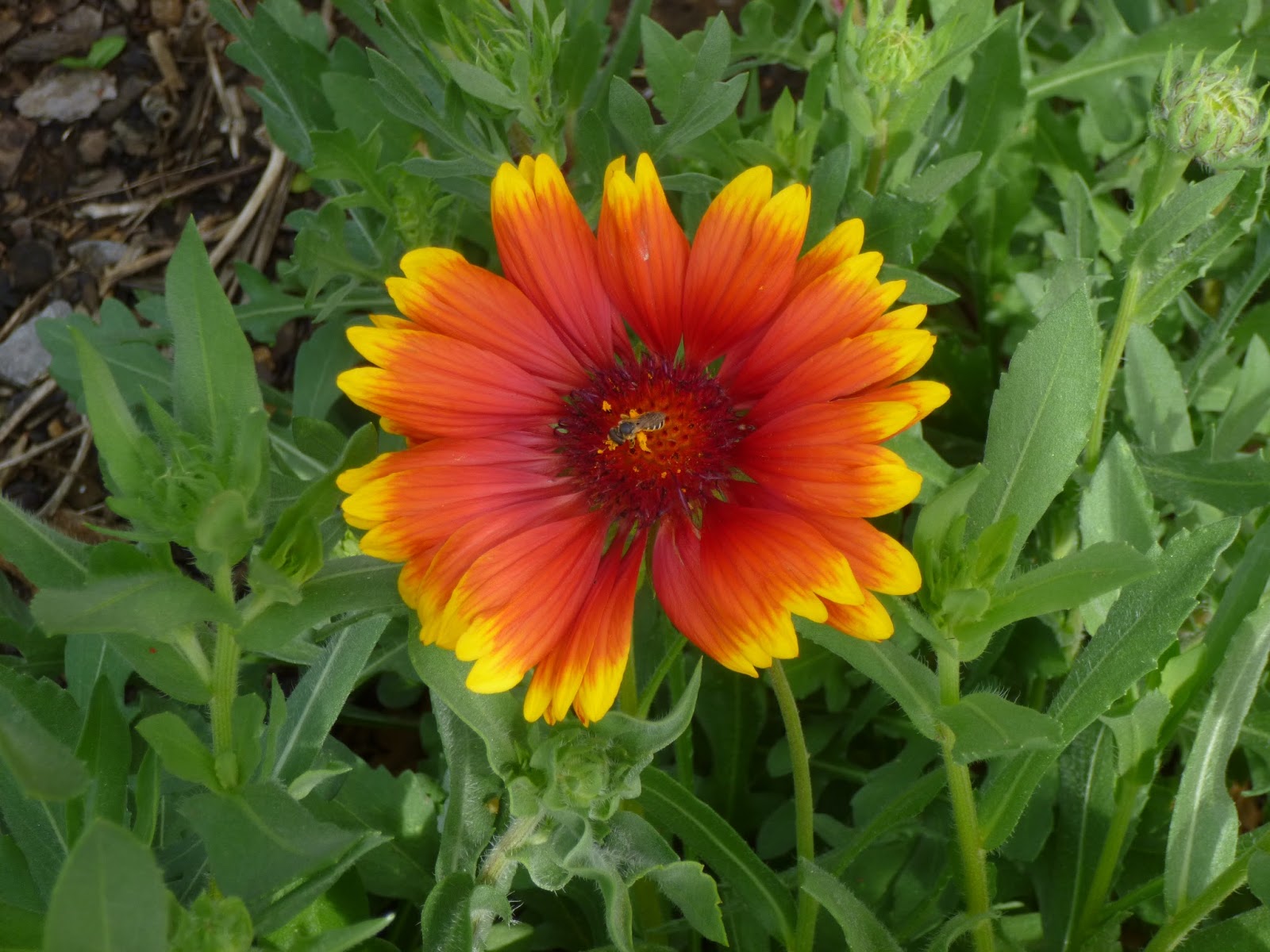
Gaillardia (blanket flower) has come into full bloom and is now attracting pollinators. Once it starts, Gaillardia x grandiflora often will bloom straight through until frost (!) with little or no deadheading required.

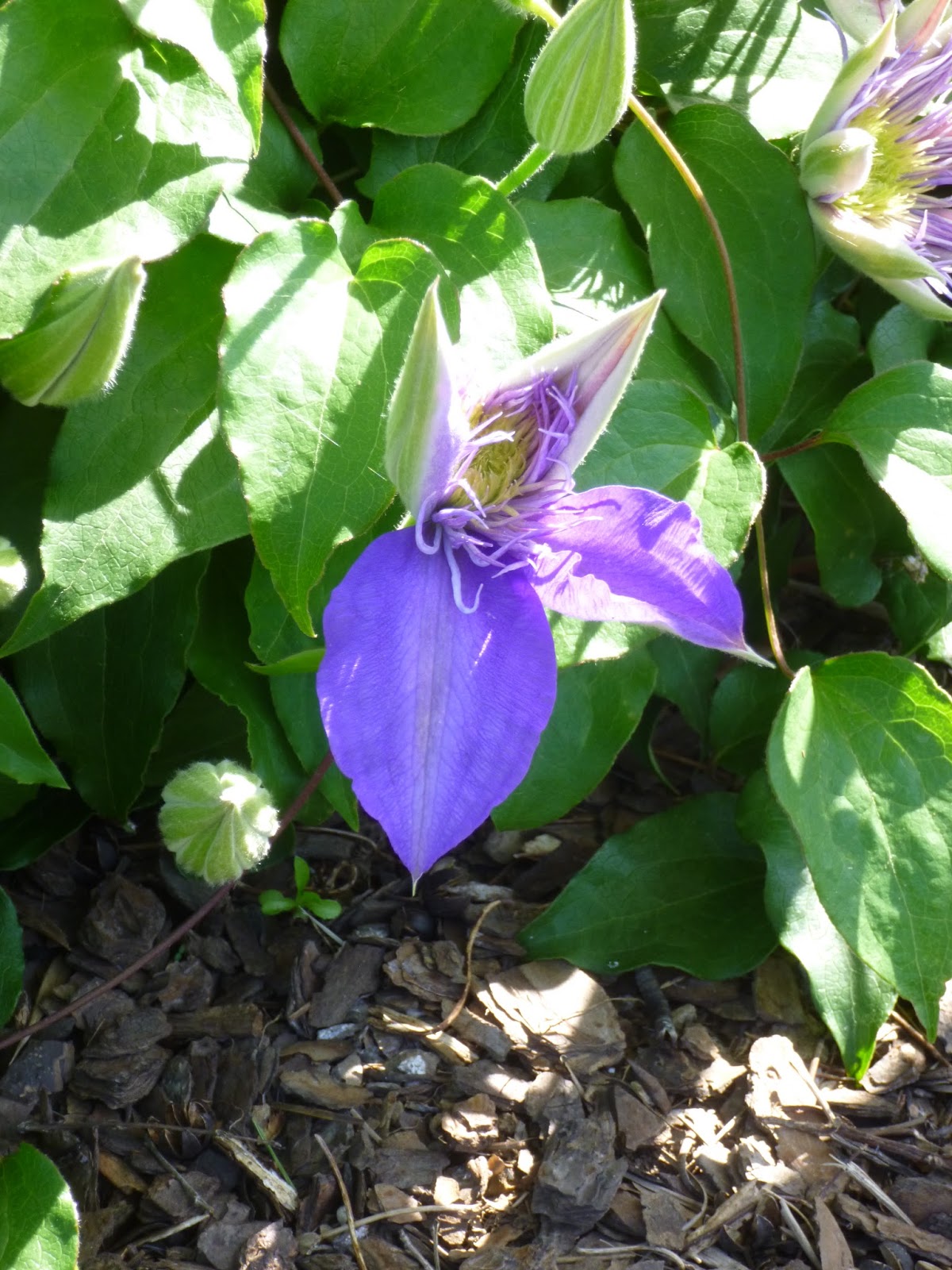
Clematis 'Crystal Fountain' in full bloom

Likewise, the 'Natchez' mock orange (Philadelphus x virginalis) is blooming its heart out. I detect a bit more fragrance this year and have seen a few pollinators. (In previous years, the pollinators seemed to bypass this shrub, but as the flowering show gets bigger and bigger each year, perhaps they're starting to take more notice?)

Epimedium x perralchicum 'Frohnleiten' looking fantastic. The new growth has effectively swamped and hidden the old foliage on those parts of the clump that I did not cut back this winter (as most gardening sources suggest doing).

Love the incongruous touch of bronze in the spring garden, courtesy of the new growth on Dryopteris erythrosora (autumn fern, Japanese shield fern)
This corner of the front foundation border is looking quite ferny thanks to (from left to right) lady fern (Athyrium filix-femina), eastern wood fern (Dryopteris x australis) and Japanese painted fern (Athyrium niponicum var. pictum).  

Can you believe all this new growth sprang to life in just a few weeks? Aralia racemosa (American spikenard) only emerged from dormancy in early April. Three weeks later, it was already the size of a small shrub. At maturity, I've heard this native perennial can reach 6 feet tall or even higher!

I profiled Cornus amomum (silky dogwood) as a new addition to the garden back in February with a photo off a mature shrub loaded with berries. Well, here's the shrub I planted last autumn. As you can see, it has leafed out nicely. I really like the tinge of red on the new growth!

I was really excited to see the native Asclepias incarnata (swamp milkweed) emerge from dormancy in early April. As you can tell, it seems to be doing really well, with lots of healthy-looking foliage and strong stems emerging from the base of the plant. 

I tried scattering lots of silky seeds from the Asclepias incarnata pods last autumn. And what's this? It looks like I have successful germination throughout one of the beds in the back of the garden! Exciting!! The monarch butterfly caterpillars and lots of other critters made a home on my single swamp milkweed plant last year. If these are in fact all swamp milkweed seedlings, I can't wait to see how much insect life turns up around the plants this year! (I did also scatter seeds from Asclepias viridis, green antelopehorn, last autumn, so some of these milkweed seedlings could be from that species, but the leaves look a bit narrower and more pointed than the photos of A. viridis seedlings I've seen online. It also looks as though A. viridis has wavy leaves, but the leaves on these seedlings don't seem wavy to me, so I'm guessing that they are A. incarnata seedlings. We shall see if/when they bloom! 
Instagram

Thursday, April 21, 2016

Shots in the Garden April 2016 Edition - Ajuga, Erigeron pulchellus, Agastache, Ninebark, Epimediums, Clematis, Viburnums, Blanket Flower and More!

All photos taken in the Garden of Aaron on April 20, 2016...


New redbud (Cercis canadensis) leaves against a cerulean sky.
Some of the Ajuga flowers spikes (here on A. tenorii 'Chocolate Chip') are starting to fade ... 

But the flowers of other Ajuga (such as this large patch of A. genvensis and A. reptans) are still going strong. Strangely, while Ajuga flowers seemed to attract bumblebees last year, I have not seen any bees visiting the Ajuga this year, despite the fact that the patches have grown in the interim and that larger flower patches usually do a better job of attracting pollinators.

One more patch of Ajuga (A. genevensis). This patch is in shade most of the day, although it does get strong late  afternoon sun. The other photos above were of Ajuga in mostly full sun situations. As you can see, this is an adaptable genus that grows well (in my experience) in sun or shade. I've had pretty good luck with all three species, although A. genevensis seems more dependable and a bit more cold-hardy than the common A. reptans. Ajuga reptans also seems somewhat susceptible to sudden (fungal?) dieback, whereas I have not had this problem so far with either A. genevensis or A. tenorii. All three seem to do a pretty good job of blocking weeds. I'm not sure yet whether they will play nicely with other perennials, although strong growers (such as Platycodon grandiflorus, balloon flower) seem to be able to push right through the Ajuga.


Flower clusters on Prague viburnum (Viburnum x pragense). Although the flowers are pretty, they are unscented and do not seem to attract any pollinators. Still, Prague viburnum seems to be a tough, largely evergreen (in zone 7) and fast-growing plant that has a place in border / privacy plantings.

First flower opening on Gaillardia x grandiflora (blanket flower).

Most of the emerging foliage looks fantastic on the chaste tree (Vitex agnus-castus)...

....but I have notice some stunted, curled and blasted looking foliage among the healthy leaves. Any idea what could be causing this problem?

Love this soft, ferny, feathery patch of Coreopsis verticillata (threadleaf coreopsis), a regional native.

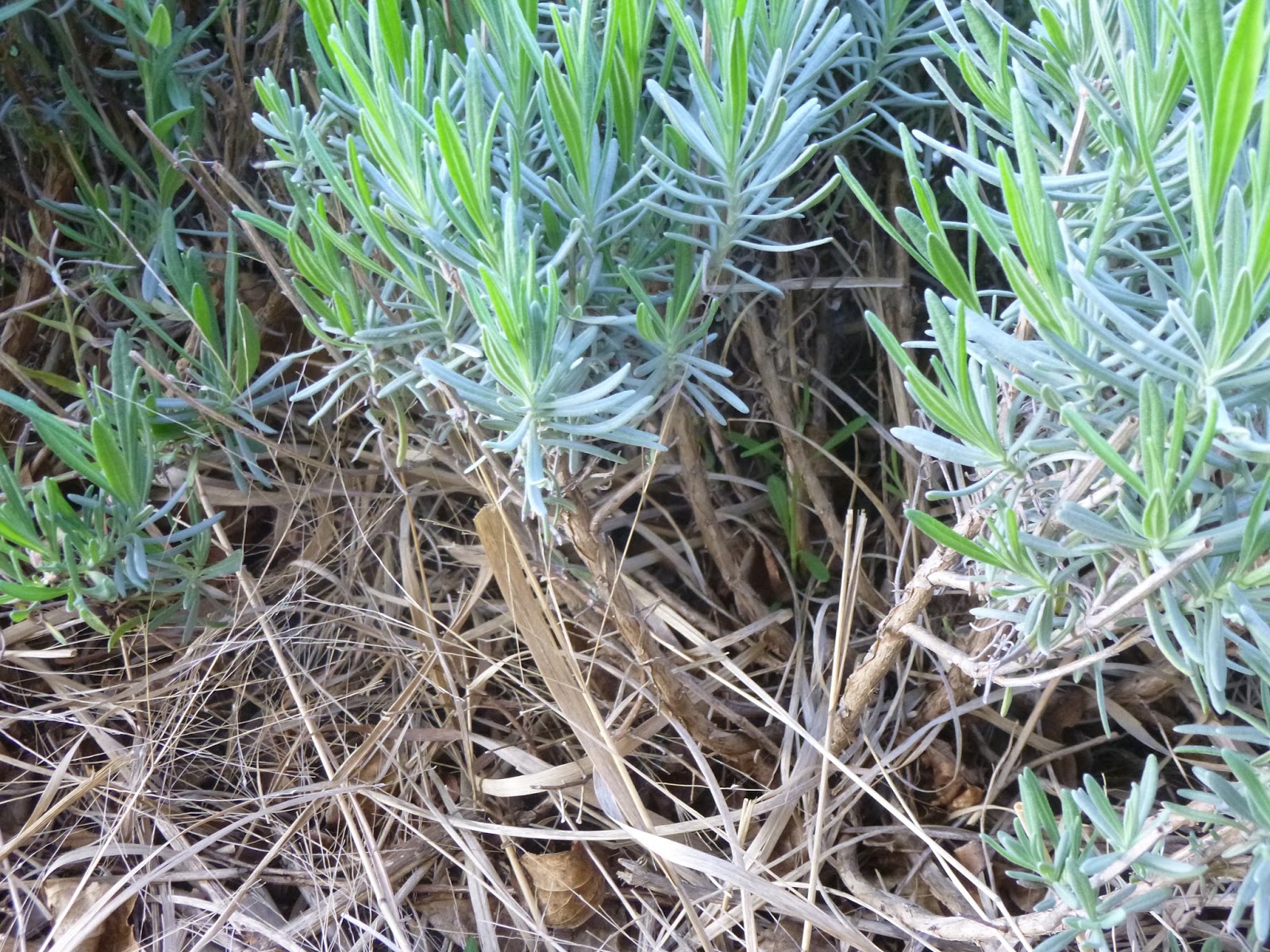
On casual inspection, this lavender hedge looks full, lush and healthy...

But peek behind the hedge, and you'll find lots of woody growth with foliage just on the tips.

I do wonder if I should have pruned my lavender back hard earlier in the spring? There was one section of the shrub that was mainly dead branches, though I did notice a bit of fresh growth near the base. So I gave that section a rejuvenation pruning as a test, and now I can see loads of fresh new growth emerging from the hard-pruned area. It makes me think I should try giving the whole shrub a hard prune next spring. Or is it not too late? Maybe I should/could still give it a hard prune now?

Any idea what this might be? Whatever it is, it's getting swamped by a large patch of Symphyotrichum oblongifolium (aromatic aster). 

The 'Crystal Fountain' clematis is starting to bloom...

Here's one 'Crystal Fountain' flower that is unfolding in an unusual asymmetrical fashion.


A month ago, lamb's ear looked like something the cat dragged in. I asked for advice on whether to prune selectively or leave it alone. By default (I got sick and was unable to work in the garden for a couple of weeks), I left it alone. As you can see, it now looks fantastic without any intervention on my part.
I love the fresh new foliage on the Alleghany viburnum (Viburnum x rhytidophylloides 'Alleghany'). Although some flower clusters on this plant have already bloomed, here you can see a cluster of buds that are getting ready to burst. In other words, the shrub has a nice, extended flower season. (Although as with the Prague viburnum, the flowers have no detectable scent and do not seem attractive to pollinators in my garden.)

Does this spell trouble? I suspect that voles have tunneled under the Alleghany viburnum. I hope they don't start snacking on its roots. Well, maybe it's just a chipmunk? Or a mouse hole?
Here's a cute little patch of self-sown Johnny jump-ups! 

The Natchez mock orange (Philadelphus x virginalis) is loaded with buds this year. This will be its third year in the garden. It's grown a good bit since I bought the rootbound 1-gallon shrub in the bargain section of a local nursery. Here's a look at the mock orange during its first year in the garden in 2014.  I'm pretty impressed with its toughness and perseverance. It tends to leaf out relatively early, which is also nice.

The pink azaleas (not sure of the variety since they were here when we bought the house, but they are repeat bloomers) are in bloom. Pretty flowers, but apparently have zero interest to pollinators.

Here's a shot you won't see in any nursery catalogs. I like to show not just the pretty side of a plant, but also its drawbacks. This is the same azalea, and as you can see, it's still hanging onto dried, dead flowers from last autumn. Not a pretty sight. IMHO, the tendency of azaleas (at least exotic evergreen azaleas like the ones I have) to hold onto their persistent dead flowers is a significant aesthetic demerit. 

Epimedium x perralchicum 'Frohnleiten' in flower and with lots of beautiful new rosy foliage. In previous years, I've followed the suggestions of many published experts to cut back the old foliage before the new growth emerges. This year, I decided to experiment with cutting back the old foliage on half the patch and leaving the old foliage on the other half. Well, as you can see, the old foliage (solid green in the photo, a bit tattered) does not seem to have hurt or hindered the emergence of new foliage. Although, it is also true that the new foliage is more prominent and thick on the edges of the patch, rather than in the center where I left the old growth. It will be interesting to see whether the old foliage persists throughout this year or fades away and decomposes as the new growth takes center stage. I'll try to report back later on the results of this experiment.

Here's another Epimedium species I planted last year. I think this one is Epimedium x versicolor 'Sulphureum'. The new foliage is quite charming on this one too. Unlike Frohnleiten, I think Sulphureum went totally deciduous last winter.


The 'Natchez' crape myrtles (Lagerstroemia 'Natchez') are leafing out really nicely this year.

From a distance, I'm not sure if I like the ultra-dark foliage on this 'Diablo' ninebark (Physocarpus opulifolius 'Diablo'), but the golden highlights on the emergent foliage against the dark background of mature leaves sure is gorgeous up close.

Now that the blooms have faded, I'm having fun finding the adorable baby crabapples (including one here with stamens still attached) on the 'Sugar Tyme' crabapple tree.

It's been a long wait, but I've spotted new growth emerging on the native rose mallow (Hibiscus moscheutos). This is the 'Luna Pink Swirl' cultivar that I've had for a few years. I planted a straight species plant in more sun last autumn. Looking forward to seeing how that one performs this year. I think these plants love wet areas, but they seem to have surprisingly decent drought tolerance in my garden too. Even though this plant dies to the ground each year, I like to leave some of the old stems standing both because it helps mark the location of the plant (important especially since this plant emerges a bit late in the season - I don't want to accidentally forget where I planted it and dig it up while trying to plant something else in the same spot) and also because I think the sturdy old stems might offer some protection to the soft, tender emergent new growth.

Beautiful ruby-red new growth on this unknown crape myrtle.

Amsonia hubrichtii (Arkansas blue star) took a couple of years to settle in, but it seems to emerging strongly this year. It looks like it might even flower for the first time in my garden! 

Need a little (or a lot) of chartreuse in your garden? You can't go wrong with Agastache foeniculum 'Golden Jubilee' (anise hyssop) - tough, dependable, beautiful, with long-lasting lavender flower spikes that attract pollinators, seeds that attract goldfinches and incredible minty-scented foliage. I like the straight species just as much. Not only does Agastache come back year after year, but it also self-sows, giving you new volunteers that seem to accept transplantation well. I suppose some people might think Agastache self sows a bit too enthusiastically, but that has not been my experience. In any case, it's easy to grub out any unwanted seedlings. And even established plants can be pulled with little effort.

I'm going to finish on a high note with Erigeron pulchellus (Robin's plantain), a native groundcover in the aster family. I've been a bit discouraged/worried this spring by the relative lack of pollinators I've seen in the garden. Even plants that usually attract pollinators (Ajuga, redbud, crabapple) don't seem to have drawn in many bees, wasps, flies or butterflies. So I was really overjoyed to see lots of pollinator activity around this cheerful patch of Robin's plantain. (Note the bright yellow pollen on the pollinator pictured above!) In my experience, Robin's plantain will spread at a moderate rate. The foliage gets tattered by the end of the winter, but it stays semi-evergreen here in Tennessee and does a good job of protecting the soil and suppressing weeds. It does not seem to suffer much damage from herbivores, perhaps because the stems and foliage are pubescent (covered in downy fuzz).  So far, I've only trialed this plant in partial shade settings, where it has thrived. Missouri Botanical Garden says it is easily grown in full sun, so I guess I'll try that next - probably transplanting pieces from this main clump in the fall and perhaps buying some more quarts via Missouri Wildflowers Nursery, one of my favorite mail order plant sources. Missouri Wildflowers recommends light to medium shade for Erigeron pulchellus, so I don't know who to believe, but I think it's worth trialing it in some sunnier spots.

Incidentally, there's a wild Erigeron (I think perhaps the native E. annuus, eastern daisy fleabane) that has popped up in my garden too this year. I see the same flower (I think) growing wild along some of the roadsides near here. It's very pretty, and although some people would probably call it a 'weed', I think I'll let it stay in my garden. (Though perhaps I'll come to regret that...)


Instagram