Showing posts with label Mock Orange. Show all posts

Friday, May 6, 2016

Shots in the Garden - Late April 2016 Edition -- Swamp Milkweed, Mock Orange, Blanket Flower, 'Crystal Fountain' Clematis and More!

I know I just did a "Shots in the Garden" post a couple of weeks ago, but there were so many more exciting images I wanted to share with you all, that I decided to throw caution to the wind and publish another "Shots in the Garden" post. All photos here were taken on April 27, 2016.

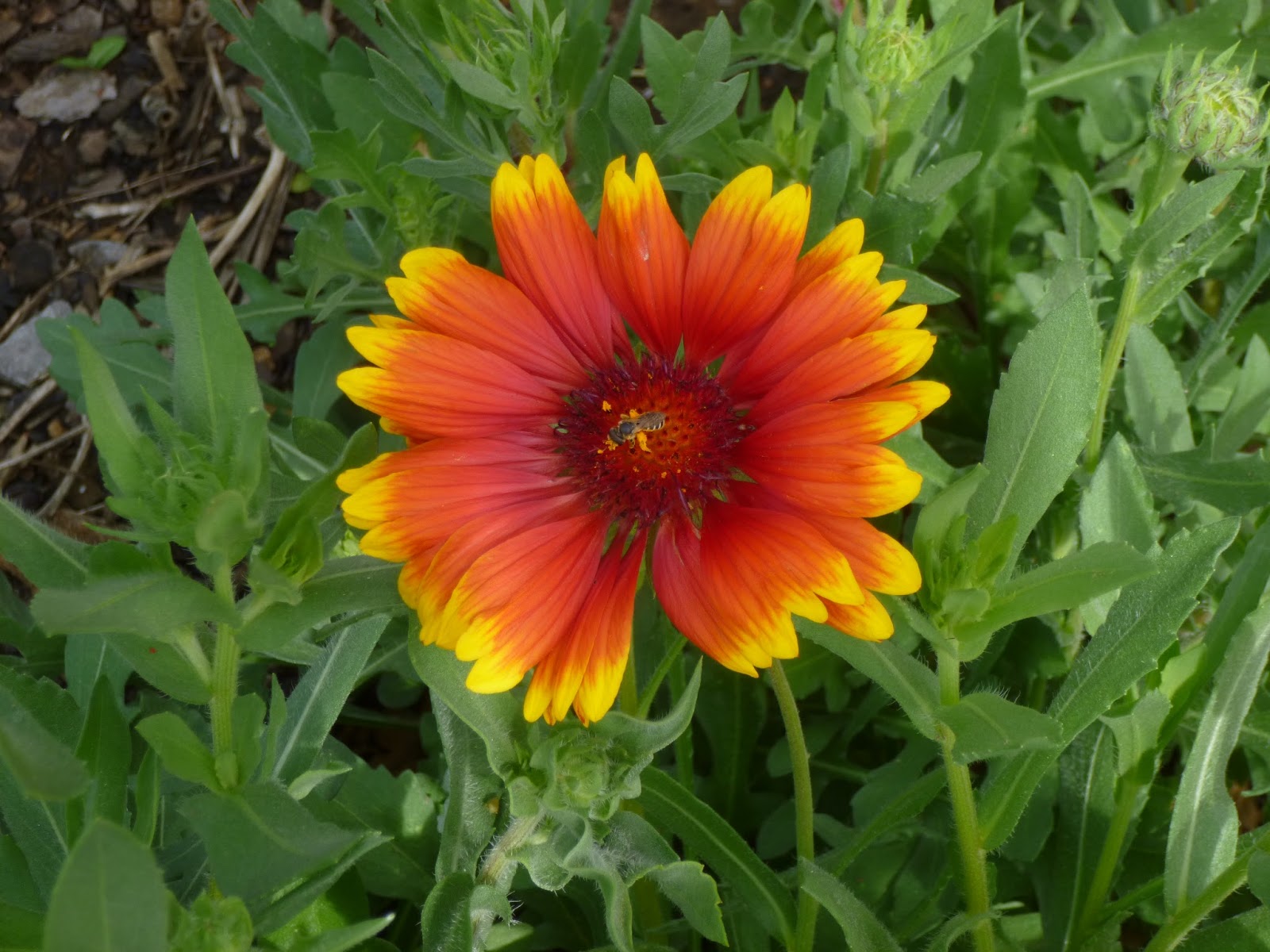
Gaillardia (blanket flower) has come into full bloom and is now attracting pollinators. Once it starts, Gaillardia x grandiflora often will bloom straight through until frost (!) with little or no deadheading required.

Clematis 'Crystal Fountain' in full bloom

Likewise, the 'Natchez' mock orange (Philadelphus x virginalis) is blooming its heart out. I detect a bit more fragrance this year and have seen a few pollinators. (In previous years, the pollinators seemed to bypass this shrub, but as the flowering show gets bigger and bigger each year, perhaps they're starting to take more notice?)

Epimedium x perralchicum 'Frohnleiten' looking fantastic. The new growth has effectively swamped and hidden the old foliage on those parts of the clump that I did not cut back this winter (as most gardening sources suggest doing).

Love the incongruous touch of bronze in the spring garden, courtesy of the new growth on Dryopteris erythrosora (autumn fern, Japanese shield fern)
This corner of the front foundation border is looking quite ferny thanks to (from left to right) lady fern (Athyrium filix-femina), eastern wood fern (Dryopteris x australis) and Japanese painted fern (Athyrium niponicum var. pictum).  

Can you believe all this new growth sprang to life in just a few weeks? Aralia racemosa (American spikenard) only emerged from dormancy in early April. Three weeks later, it was already the size of a small shrub. At maturity, I've heard this native perennial can reach 6 feet tall or even higher!

I profiled Cornus amomum (silky dogwood) as a new addition to the garden back in February with a photo off a mature shrub loaded with berries. Well, here's the shrub I planted last autumn. As you can see, it has leafed out nicely. I really like the tinge of red on the new growth!

I was really excited to see the native Asclepias incarnata (swamp milkweed) emerge from dormancy in early April. As you can tell, it seems to be doing really well, with lots of healthy-looking foliage and strong stems emerging from the base of the plant. 

I tried scattering lots of silky seeds from the Asclepias incarnata pods last autumn. And what's this? It looks like I have successful germination throughout one of the beds in the back of the garden! Exciting!! The monarch butterfly caterpillars and lots of other critters made a home on my single swamp milkweed plant last year. If these are in fact all swamp milkweed seedlings, I can't wait to see how much insect life turns up around the plants this year! (I did also scatter seeds from Asclepias viridis, green antelopehorn, last autumn, so some of these milkweed seedlings could be from that species, but the leaves look a bit narrower and more pointed than the photos of A. viridis seedlings I've seen online. It also looks as though A. viridis has wavy leaves, but the leaves on these seedlings don't seem wavy to me, so I'm guessing that they are A. incarnata seedlings. We shall see if/when they bloom! 
Instagram

Friday, June 20, 2014

The Marvelous Mock Orange

Natchez Mock Orange in full bloom, May 15, 2014

Late last autumn, I went shopping at a local plant nursery and found a heavily discounted 1-gallon Natchez Mock Orange (Philadelphus x virginalis "Natchez") on sale.

I bought. I planted it on the Northwest side of the house where it replaced a crape myrtle that I'd chopped down. (It had been growing waaaaaaaay too close to the house. Now it's trying to grow back. I foresee lots more chopping in the future.)

This is only the Mock Orange's first spring here, but I've been really impressed with the way it covered itself with flowers.

Unlike some other Mock Oranges, Natchez does not have especially fragrant flowers, but it is considered a "prolific" bloomer. Definitely fit the bill this year.

Close up on Natchez Mock Orange flowers, May 15, 2014


My understanding is that Mock Oranges are often both tough and fast-growing. So far, it seems plenty tough. I haven't seen much (any) growth yet, but I guess they typically bloom on old growth, so now that the bloom is done, perhaps the growth spurt will come later this summer or in the autumn?

Incidentally, my Natchez bloomed  for almost a month this year and the flowers are self-cleaning. I particularly liked visiting the Mock Orange in the evening when the white flowers are outstanding in the gloaming.

Tuesday, May 6, 2014

Thank You 200,000 Times


As the little counter way down in the right-hand sidebar shows, Garden of Aaron surpassed 200,000 lifetime visits yesterday.

So I just wanted to write a quick note to say "Thank You!" to everyone who visits, reads and comments.

Special thanks to all those knowledgeable gardeners and garden bloggers who give me so much encouragement and don't laugh (too much?) at my gardening faux pas.

I wish I could send you all flowers, but perhaps a virtual bouquet will have to do...

Natchez Mock Orange (Philadelphus x virginalis) begins to bloom in early May in Middle Tennessee (2014)
The Mock Orange (Philadelphus x virginalis "Natchez") finally has started to bloom! 


Dianthus gratianopolitanus "Firewitch" looking amazing in full bloom
Dianthus gratianopolitanus "Firewitch" looking A-mazing in full bloom. Did I say I broke up with this last year? What was I thinking? I take it back. In fact, I'm pretty sure I need more of these in my garden.


Salvia nemorosa "May Night" in bloom
Salvia nemorosa. After vacillating in the past (and losing the plant tag), I'm going to go out on a limb here and call this May Night. (I have Blue Hill too, but it's a lighter periwinkle blue.)


Clematis "Crystal Fountain" in bloom
Clematis "Crystal Fountain" puts on quite a show

Wednesday, April 23, 2014

So What's the Damage?

Alchemilla mollis, Lady's Mantle, unhurt by a late freeze, looking bigger and better than ever this year.


The Details:

The weekend of April 12th, temperatures topped out near 80 degrees (Fahrenheit). Then a cold front came crashing through - two nights in the mid-30s and one night where temperatures dipped all the way to 28 degrees Fahrenheit in our neighborhood. (I foreshadowed this cold snap in a blog post last week.)

In true Darwinian style, I left most plants uncovered and unprotected to fend for themselves.

Remarkably and encouragingly, most pulled through without any problems. Here's a list of the ones that laughed off the cold and the few where winter got the last laugh.


Little or No Damage:

- Agastache foeniculum, Golden Jubilee
- Ajuga genevensis (leaves and flowers both unharmed)
- Alchemilla mollis
- Aronia, Chokeberry (buds, flowers and leaves all unharmed)
- Athyrium nipponicum, Japanese Painted Fern (newly planted)
- Baptisia australis (covered with an overturned pot for protection)
- Cercis canadensis, Redbud (flowers and emerging foliage both appear unharmed)
- Chrysogonum virginianum, Green and Gold

Chrysogonum virginianum, Green and Gold, undamaged by the cold, now bursting into bloom.

- Clematis "Crystal Fountain" (leaves and buds both appear unharmed)
- Cranesbill Geraniums (Biokovo, Rozanne and sanguineum)
- Dianthus gratianopolitanus "Firewitch"
- Echinacea purpurea
- Fothergilla gardenii (leaves appear unharmed, some flowers may have been damaged, others seem to be fine)
- Gaillardia x grandiflora "Arizona Apricot"
- Helianthus "Lemon Queen" perennial sunflower
- Hemerocallis, Daylilies
- Hydrangea quercifolia, Oakleaf Hydrangea

Hydrangea quercifolia, Oakleaf Hydrangea, seemed unfazed by the cold. I planted this shrub in autumn 2012 and did not see any flowers last year. Maybe this is the beginning of a flower panicle?!


- Hypericum frondosum "Sunburst"
- Juniperus virginiana, Brodie, Burkii and Grey Owl varieties
- Lavandula, Lavender, "Hidcote" (newly planted)
- Liatris spicata
- Liriope muscari (newly planted)
- Lonicera sempervirens, Coral Honeysuckle (leaves, buds and flowers)
- Malus, Crabapple, "SugarTyme" variety (leaves seem fine, flowers were pretty much finished blooming anyway, so it's hard to gauge whether they would have been damaged)
- Panicum virgatum, Switchgrass, "Northwind" (covered one clump with an overturned pot, but new growth on both protected and unprotected clumps seems equally unharmed)
- Philadelphus x virginalis, Mock Orange, "Natchez" (leaves and buds both seem unharmed)

Philadelphus x virginalis, Mock Orange, Natchez variety, leaves and buds appear totally undamaged by last week's cold snap

- Phlox paniculata
- Platycodon, Balloon Flower (covered one clump with an overturned pot, but the control clump that was not covered looks fine too)
- Polystichum acrostichoides, Christmas Fern (newly planted)
- Rhus aromatica, Fragrant Sumac, "Gro-Low" (buds seem fine, there may be a little foliar damage on some emerging leaves, but I think the majority of emerging foliage seems fine at this point)

Rhus aromatic "Gro-Low" Sumac does not seem to have been set back at all by the freeze
Rhus aromatic "Gro-Low" Sumac does not seem to have been set back at all by the freeze. Check out those beautiful lemon yellow buds and fresh multicolored foliage! I'm enraptured!!

- Stachys byzantina, Lamb's Ear, "Helene von Stein"
- Veronica umbrosa, Prostrate Speedwell, "Georgia Blue" (leaves and flowers both seem unharmed)
- Viburnum prunifolium, Blackhaw (buds and open flowers both seem unharmed)
- Viburnum x pragense, Prague (buds and open flowers both seem unharmed)

Neither the new leaves nor the flowers on the Prague Viburnums were damaged by the late freeze

- Viburnum rhytidophylloides, Alleghany variety (perhaps a little foliage damage on some plants, another seems unharmed)


Moderate damage:

- Agastache rugosa, Honey Bee Blue (perhaps 30% of foliage seems damaged/killed on newly installed plants)
- Aucuba japonica (established leaves seem fine, some of the of emerging new growth may have been damaged)
- Buxus sempervirens, Hardy Boxwood (established leaves seem fine, but new growth seems limp and damaged, I suspect I'll need to break out the pruning shears and give the Boxwoods a haircut back to healthy growth)

Wilted and whitened foliage marks frost and/or freeze damage on a Boxwood (Buxus)


- Cephalotaxus harringtonia, Japanese Plum Yew, "Prostrata" (established foliage seems fine, it looks as though the new growth may have been damaged, but I'm not familiar enough with this newly-installed plant to diagnose the degree of damage with any certainty)


Major damage:

- Ceratostigma plumbaginoides, Leadwort Blue Plumbago (newly emerging foliage seems limp, dark brown and dead)
- Hibiscus syriacus, Rose of Sharon (newly emerging foliage and young leaves on both Rose of Sharons looks limp and dead)

Newly emerging foliage got fried on this Blue Bird Rose of Sharon.  This photo was taken about a week after the cold snap.
Newly emerging foliage got fried on this Blue Bird Rose of Sharon.
This photo was taken about a week after the cold snap. 


- Lagerstroemia indica, Crape Myrtle (most newly emerging foliage looks dead and blackened, fortunately several trees had not yet started to leaf out, interestingly foliage on a few branches of one Natchez crape seems fine, even though foliage on other branches seems dead!)

Luckily not much foliage had emerged before the cold snap on the crape myrtles, which are some of the latest trees here to leaf out. The leaves on this branch that had started emerging seem to be toast. All the green leaves in the background were still dormant buds during the freeze and have just awakened and put out green foliage in the past few days.
Crape myrtle with frozen dead leaves and fresh green leaves on different branches

- Vitex agnus-castus, Chaste Tree (newly emerging foliage appears to have been totally killed)

Vitex agnus-castus foliage appears to have bitten the dust.
No sign of any new foliage yet in the week since the freeze.


So that's the story.

Overall, I was very pleased with the way most plants pulled through.