Showing posts with label Sweet Woodruff. Show all posts

Monday, July 29, 2013

Groundcover Review: Sweet Woodruff, Galium odoratum

Galium odoratum, Sweet Woodruff in early July, nestled between a tattered aquilegia and a glossy camellia

UPDATE - As time goes by and I see how a plant performs in the garden from year to year, my views may change and I'll update old posts accordingly. That's what happened with sweet woodruff. I started experiencing dieback on patches of this plant in both winter and summer. I suspect it's a bit difficult to grow in the hot and humid Southeast and especially the Deep South. At the same time, when I started to try to dig up patches, I found a disturbingly elaborate web of roots that seemed to occupy the entire top layer of soil. I could literally lift the plant and the soil would come with it like a piece of carpet. So I ended up evicting sweet woodruff entirely from my garden. Fortunately, unlike Ajuga or Geranium sanguineum at least it had the decency to leave politely and not try to make too many repeated comebacks. I've since shifted my gardening more toward natives, especially vis-a-vis spreading groundcovers. If you do grow this plant in the U.S., please check to make sure it's not invasive in your region, as might be the case particularly in the Pacific Northwest, Upper Midwest and parts of New York State.

Sweet Woodruff, Galium odoratum

Pros:

- Evergreen (at least in zone 6/7)

- Beautiful light-green foliage with an interesting whorled shape. That foliage stays clean and green throughout much of the year. As far as I can tell, Sweet Woodruff is not bothered by any insects or diseases.

- Tall and thick enough to block out weeds

- Spreads moderately quickly but mainly grows in spurts (autumn and spring, I believe). The patches I've got seem to reach their spring size and then stay that way. The fact that it's not constantly expanding its territory makes me think I could control it fairly easily if I needed to. Or not. See update above.

Sweet Woodruff seems to thrive best in shady spots. This one is sheltered under the canopy of a crape myrtle.

- Tough! Grown in partial shade, it survived last year's 100+ temperatures and brutal drought. Temperatures down into the teens and 20s this winter didn't faze it one bit. (It is hardy to zone 4.) Or not. Ended up getting burned by even lower temps without snow cover in subsequent winters. Started melting out in our summers too.

- Flowers a little bit in springtime. Well, my plants didn't flower at all their first year. They flowered a little this year. I've seen photos online with lots of (small) white flowers, so perhaps they'll have more flowers in future years.

- Some sources say that Sweet Woodruff can repel mosquitoes and that the dried leaves can repel moths.

- I believe the flowers were formerly used to flavor spring wine in Germany, but nowadays internal use is discouraged due to the fact that the plant contains a compound called coumarin that reportedly can damage the liver.


Cons:

- Not native to the Southeastern U.S. Sweet Woodruff comes originally from Europe.

I was worried that Sweet Woodruff would overrun Rozanne Geranium, but the geranium actually seems to have the upper hand. The kicker will be to see what happens next year. Because the semi-evergreen Sweet Woodruff will most likely expand in all directions in early spring before the geranium breaks dormancy. Which means the geranium may try to emerge right in the middle of the Sweet Woodruff next year. It will be interesting to see what happens as these two duke it out. Regardless, it looks lovely right now with geranium foliage and flowers intermingled with the Sweet Woodruff.


- Sweet Woodruff doesn't necessarily play nice with other small plants. I would say that thick lush growth that blocks weeds would almost certainly stop the germination of any annuals and could very well overwhelm smaller perennials. For instance, my largest patch of Sweet Woodruff is butting up against a hardy geranium (Rozanne) and has practically swamped some Smilacina racemosa (False Solomon's Seal). On the other hand, I can't see Sweet Woodruff causing any problems for shrubs, trees or any perennials that grow taller than say 6 inches. Cornell calls it aggressive, but not invasive and says other plants can come up through its foliage.

- Depending on your aesthetic standards, there's a point in late winter / early spring when you might not be too happy with the way Sweet Woodruff looks. The previous year's foliage does look good throughout January (at least here in zone 6/7), but there's a point in February or March when the evergreen / semi-evergreen foliage turns brown and crispy. Lots of websites will tell you to cut the old foliage near the ground in Spring to stimulate regrowth. Being an experimental sort of gardener - and figuring that Sweet Woodruff had evolved and probably thrived in the wild without anyone coming along to trim it back in the spring - I decided to leave it alone to see what would happen. After a few somewhat messy-looking weeks, fresh new green growth quickly obscured the tattered foliage of the previous year. And I'd guess that old foliage both protects the new foliage while it's emerging and then later feeds the plant as it decomposes back into the soil. So if you're not a perfectionist, I'd suggest going for the low-maintenance approach and forgoing the spring trim. If you prefer to keep your garden looking pretty all the time in case a photographer from House Beautiful drops by, I don't think there's anything wrong with trimming or probably even mowing the old foliage back to the ground in the spring.


Conclusion:

Sweet Woodruff is one of my favorite groundcovers. I'm planning on dividing and spreading this to several other semi-shady parts of my garden this autumn. I might even try putting a piece in full sun, just to see what happens, though I doubt sincerely that Sweet Woodruff would be happy in full Southern sunshine. Ultimately shovel-pruned. Do not recommend.

Saturday, April 6, 2013

Signs of Life ... and Death?


With the shot of warm air that finally hit Middle Tennessee yesterday (and looks like it will stick around for a while), I had the urge to go out and stroll the garden, taking photos of comeback kid plants and those that have put on a disappearing act.

Here's what I found...

The pink camellia (not sure of the name since it was here when we moved in) is still going strong and covered in blooms. I only fertilize this plant once a year with an acidic natural fertilizer! Yesterday was the first day this year to see a bee working the camellia bush. Definitely a sign of spring!

I wasn't too impressed with Dianthus Firewitch last year. It just kind of sat there, but at least it didn't die in full sun, intense heat and drought. This year, it seems to be expanding. All of a sudden, just in the last couple of days, it is shooting outward in all directions. Love the foliage color. Curious to see whether this will be a long-lived perennial...

One of the two native coral honeysuckles flanking the front steps. LOTS of buds on the plant this year (its second year in the ground). Looks to be establishing nicely. Can't wait to see if a profusion of flowers will attract hummingbirds (as it is supposed to do). Last year, it had a sparse bloom and I didn't see any hummers...

Phlox paniculata 'David' - tall garden phlox. I planted three small plants back in 2011 (so two years ago). All three have come back and multiplied. From one initial stalk on this particular one, it looks like I have about a dozen stalks this year. Exciting!

I was worried that I had killed my Rozanne Geraniums by transplanting them twice last year - first from the full sun back of the house to the afternoon shade in the front. Then transplanted them again to bring these low plants closer to the front of the border where they would be more visible -- and also because I needed the space to put in an oakleaf hydrangea (see below). Anyway, I'm pretty sure these small leaves are the reemergence of one of the Rozanne Geraniums. I see another plant emerging nearby. So that's 2 out of 3 (at least). Not bad for plants that were manhandled roughly last year.

I forgot about this lily altogether until I saw it pushing up boldly in the front of the house! We put in three Stargazer Lilies when we moved in back in 2011. I remember the two in the back of the house in full sun, but the one in the front in afternoon shade has never done much. It looks really strong this year though so I have high hopes!

This is the oakleaf hydrangea I mentioned above. The new leaves are unfurling at the tips of the branches even as the old leaves still hang on. I'd say that our oakleaf hydrangea was semi-evergreen in its first winter, but the old leaves are still beautiful - colorful and almost like they are etched with frost. I think it's exciting to see the new and the old side-by-side, each beautiful in its own way. Look forward to watching this plant undergo its metamorphoses throughout the year.

And now for some not-so-great news. As you can see, the buffalo grass patch is still looking pitiful. Not a single sign of green on any of the tufts. They might be dead for all I know, or maybe just still dormant. Either way, I can't imagine planting a larger patch of buffalo grass here in Middle Tennessee. Even if it is low-growing and green in the summer, I can't imagine having the lawn look like this (or a version of this with the dormant grass more filled in) during 5-6 months from November to April.

Trying to find the bright side of the ridiculously awful buffalo grass, I will say that all the spaces between the dormant tufts provide room for self-sown annuals like this volunteer lettuce to pop up. I plan to eat this soon. It looks better in real life than in this top-down photo.


And alongside the lettuce amid the dormant buffalo grass, I also like to see these adorable violets. They popped up early despite the cold spring and have added a touch of color and movement at a time when almost everything else was dead, dormant, brown or grey. I know some people think of violets as weeds, but I like them in my garden :)

Here's a close-up on a dormant tuft of buffalo grass so you can see just how pitiful and scrawny it looks. Not surprisingly, I had to weed this patch heavily earlier in the winter...


Moving to the front of the house, there are no signs of life on this Clematis integrifolia. I did not really like the plant last year - the flowers were pretty but down-turned on a low plant so that I would have had to lie on the ground to really see them. That's my own aesthetic sensibility - just not much of a fan of down-turned flowers. I don't mind them on Aquilegia (Columbine) but I'm not particularly longing for a Hellebore either for the same reason. Anyway, I figure I'll give this Clematis another week or two to make an appearance or show some signs of life before shovel-pruning it. Or perhaps I'll just cut it way back and see if it ever makes a reappearance...

This is actually one of my biggest disappointments of the spring! You're probably thinking, "That doesn't look like much." You're right - that's the problem! This is one of the three Ceratostigma plumbaginoides (Hardy Blue Plumbago) in my garden. All three of them are just bare little sticks right now. I loved these tough plants last year - they were pretty slow-growing, but they slowly did expand over the course of the growing season and they had the prettiest blue flowers plus lovely red foliage in the autumn. But I have heard these are very late to leaf out in the spring and they seem to be sticking true to that description. It's a pity, because I was thinking to try to propagate these and divide them and buy more to get a large scale Hardy Blue Plumbago groundcover, but I'm not sure I want to do that if they're going to stay dormant this far into the spring. (And that's presuming they do make an appearance and didn't bite the bullet for some reason over the winter...)

This is Geranium maculatum, just purchased via mail order. I don't have a good feeling about this plant to be honest (or most of the other plants that arrived in the same order).  The plant is quite small and some of the leaves have died since I planted it. But Geraniums are kind of tough plants (see the Rozanne above that I transplanted twice last year and still survived) so I'm hoping this one will pull through. I put it near the Rozanne to have a nice mixed Geranium area. That's the idea anyway.

This is Hexastylis arifolia, an ornamental ginger native to the Southeast. It arrived in the same mail order package as the Geranium maculatum above. Again, I think it's looking really pitiful. Only one of the leaves is hanging strong and the rest of the stems have pretty much keeled over. I'll give it time to recover, but I don't think it's looking good. 

OK, let's finish on a high note with some upbeat images. As I mentioned in my last post, I'm loving the Veronica Georgia Blue so far. I added two to the garden last autumn and both stayed evergreen through the winter and are now blooming their pretty little heads off in March and April. They are most floriferous on sunny days. Just beautiful!! Love that shade of blue :)  (This one is in afternoon shade and seems to be spreading a bit wider than the one in full sun, but the one in full sun looks good too, just growing a little tighter.)
I don't have the tag for this anymore, but I believe this is a variegated variety of Agastache foeniculum, a.k.a. Anise Hyssop. I bought this plant late last autumn and it did not have much time to settle in before it went dormant for the winter, so I was a little worried about it, but it seems to be coming back nicely this spring. It is actually supposed to prefer full sun (I have it in an afternoon shade setting) but it's related to mint and mints like moist soil and the full sun areas on my property tend to bake and dry out in mid-summer. So even though it is supposedly drought tolerant, I placed it in afternoon shade. So I may not get as many flowers as I would if it were in full sun, but hopefully the plant will survive and thrive. If I ever get another one, I'll probably try it in full sun just to see what happens, but I'm trying to minimize supplemental irrigation in my garden and find plants that can survive just on rain water (with an occasional  assist in extreme droughts), and I'm not sure that Anise Hyssop would fit that bill in a full sun setting.
Here's another plant that I added late last year. It's hard to tell what's going on from this photo, but trust me when I say this is a top-down view of a dogwood that was sort mistreated by being partially buried alongside a brush pile last winter. Some branches were broken and/or perhaps nibbled by the mice who made their home in said brush pile. Nonetheless, the dogwood seems to have pulled through and is starting to leaf out! Exciting stuff!!
Here's another perennial with a reputation for breaking dormancy late in the year. But it's still up and growing before the Hardy Blue Plumbago. You're looking at the emerging stems of the balloon flower - Platycodon grandiflorus, Mariesii variety. Again, I added this late last year and it still flowered prettily in the autumn, but I was not sure if it had time to settle in before winter. Looks like it did just fine. I love the fleshy purple stems. I believe Platycodon is supposed to be long-lived and able to thrive with little human care. My kind of perennia! Plus the flowers are amazing.
Again, it's a little hard to tell from this photo (given the difficulty my camera has with focusing sometimes), but this is Aronia arbutifolia Brilliantissima variety. All three of my aronias struggled with the heat and drought last year, but they all pulled through and are leafing out nicely. The two A. melanocarpas on the other side of the front steps are a bit smaller, but this A. arbutifolia has lots of leaves and seems to be covered with buds. I'll be amazed if it blooms when it is this small (only about 12-18 inches tall) but it looks like it might just do that! Wow.

Finally, to finish with a favorite, this is the impossibly fresh and clean green foliage of Sweet Woodruff. One of three patches that I have in the garden (another one smaller than this and one that's much bigger). This came from Gardens in the Wood of Grassy Creek (GITWOGC) last autumn and it looks just beautiful. Based on my experiences so far, I can say that GITWOGC is the only mail order nursery that impressed me with the size and health of its plants and their vigor. I placed another order from Dottie at GITWOGC this spring and am looking forward to receiving my plants next week. (Normally, I think she would ship earlier, but North Carolina's spring has been as cold as ours here in Tennessee.) Some folks say that Sweet Woodruff is invasive. I'm sure I'll regret saying this later, but right now I'm hoping it will invade a lot of the bare ground in my landscape beds! ;)


Tuesday, April 2, 2013

Feeling Like an April Fool...


Gaura lindheimeri "Siskiyou Pink" having a bad hair day. 

So I have to confess that today was somewhat of a low-point in the garden for me.

It was just yesterday that I was jazzed about the good results in the seed-starting experiment.

Eager to maintain forward momentum in the garden, I decided to prune back two of the Gaura Siskiyou Pinks, a task that I had been avoiding for far too long.

Some sources recommend pruning back gauras in early winter, but others suggest leaving the task until early spring. I probably should have done it at least a month ago, but spring here has been so cold and wet that I didn't really feel like it.

The same gaura after a trim. Not much prettier. You can see what looks like a little bit of fresh green growth. That's actually better than the other neighboring gaura I cut back where nearly the whole plant looks dead.


So I went out after an early dinner all bundled up in my winter coat, temps in the high 40s F (~9 C) and a light rain falling.

And here's what got my goat:

1. The gaura looked dreadful. Sure, I had tried to fool myself for the last few months that the curled and frizzed gaura stems gave the garden 'winter interest'. But really, they just looked dead. And when I cut away the old stems (never quite sure how far down to prune the gaura), I found barely any new growth on one of the gauras and only a moderate amount of new growth on the other. Now gauras are supposed to be long-lived in light soils with good drainage, but I'm thinking that a winter with above average rainfall in our heavy clay soil may have done them in. It's frustrating because it wasn't long ago that I was singing the praises of gaura, and now I feel like this is another plant that I have to re-evaluate as to whether I really want in the garden. Sure it looks pretty while it flowers in the spring, and perhaps it gives a brief rebloom in the autumn, but once hot temperatures kick in, gaura stops flowering, it looks fairly awful in winter if not trimmed back (could perhaps solve that last bit by trimming it in late autumn) and it may not survive more than 2-3 years in our climate and soil.

No leaves on the Vitex agnus-castus (Chaste Tree) yet...


2. Here we are in early April and many of the plants are still leafless and bare. I guess I was spoiled by last year's early spring, but the unseasonably (10-20 degrees below average) cold temperatures this year have me yearning for some greenery. And it doesn't help that a number of my plants - Chase Tree (Vitex agnus-castus), crape myrtle, Rose of Sharon - are living up to their reputation as being slow to leaf out. Actually, I knew that crape myrtle would be slow to leaf out. When we bought our house two years ago, the crape myrtles were totally bare and we actually contemplate cutting them down because we didn't like the look of the bare branches. Then the summer flowers came and I was so glad we had decided to keep them. I hope I'll be singing a different tune later this month or certainly by May, but right now I sort of wish that I had added more plants to my landscape like the Beauty Bush which started leafing out last month and now looks fairly decently clothed in leaves.

Why couldn't I have planted more deciduous plants that leaf out relatively early - like this Beauty Bush?

3. Evergreens or semi-evergreens make me happy. Again, this is something I've just realized this winter. And I don't have a lot of evergreens. I'm not talking about conifers - at least not necessarily - but plants like Lonicera sempervivens (native coral honeysuckle) or even the oak leaf hydrangea and sweet woodruff, which look tattered and ragged, but kept a lot of their leaves over the winter and are already sprouting plenty of new growth. I'm also loving the new growth on the three little Aronia plants, but there's nary a bud or leaf in sight on the tiny Calycanthus floridus. I'm wondering if it even survived the winter after a rough first year last year. If I don't see any sign of life in a week or two, I may rip it out and replace it with something that's more than 3-inches tall. Same deal with the Sarcococca confusa. I planted two Sarcococcas last year - one died and the other hung on, but it's not looking good (some leaves yellow, others damaged) and doesn't seem to have any new growth. Perhaps I should cut my losses with that one too rather than doting over a damaged and stunted plant for the next year or two?

One of the few cheery sights in my garden - Veronica "Georgia Blue". Loving the blue flowers. And the foliage stays evergreen! I recognize these are early days - and I have a solid track record of recanting early opinions about plants (see gaura) and mulch (see pine straw), but I have a good feeling about Georgia Blue. I haven't seen how it takes a Tennessee summer yet...

4. Still kicking myself about the pine straw. I've found that I much prefer the pine bark nuggets, but right now I have a mix of areas mulched with straw, areas mulched with nuggets and unmulched areas. Not happy at all with how that looks. Plus there are plenty of weeds in the straw, since they're difficult to pull there. (Some weeds in the nuggets too, but I find I have a much easier time getting those out.) In some cases I've laid the nuggets on top of the pine straw, but mainly I'm trying to move the straw and replace with nuggets. But it's getting hard to find places to put the straw. I hate feeling like I made work for myself unnecessarily, but that's exactly what I did twice over - first when I laid the straw and now when I've had to pull it up and move it. Double sigh.

I'm not crazy about this ajuga genevensis (somewhat swamped by pine straw) but at least it's got green foliage and some small blue flowers, which makes it more attractive than about 90% of my garden right now. Not sure what all the tiny little seedlings are in the bottom right of the photo. I'm thinking/hoping maybe they're sweet alyssum...

Anyway, don't mean to complain, just feeling a little down on myself for making what feels like stupid gardening mistakes.

Have to keep reminding myself that gardening (like anything else) has a learning curve and I'm still on the steep part of that slope. I also know that it's OK to make mistakes - hopefully I just won't make the same mistake twice (or more often than that).

And I know that there are also plenty of hopeful signs - the rapidly spreading and thriving Sweet Woodruff, all the plants that are leafing out nicely, the David garden phlox that is springing up and seems to have multiplied, Stargazer lilies starting to poke through the soil. And there are the happy surprises, plants that I had given up for dead that are coming back to life - a clematis, a Lonicera Serotina honeysuckle, the ballon flower (Platycodon) and a variegated Anise Hyssop. I'm sure there will be many other joyful moments in the 2013 gardening season, but today was a tough one.

Do you ever have days when you beat yourself up over gardening decisions? And what do you do to pull yourself out of that funk?

Meanwhile, here are some more photos...

Russian Sage did great its first year (2011), but performed much weaker last year (2012) with branches losing their leaves and flowers early. Like with the gaura, I think that drainage could be a big part of the problem here. Russian Sage supposedly likes excellent drainage, while we've got heavy clay and lots of winter rain. The plants lost a few branches this winter, but I can't tell if that's because they're dying or if they just got buffeted by the winds. Per instructions, I trimmed the sage back last year, but thinking about leaving it untrimmed this year to see how it responds. If they turn in another weak growing season this year, I may shovel prune all three of them. Too drastic? (Note the weeds growing right through the pine straw. They're a pain to pull through the straw, so I will most likely rake away all the straw, try to find somewhere else to deposit it and replace with pine bark nuggets.)

I think this is a tiny self-sown gaura seedling that I found near one of the Siskiyou Pinks. Species gauras are supposed to self-sow quite a bit, but I've only found this and maybe one other seedling in two years. I had thought that cultivars like Siskiyou Pink were sterile, but it seems like they may be able to self-sow a little. (Alternatively, this could just be a runner from the mama plant...I haven't tried digging around it to find out.)

I'll close on a happy note. This plant looked so awful last year that I contemplated tearing it out. I thought our extreme summer temperatures last year had killed it, but apparently it is tougher than it looked. You're looking at Lonicera periclymenum, a type of  honeysuckle also known as Woodbine. This is a variety called "Serotina" that is supposed to have fragrant flowers and red berries. I'm digging the foliage, which I would call purplish, but Missouri Botanical Garden calls dark green above and bluish green below. I probably should have given it more shade than it has in its current spot. (Mobot says it can take full sun to partial shade, but prefers partial shade.) Supposedly it can grow to 10-20 feet long and may attract hummingbirds. Hope springs eternal!!


Friday, March 15, 2013

To Prune or Not To Prune ... Sweet Woodruff

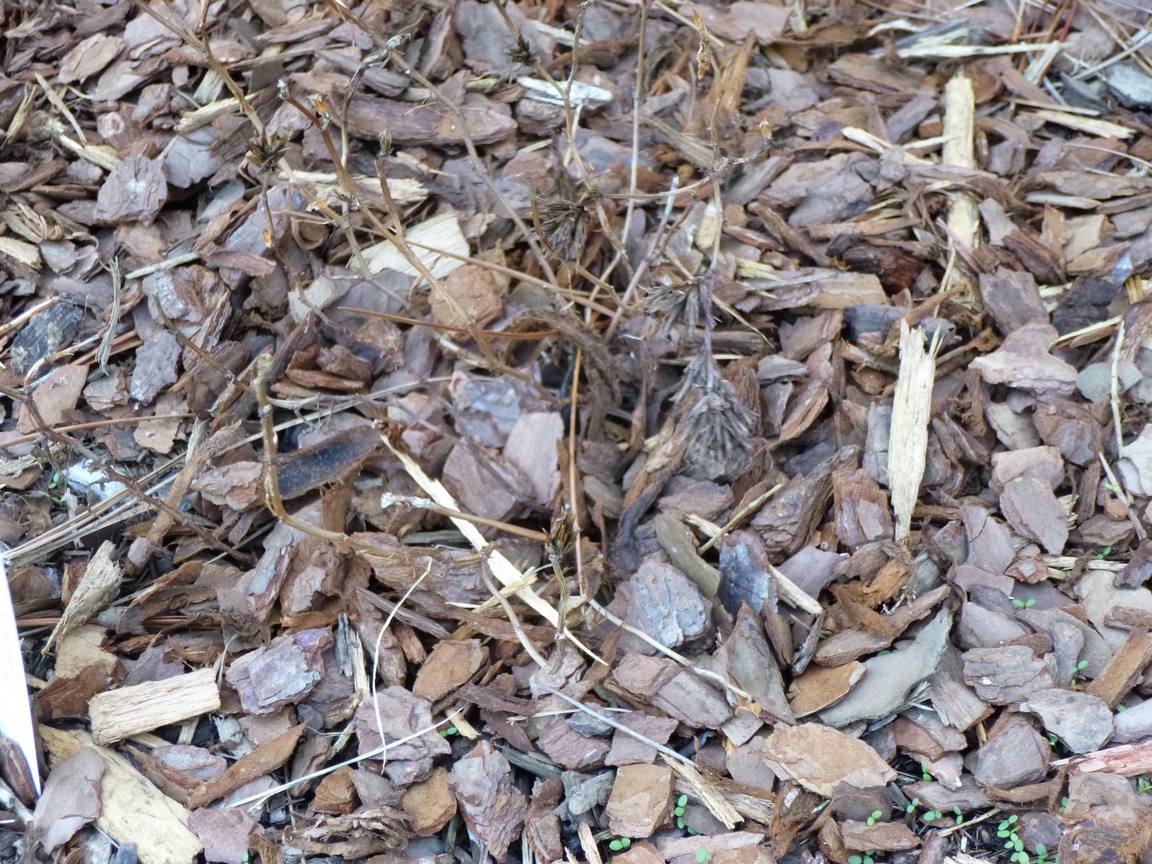
Sweet Woodruff in March 2013 - battered but unbowed
UPDATE - As time goes by and I see how a plant performs in the garden from year to year, my views may change and I'll update old posts accordingly. That's what happened with sweet woodruff. I started experiencing dieback on patches of this plant in both winter and summer. I suspect it's a bit difficult to grow in the hot and humid Southeast and especially the Deep South. At the same time, when I started to try to dig up patches, I found a disturbingly elaborate web of roots that seemed to occupy the entire top layer of soil. I could literally lift the plant and the soil would come with it like a piece of carpet. So I ended up evicting sweet woodruff entirely from my garden. Fortunately, unlike Ajuga or Geranium sanguineum at least it had the decency to leave politely and not try to make too many repeated comebacks. I've since shifted my gardening more toward natives, especially vis-a-vis spreading groundcovers. If you do grow this plant in the U.S., please check to make sure it's not invasive in your region, as might be the case particularly in the Pacific Northwest, Upper Midwest and parts of New York State.

So far, I'm still loving Sweet Woodruff (a.k.a. Galium odoratum). Not loving it anymore. Shovel-pruned it.

I first planted some last spring, it survived our scorching summer last year, so I split off some last fall, and both the division and a new plant that I purchased from a nursery last autumn have done well and seem to be growing and expanding.

(That's opposed to other 'groundcovers' I've purchased that have either (a) died or (b) covered very little ground so far.)

So that's why I sang Sweet Woodruff's praises a couple of months ago. At the time, the plants were welcome shades of green in an otherwise relatively brown and bare landscape.

Well, I'm still enamored with the plants, but they weren't quite as evergreen as I'd hoped, at least not in our average zone 7 winter. Our coldest temps were in the high teens this winter, but most nights were in the 20s or 30s.

Anyways, my question is this -- For anyone who grows or has grown Sweet Woodruff, do you prune off the old tattered foliage or if you don't do anything will the plant shed the old foliage on its own as the year progresses.

Lots of healthy new Sweet Woodruff foliage emerging from underneath the messy mop of foliage pictured above. Should I trim away the old growth or will it fall away on its own (and how long would that take?) as this new foliage takes center stage?

I only have the three small Sweet Woodruff patches right now (actually one small patch, two tiny patches), so I certainly wouldn't mind clipping off the old growth this year, but I have two concerns:

1) Perhaps the old growth is there to shelter and protect the new growth as it emerges? After all, no one's pruning Sweet Woodruff in the wild.

2) Alternatively, if the old foliage will persist throughout the year and it's better to give it a haircut to let the new foliage have its place in the (partial) sun, that's good to know before I let Sweet Woodruff run rampant and find myself faced with the task down the road of pruning an acre of last year's Sweet Woodruff foliage on my hands and knees.

Ergo, I welcome your opinions, suggestions and personal experiences on this edition of To Prune or Not To Prune! Thanks :)


Tuesday, January 15, 2013

The January Garden - Sweet Woodruff

I have fallen in love with Sweet Woodruff (Galium odoratum, a.k.a. Asperula odorata). Here in the heart of winter, Sweet Woodruff is looking greener, healthier and more beautiful than ever. The winter coloration (purpling) of some leaves just adds to the beauty for me.

UPDATE - As time goes by and I see how a plant performs in the garden from year to year, my views may change and I'll update old posts accordingly. That's what happened with sweet woodruff. I started experiencing dieback on patches of this plant in both winter and summer. One of the readers from South Carolina who left a comment also reported problems with this plant. I suspect it's a bit difficult to grow in the hot and humid Southeast and especially the Deep South. At the same time, when I started to try to dig up patches, I found a disturbingly elaborate web of roots that seemed to occupy the entire top layer of soil. I could literally lift the plant and the soil would come with it like a piece of carpet. So I ended up evicting sweet woodruff entirely from my garden. Fortunately, unlike Ajuga or Geranium sanguineum at least it had the decency to leave politely and not try to make too many repeated comebacks. I've since shifted my gardening more toward natives, especially vis-a-vis spreading groundcovers. If you do grow this plant in the U.S., please check to make sure it's not invasive in your region, as might be the case particularly in the Pacific Northwest, Upper Midwest and parts of New York State.


I guess normal gardeners love roses, daylilies, viburnums, azaleas and rhododendrons.

Me? I fell in love with a groundcover - Sweet Woodruff, Galium odoratum, also known as Asperula odorata.

The Internet is full of interesting information about this plant:

Living in Season notes that in Germany (where the plant is called Waldmeister or "Master of the Woods"), fragrant dried sprigs are used to flavor May Wine. But that killjoy FDA has nixed consumption of Sweet Woodruff due to the fact that the plant contains a chemical called coumarin.

Now I'm neither a lawyer, nor a chemist nor a doctor. (I don't even play any of those roles on TV.) So I'm not going to even attempt to tell you whether or not it's safe, legal or smart to use Sweet Woodruff to flavor your wine. Do your own research. Consult with experts. Make your conclusions.

But it does seem to be perfectly safe (near as I can tell) to dry Sweet Woodruff sprigs and use them for potpourri or air freshener. I haven't tried that yet, but perhaps I will do so this year.

Just another shot of beautiful Sweet Woodruff foliage, which is supposedly fragrant when dried. I like the greens and the purples. I like it all. There is something here that reminds of me of both snowflakes and fractals.

Some folks say that Sweet Woodruff can be aggressive. That has not been my experience (yet) but I can see how eventually it might overtake particularly small or retiring competitors. But Sustainable Gardening (which has a beautiful photo of a whole bed of Sweet Woodruff) notes that the plant is rather delicate and can be easily uprooted, kept in bounds and otherwise controlled. Sustainable Gardening also points out that the low-growing Sweet Woodruff (mine can't be taller than 4-6 inches at most, though some sources insist it can grow up to 12-inches tall) is no threat to bushes, shrubs or tall perennials.

See the little sprout of Sweet Woodruff poking through the soil on the left-hand side of the photo. Sweet Woodruff will spread, but the new plants pop up near the mother plant and I've found the plant easy to control / uproot if necessary. In fact, I wish it would spread faster! (As always, YMMV depending on climate, soil, rainfall, etc.)

Now Mother Earth Living warns that Sweet Woodruff will struggle in the hot and humid South. That hasn't been my experience at all. I planted Sweet Woodruff last spring, just before a long, hot and dry summer. And when I say "hot", I'm talking record heat (110+ degrees Fahrenheit). It's true, I did give this plant partial shade (its natural environment is woodlands after all), but my Sweet Woodruff still got fairly intense sun all morning during the summer in its east-facing foundation bed. That's maybe 6 hours of sun, which would be considered 'full sun' in some books.

And yet, the plant performed like a champ. It didn't grow much, but it didn't wither or croak either. It just kind of hunkered down and stayed green and pretty. A couple of stems might have browned and died, but the overall effect was undiminished. This is a tough cookie. But if I were to do it again, I'd suggest Southern gardeners plant Sweet Woodruff in the fall, since a new plant that I added to the landscape in autumn seems to be getting off to a much better start than the one I threw into the deep end of a long hot Tennessee summer.

Anyway, cooler weather came eventually. Lows in the low-20s recently. Highs sometimes only in the 30s. But Sweet Woodruff is hardy to zone 4. That means it should be able to handle lows in the negative-30 Fahrenheit range. 20 above freezing is just a walk in the park. Which might be why my Sweet Woodruff, which looked fine in July, now looks positively cheerful.

(I should say it looks mostly cheerful. Certain stems do appear dead or damaged, especially on the smaller plants that I divided or planted this autumn. But even those have very healthy-looking new foliage emerging from underground, so I'm fairly confident that they'll be fine come springtime and may even benefit from a haircut.)

Where Sweet Woodruff waited out the summer, it is now growing and expanding in the middle of winter. When I redid the front foundation this summer, I transplanted the Sweet Woodruff a bit closer to the front of the bed, where it would be more visible. At that time, I divided the plant and replanted the offset nearby. And I also planted a new Sweet Woodruff plant that I'd ordered through the mail from Gardens in the Wood of Grassy Creek.

The Sweet Woodruff I bought and planted just a couple of months ago from Gardens in the Wood of Grassy Creek. The 'mama' plant is still pretty small, but look how much she's already spreading to the right with shallow stolons and pretty little rosettes popping up - and this is in heavy clay with a light scattering of mulch on top!

All three plants are doing great now. The one from Gardens in the Wood in particular is expanding and scouting out new territory even though the central clump is still pretty small. And I'm looking forward to hopefully seeing a show of white blossoms that Paghat says should make an appearance in April and May.

So to recap, it's not flashy or showy, but I think Sweet Woodruff deserves to be planted in far more gardens. Here's why:

1. Evergreen (so far, in zone 6/7, during a winter with temps close to average, lows in the 20s, highs in the 30s and 40s)

2. Nicely spreading - clearly desirable in a groundcover - but not overly aggressive.

3. Interesting and beautifully whorled foliage, which can supposedly be cut back to stimulate regrowth. Haven't tried that yet, but will report back when/if I do make that experiment.

4. Flowers (reportedly) in spring that are supposed to attract butterflies and bees, according to Agweek (which agrees with me that Sweet Woodruff is "one of the best groundcovers")

5. Fragrance (reportedly, of dried branches). Also haven't tried this yet, but will report back when/if I do.

6. Suppresses / controls weeds, which makes a gardener's life more carefree and lighthearted!

Do you grow Sweet Woodruff in your garden? If so, please post your experiences in the Comments section below!

Curious to see if my love affair with Sweet Woodruff will last? Want to know whether Sweet Woodruff will flower and if the scent of the dried sprigs really is as good as everyone says? Stay tuned with email updates.