Showing posts with label drought. Show all posts

Monday, May 16, 2016

Class of 2016 -- Coreopsis lanceolata, lanceleaf coreopsis


Lanceleaf coreopsis (Coreopsis lanceolata) started to bloom on May 11th.

Why I'm growing Coreopsis lanceolata in my garden...

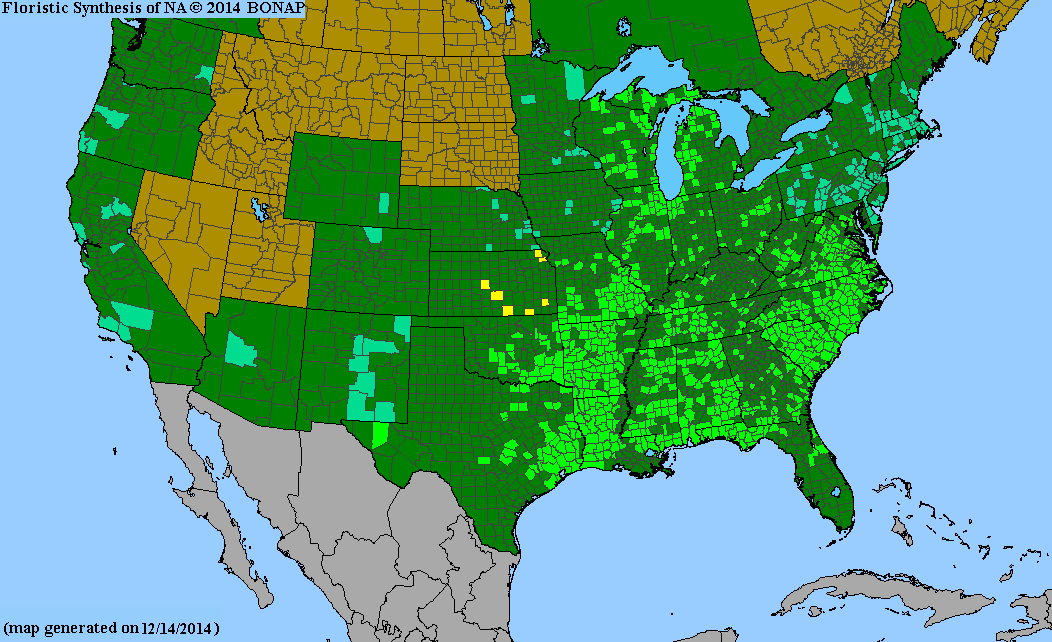
1) Lanceleaf coreopsis is native to Tennessee and throughout much of the Eastern U.S.

2) Missouri Botanical Garden says it can grow in full sun and tolerate deer, drought, heat and humidity. (I've got all of those in abundance!)

3) I found an 1890 (!) article in The Garden magazine saying that C. lanceolata grew "exceptionally fine" on heavy clay soil during wet summers.

4) Michigan State University says that lanceleaf coreopsis flowers are very attractive to bees and other beneficial insects.

5) The Missouri Prairie Foundation says that C. lanceolata seeds provide food for finches.


Do you grow lanceleaf coreopsis? If so, what has been your experience with this plant?

Instagram

Follow Aaron Dalton on Feedio

Monday, February 10, 2014

Anger, Snow, Drought, Butterflies and Poetry

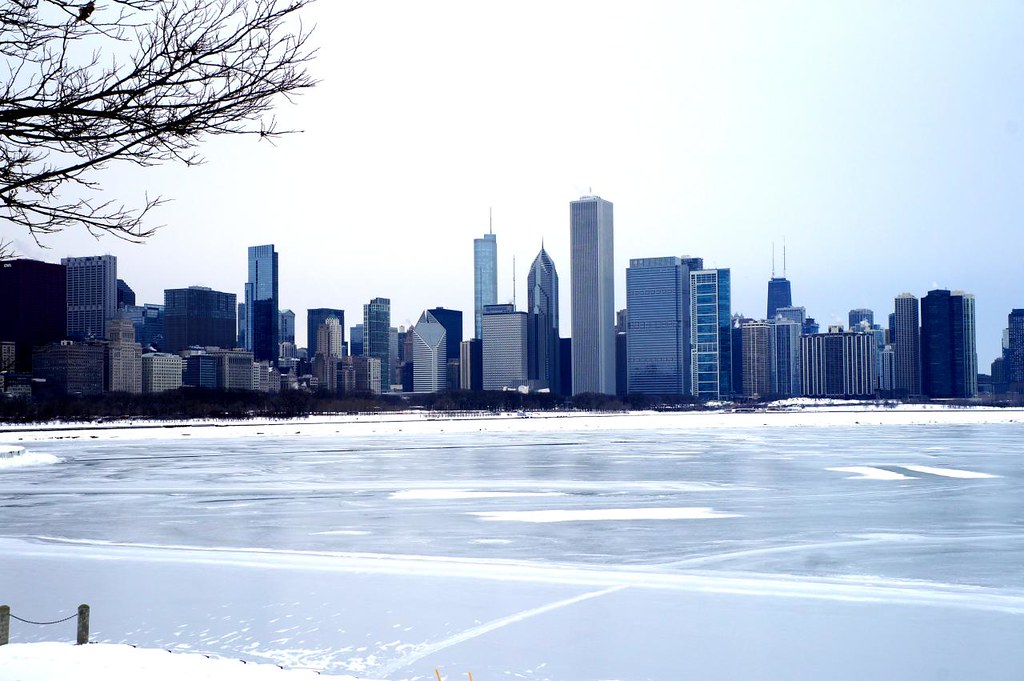
Snowy Chicago and frozen Lake Michigan, February 4, 2014
Photo by Patrick Giblin via Creative Commons

I read online a few months back that anger is the Internet's most prevalent and powerful emotion.

That sounds about right to me.

And it concerns me a bit, because so many of us spend so much time on the Internet these days, that we're probably absorbing that anger, contributing to it and most likely taking it offline into our personal lives.

That's probably not healthy.

Of course, that's one reason I like writing and reading gardening blogs. There's usually not much anger either on the part of the writer or the commentators.

On most sites, comments sections are typically inane at best or vicious at worst, filled with ad hominem attacks. But gardening blog comment sections are typically supportive, humorous, helpful and kind. I think it speaks well for our ilk and gives me hope for the human race. (OK, maybe that's naive or silly, but that's how I feel.)

And yet...

Allow me to vent just a little on a story I came across just today in the venerable New York Times with an editor from Powder magazine scaremongering about "The End of Snow?"

Seriously!?

Did the Times commission this piece and agree to run it back in July?

Because last time I checked, this has been the harshest winter in decades in large parts of the Eastern United States.

Here in Tennessee, our temperatures have been running about 20 degrees below normal lately. Over the next couple of days, 2-4 inches of snowfall is being forecast south of us in Alabama and Georgia.

Wait....what's that white stuff?
Oh yeah, it's SNOW in Bethlehem Pennsylvania, February 3, 2014
Photo by Marty Desilets via Creative Commons


My father up in Pennsylvania seems to spend most days shoveling snow as his state has been hammered week after week by snow and ice. The most recent storm left hundreds of thousands of people without power - some for five days now. One guy apparently tried to stay warm in his powerless house by lighting a Duraflame log on his kitchen table.

Now I know that somebody is bound to jump up at this point and say, "But wait - global warming is a global phenomenon and you're talking about local weather patterns."

To which I say: Sure. I know that temperatures have been running above average in California and southern Florida, but large sections of North America have clearly been way below average temperature-wise this winter. Thousands of cold and snowfall records were broken last month. Just for a sampling, this winter is shaping up to be one the snowiest on record in places like Cleveland, Detroit and Chicago.

Of course, all that snow may have escaped the notice of Powder magazine since the skiing probably isn't so great on Michigan Avenue. But I'm sure that some ski resorts (e.g., in Montana) have gotten oodles of snow this year.

Farther afield, Tokyo just had its heaviest snowfall in 13 years. I don't think we need to worry that snow is on its way to becoming something you can only view in a very cold museum.

I am a fervent and proud environmentalist. I also understand that some people actually believe global warming is a proven fact, but personally I don't hold great faith in climate prognosticators of any stripe when the meteorologists with all their satellites and sophisticated computer models tend to get the weather wrong more often than not, especially when trying to predict anything more than 24-48 hours into the future.

And I don't find all that helpful to have anecdotal evidence that the snowpack in a given location might be less than 40 years ago. Because four decades ago, we were in the 1970s (yikes), which I believe was such an unusually cold decade that news magazines were running stories about how we might be about to enter a new ice age.

(Incidentally, we might be due for another ice age. On the down side, it would wipe out a lot of life on the planet. On the upside, the skiing opportunities would probably be legendary.)

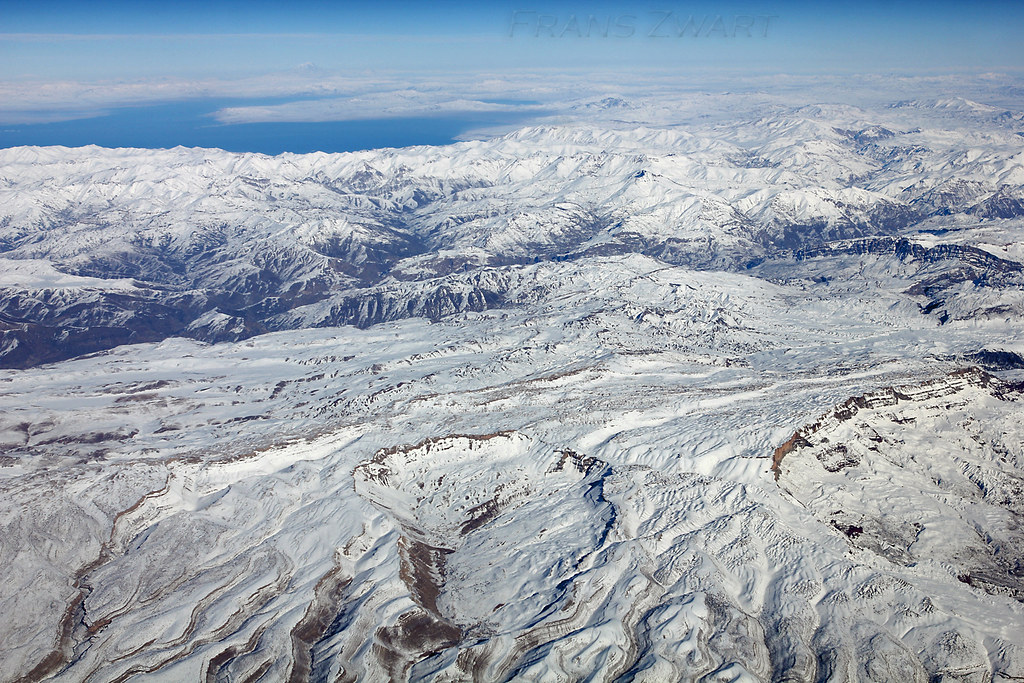
Lots of snow in this Turkish mountain range., but no visible ski resorts.
Maybe there is an inverse relationship between ski resorts and snowfall?
Beautiful photo by Frans Zwart via Creative Commons

The point I would like to make is that scaremongering may win clicks, but I think it tends to boomerang and erode the scaremonger's credibility in the long run.

Unfortunately, that's what has been happening. When people run around year after year saying, "The sky is falling! The sky is falling! We're not going to have winter anymore unless we all radically change our lifestyles." And then we have a brutal winter, people just stop listening and figure we can all merrily pollute to our heart's content.

And that's a problem. Because I think we are screwing up the planet in some ways. That's what happens when you have billions and billions of people blithely building, consuming, polluting and reproducing.

I wouldn't be quite so harsh on homo sapiens as Agent Smith was in The Matrix, but it's clear that collectively we are are tacitly supporting an agricultural system that rips out milkweed, plants endless fields of corn and drives the Monarch butterflies to the brink of extinction in the process.

We are withdrawing water from underground aquifers faster than those aquifers naturally can be replenished.

And yet we have someone wringing his hands about how global warming is going to harm the skiing industry?!

Here's an idea -- If you're concerned about human impact on the planet, why not stop flying around the world on pollution-spewing airplanes just so you can get your kicks sliding down a mountainside.

(The ski industry's eco-friendly credentials are not burnished by the news that snow-making in the Alps uses more water than the inhabitants of Vienna in wintertime.)

Let's face it - the whole skiing industry is massively wasteful and probably representative of our cavalier disregard for the planet. Let's take a pristine mountainside, chop down the trees to create ski runs, build condos and hotels and other buildings -- all of which incidentally emit heat, almost certainly making the local microclimate warmer. Then let's attract millions of people from all over the world who will almost certainly arrive by car or plane clad in the latest space-age gear made from petroleum products.

(I realize I just aggravated off an awful lot of people, thus fulfilling my initial point that the dominant emotion on the Internet is anger.)

All I'm trying to say is this -- If you want to ski, OK. If you want to agitate against global warming, OK. But you cannot credibly have it both ways by pretending to care about global warming and then blithely advocating a lifestyle that emits massive amounts of global warming inducing greenhouse gases while calling on "federal policy makers to take action on climate change."

You want action? How about starting by changing your own lifestyle.

If you're upset about big agribusiness, try to eat local, grow your own food, support local organic agriculture and so forth.

If you're upset about the fact that the Monarchs are dying out, plant milkweed.

If you're upset about droughts, advocate more sensible water policies. Encouragingly, cities across the West are doing just that by paying citizens to rip out their lawns and replace them with drought-tolerant landscaping - or even by outlawing lawns altogether.

And if the vitriol on the Internet, cable talk shows, newspaper editorial columns, radio shows, etc. makes you mad, just shut it off.

Take a deep breath.

Plant some flowers.

Read a gardening blog -- most of the time we're really quite calm and civil.

And if the whole rigmarole has got you down, if you feel buffeted by inanity and calamity, assailed by the cruel winds of fate (or perhaps just the howling gales of this bitterly cold winter), it may help to remember the encouraging words of the English poet William Ernest Henley who wrote:

Invictus

Out of the night that covers me,
Black as the Pit from pole to pole,
I thank whatever gods may be
For my unconquerable soul.

In the fell clutch of circumstance
I have not winced nor cried aloud.
Under the bludgeonings of chance
My head is bloody, but unbowed.

Beyond this place of wrath and tears
Looms but the Horror of the shade,
And yet the menace of the years
Finds, and shall find, me unafraid.

It matters not how strait the gate,
How charged with punishments the scroll.
I am the master of my fate:
I am the captain of my soul.

Wednesday, July 4, 2012

104, 108, 106, 104, 99, 99

Those aren't lottery numbers, they're the high temperatures recorded in my neck of the woods over the past six days.

At Nashville airport, it actually hit 109 degrees (42.8 celsius) on June 29, setting an all-time high temperature record.

That's right, the highest temperature ever recorded in Nashville since modern record-keeping began back in 1871, over 140 years ago.

Oh and did I mention we have had basically no rain for over a month?

What does that do to a garden? It ain't pretty, folks. I'll spare you pics of the worst of the carnage today and just say that I'm fighting to keep most plants alive.

At the same time, I'm perversely interested to see what will survive. Especially in an age of scarce resources, I believe that coddle our gardens far too much. I think I want a garden that can prosper - or at least survive - with little intervention or assistance.

Is that too much to ask?

In any case, I have not been living up to that ideal, but I have taken feeble steps in that direction by refraining from watering every day and limiting my watering to every other day.

(The exception is the vegetable garden. It's not fair to ask vegetables that were bred to be edible, not drought-resistant, to survive on their own. It would be like throwing a toy poodle into the Amazon jungle. So the cucumbers, the beans and the stubbornly small okra seedlings get some daily water. The tomatoes though, which are well-established, only get a deep watering every other day.)

So how are some of the previous garden superstars doing in this infernal weather? Not so well...

Remember the Rozanne perennial geraniums covered in blooms back in early June? This is the same plant now:

Perennial geranium 'Rozanne', nary a bloom in sight

I had thought perennial geraniums like Rozanne were drought-tolerant, but as with my last post, I find that when I go back to look at the Bluestone Perennials plant description, I must have actually focused on heat tolerance rather than drought tolerance.

That's a big difference. Rozanne might do great in steamy tropical wet Florida -- or even in a normal Tennessee summer punctuated by regular downpours -- but it doesn't seem to have much tolerance when the rains fail.

In any case, I tried cutting back the dead growth on my three Rozannes. (I was guided in part by this article that suggests a big cutback can promote rebloom, though I'd be happy with just having them survive to bloom next year.) As a relatively novice gardener, I'm not sure if that was a good idea or not. Would more experienced gardeners like to chime in? Do you typically cut back drought-stressed perennials.

The trimmed Rozannes look better...for now. But we'll see how they fare through July and August...

Rozanne geranium after a major haircut

Since I was in a trimming mood, I also cut back two of the three gauras. Again, I was guided by an article that said: "If the plants are looking tired prune again in summer to encourage a further flush of flowers."

But what is the best way to trim a wild and sprawling gaura that has ceased flowering?

How do you tame a plant like a gaura? (Apologies to Sound of Music.)

I tried two methods of pruning with these two plants:

1) For the plant on the right, I grabbed bundles of the long floppy stems and cut them back close to where the leafy bottom part of the gaura begins, maybe 8-inches off the ground.

2) Cutting bundles of stems is hard work, so for the plant on the left, I tried to cut back even further. I mostly chopped this plant back to its woody stems. One cut to a woody stem severs all the floppy ones above it, so fewer total cuts are needed. But I'm a bit concerned that I may have cut back the plant too severely.

There were a lot of dead leaves at the base of both plants, particularly the one on the left. I'm not sure if this is typical (it's only my 2nd year growing gaura and I know they are supposed to be short-lived plants), but I suspect that it's at least partly the result of the heat and the drought.

Well, here is a photo showing one trimmed and one soon-to-be trimmed gaura:

Short-haired gaura vs. Long-haired guara :)

With the trimming done, I took a walk around and visited some other plants, like this heat-and-drought stressed lily. I can't remember the name of these lilies we planted last year, but all three of them did come back and they were looking pretty good until about two or three weeks ago when they started yellowing at the base. Not all the flowers have opened and the ones that did open weren't looking all that happy. So I cut some of the flowers and brought them inside where we could enjoy the beautiful fragrance. The ones that are inside in the a/c and sitting in a vase of water look much happier now!

Lily struggling in the heat.

A cool and comfortable lily blooming widely and fragrantly in the air-conditioned house

As we established in a post about 10 days ago, the zinnias are looking extremely drought-stricken. But I've been watering them faithfully every couple of days and most of them seem to be (barely) hanging in there. The ones that are left are visited regularly by gold finches and butterflies. Many of the butterflies are little brown skippers, but there are other beautiful visitors including this one:

Black and blue butterfly (swallowtail?) on zinnia

Same butterfly, same plant, different flower, different angle

Finally, let's take a walk around to the North side of the house. It's a bit cooler and shadier over here, which means that while several of the Natchez crape myrtles sitting in direct sun on the west side of the house have stopped flowering and are sulking with drooping leaves, the ones on the North side of the house are looking much fresher and just starting to cover themselves with flowers. It's a welcome sight from an aesthetic standpoint, and I'm guessing that the bees are happy as well.

Lavender crape myrtle blossoms

Smaller reddish-pink crape myrtle has grown a lot and has many more flowers this year compared to last year. I'm not sure if it will stay shrub-sized or grow into a small tree. This one is more susceptible to powdery mildew than either the Natchez or lavender crape myrtles, but so far it has fought off the mildew on its own to produce a multitude of flowers

Close up on reddish-pink crape myrtle flowers that harmonize nicely with the brick wall background


That's all for now. Weather.com is calling for a 95% chance of rain in the next six hours. Accuweather says 90% probability of rain. I hope they are right!

Conversation starter --- Do you pamper your garden with life-sustaining water in times of drought or do you practice tough love and create your own little Darwinian survival-of-the-toughest situation?

Friday, June 29, 2012

Harvest #4 - Sun Gold Cherry Tomatoes and UBT (Unidentified Black Tomato)

Sun Gold cherry tomatoes ripening on the vine


I planted five varieties of tomatoes this year - Sun Gold, Riesentraube, Black Cherry, White Rabbit and an UBT (Unidentified Black Tomato -- well, not unidentified by the seller, but I didn't write down the name when I bought it at the farmers market and promptly forgot it by the time I was ready to label it).

Of these five, the White Rabbit (purchased online via mail order) died practically immediately. Its stem was broken in transit and it never recovered. The seller, whom I contacted immediately upon receipt of the plant, never even bothered to respond. This experience has soured me on buying tomato plants via mail order, despite all the amazing-sounding varieties available. I'll be sticking to farmers markets or nurseries from now on.

Anyway, Riesentraube (which translates to "Giant Grape") is humming along and growing nicely, though all its tomatoes are still green. I'll post Riesentraube photos at a future date. (I'm encouraged by the success that Margaret Roach has had with Riesentraube, as chronicled on her A Way to Garden blog.)

Black Cherry, purchased at the farmers market, has sulked and refused to grow since being planted. I suspect it may not be happy in its raised bed.

That leaves Sun Gold and the UBT.

The UBT produced a number of smaller-sized-than-regular-tomatoes-but-bigger-than-cherries and then has basically stopped growing at maybe 12 or 15 inches tall.

UBT (Unidentified Black Tomato), looks ripe but isn't really
The half-dozen tomatoes turned black but they still seemed really hard to the touch. I don't have much experience growing tomatoes, but I was concerned they might be unripe.

So I turned to that Voice of Experience (my momma) and asked her what she thought. Her sensible advice? Pick one and see if it was ripe.

So I picked one UBT and one Sun Gold tomato for a tiny tomato amuse bouche:

UBT and Sun Gold, just picked and freshly rinsed


I then sliced them open, so that my wife and I could share equally in this tiny harvest:

Sliced Sun Gold and UBT. Notice that the Sun Gold looks pleasingly ripe. Not so with the UBT.

Uh oh. That UBT didn't look ripe at all on the inside.

And in fact the taste was distinctly green tomatoish. (The crunchiness of the green tomato with the black skin and a slight sourness actually also brought to mind the experience of eating a plum.)

The Sun Gold of course was delicious. These photos are slightly old, but despite our record temperatures in Middle Tennessee and the ongoing drought, the Sun Gold has continued to produce new tomatoes with a bit of supplemental water given twice weekly. I'm impressed and certainly plan to plant more Sun Golds in the future. I can see now why they are a favorite of home tomato growers.


Dear Readers:

Has your tomato harvest begun?

Which varieties are performing best for you this year?

If you have photos of your thriving tomato plants online, please post photo links!

Sunday, June 24, 2012

The Heat is On! Which plants can survive a hot, dry Tennessee summer?

Pineapple Sage (Salvia elegans), not so drought-tolerant after all


The other night, I heard that nearby Franklin, Tennessee has started requesting voluntary water conservation from its citizens.

There hasn't been much news about the drought yet (despite the fact that Tennessee's rivers are at or near historic lows this year), but I can tell you that it is hot and dry.

We're talking mid-90s Fahrenheit (~35 Celsius) every day with high pressure parked over the region and no rain in sight.

Lawns up and down the street are turning brown, despite the fact that most people are watering daily. (I find lawn watering awfully wasteful, so I use our irrigation system a few days a week and feel guilty even using it that much. So our lawn is browner than most.)

But I don't care much about lawns. If I could afford it, if our HOA would allow it and if I thought it wouldn't adversely affect retail value, I'd rip it all out and replace it with landscaping with greater ornamental value and greater wildlife value for bees, butterflies, birds and other critters.

But that raises the pertinent question of what plants can survive the extremes of a mid-Tennessee summer. And I can tell you right now that it's not looking pretty.

Take the Pineapple Sage (Salvia elegans) at the top of this post. I thought this was supposed to be heat and drought tolerant, full sun plant. Apparently, I was misinformed. On closer research today, I discovered from Floridata that pineapple sage needs regular watering for best growth and flowering. Apparently it can sometimes survive a drought by wilting and dropping its leaves, but it won't thrive in drought conditions.

(Floridata also says that pineapple sage is best suited for zones 9-11, so I really goofed when I bought the plant for my zone 7 garden!)

What about zinnia? The University of Florida extension service describes zinnias as being a drought-tolerant annual. Floridata (one of my favorite information sources, despite the fact that I don't live or garden in Florida) describes zinnias as being "quite drought tolerant" plants that do best in full sun. The plant shown below must not have gotten the memo, as it is looking cooked. (I will note that now that I am scouring plant descriptions specifically looking for drought tolerance, I notice that many merchants, such as Burpee, emphasize that zinnias are heat tolerant without mentioning drought tolerance. Maybe zinnias are moderately drought tolerant, but do better in hot and wet places?)

Zinnia

How about Russian Sage? As you can see below, the plants are still rocking away and producing a profusion of blooms that attract a happy chorus of buzzing bees all day long.

Russian Sage (Perovskia atriplicifolia)

And yet, the picture isn't quite as pretty just a bit further down each plant where the leaves are yellowing, browning, turning yellow and falling off. What's the reason? Various Internet sources suggest either (a) too much water, (b) too little water or (c) shedding leaves as normal behavior. The mighty Missouri Botanical Garden says that Russian Sage (Perovskia atriplicifolia) tolerates clay soil, dry soil and drought, which pretty much precisely describes its environment. And yet, there's no mention of yellowing leaves...

Russian Sage (Perovskia atriplicifolia), yellowing leaves


Well, let's not make this post all doom and gloom! The good news is that after weeks of teasing with nothing but foliage, the French Marigolds (Tagetes patula) have started to burst into bloom. True, the 'Sparky Mix' seeds I bought from EverWilde were supposed to grow into plants 12-inches tall, whereas the actual plants are less than half that height, but the flowers are endearingly luminous.

French Marigold (Tagetes patula)


Some of the leaves Natchez crape myrtles are looking a little limp, but the trees themselves are covered in blooms. I think we have many more flowers this year than last year.

Natchez Crape Myrtle

And Purple Cone Flower (Echinacea purpurea) is still going strong, to the delight of bees and butterflies. (At least, I think these are butterflies, operating on the layman's assumption that moths land with wings flat and butterflies fold their wings...) University of Maryland's Cooperative Extension describes purple cone flower as "quite drought tolerant," while University of Delaware's Extension service describes Echinacea purpurea as being "very drought resistant." Interestingly, definitions of drought tolerance may differ here in the U.S. versus across the pond in Europe. I found one U.K. site that says Echinacea needs water at least weekly in full sun. I'm guessing that is the case, as a couple of my Echinacea are looking a little drought-stressed (though they're still getting by much better than the pineapple sage or the zinnia). Perhaps in very hot areas with drought risk it makes sense to ignore the usual full sun recommendation and plant Echinacea where it will get some afternoon shade?

Echincea purpurea, standing tall for now despite the drought

We have four or five of the Natchez crape myrtles in full sun, as well as an unidentified lavender crape myrtle that gets less morning sun, though it does get plenty of solar radiation in the afternoon. This specimen is thriving, growing vigorously and not exhibiting any signs of drought stress. Of course, it also has hardly any flowers at this point, but the one bunch of lavender flowers that has opened looks lovely and has a light, sweet fragrance.

Lavender crape myrtle flowers

 Over to the front of the house (morning sun, afternoon shade), we find that Calycanthus floridus, also known as Carolina allspice or sweetshrub. Floridata says that Calycanthus likes moist soils, but can survive drought. I've been giving the plant a deep watering twice a week and so far it seems to be limping along with just a bit of leaf tip browning. The plant is native to the Southeastern U.S. and is supposed to have fragrant spring flowers. Obviously no flowers this year as this tiny plant (purchased through mail order) is just getting established, but I'm hoping I can nurture it through the drought so that I can enjoy its flowers next spring.

Calycanthus floridus, Carolina allspice, sweetshrub

Last but not least, here's a look at an Ajuga reptans that seems to have happily established itself in one of the shadier corners at the front of house. North Carolina State University (NCSU) includes ajuga on its list of drought tolerant plants, and this specimen certainly seems to be living up to its reputation, perhaps helped by the fact that it gets shade from about 10 a.m. onwards. It's not a particularly flashy plant, but I've definitely come to appreciate ajuga's shiny, classy foliage. I'm hoping it spreads into a sizeable groundcover, and I suspect that next year I'll be able to enjoy more of its blue flower spikes.

Ajuga reptans

That's all for now. I didn't include any photos (to keep this post at a somewhat manageable size) but I can tell you that the Autumn Joy sedum and the phlox paniculata (shown in the June 21) post are both doing fine. Both sedum and the phlox are on the NCSU list of drought-tolerant plants.

The drought has struck harder and earlier than usual in Tennessee, but we're certainly no stranger to droughts here and this experience has only reinforced my feelings on the importance of planting drought-tolerant or drought-resistant plants in any climate that is prone to water shortages. It seems to me this makes sense for two reasons: (1) You may enjoy watering (I do), but it's nice to know that your plants can survive for an extended period of time if circumstances prevent you from watering for one reason or another, and (2) with 300+ million people in the U.S. and 7+ billion people around the world, planting a landscape that needs lots and lots of supplemental water doesn't seem like such a swell idea.


Dear readers, I'd like to get your thoughts on a few questions:

1. Is your garden facing drought now or have you faced drought recently?

2. If you've encountered drought in your garden (now or in the past), what have turned out to be the toughest and most drought-tolerant plants in your experience?

3. How do you define drought-tolerant? Is a drought-tolerant plant in your garden one that only needs water once a week? Once a month? Never needs any supplemental water?

Thanks for reading! And let's hope for rain -- 'cause it's a good thing!

PS - Curious as to what's going on in the veggie garden? Check back in a couple of days for an update on the tomatoes, cucumber, pole beans, okra and more!