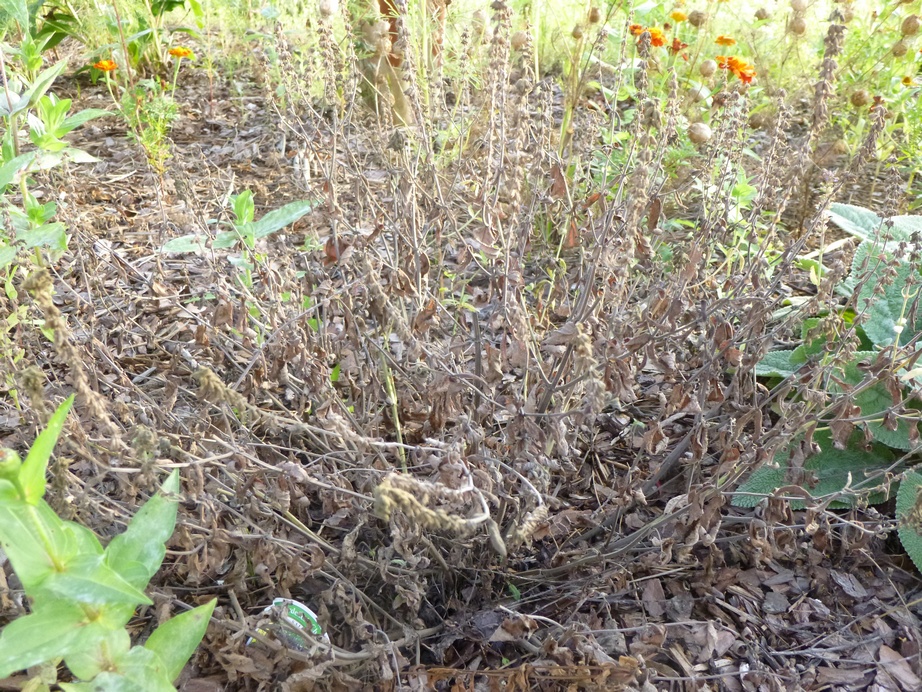
Monday, September 30, 2013
Groundcover Review: Chrysogonum virginianum, Green and Gold
Chrysogonum virginianum (a.k.a. Green and Gold)
Pros:
- Native to Tennessee and most of the Eastern U.S.
- Charming yellow flowers supposedly from mid-spring to early-fall in cool climates (stops flowering during the summer in hot climates like Tennessee but resumes in the fall). This is my first year with Green and Gold. The plant I bought was tiny, but it still flowered sporadically throughout April and May. These flowers reportedly attract native bees. I can't say I've noticed any yet, but there are typically just 1-2 flowers open at any given time so far. Maybe you need a carpet of Green and Gold to really attract the attention of the bees?
- Hardy to zone 5. Reportedly evergreen to semi-evergreen in zones 6-7. The foliage has a nice mix of colors in it - greens, but also yellows and reds.
- Supposedly easy to propagate by divisions or cuttings in early spring.
- Tolerates drought with partial to full shade in the South. So I've got it planted with an Eastern exposure and afternoon shade. Also reportedly tolerates wet soils. (We had a lot of rain this past spring and Green and Gold seems perfectly happy.)
- Diminutive but still gives good coverage. I don't think Green and Gold would overwhelm any other plants. It seems like more of a rambler than a mat-former. But I do think it's just tall and thick enough to prevent most weeds from getting through. Does not seem too aggressive. I think it should be easy to control.
Cons:
- Hard to find in the nursery trade. And when you do find it, you're likely to find a tiny plant. Since the plant grows slowly (at least at first), it would be very expensive to produce an instant groundcover effect.
Conclusion:
So far, the pros far outweigh the cons for me on this groundcover. I wish it was a little faster-spreading (OK, a lot faster-spreading), but otherwise I'm thrilled to have Green and Gold in our garden. There's supposedly a more stoloniferous and faster-spreading variety called Eco-Lacquered Spider carried by Plant Delights, but I'm loathe to spend $12 (plus shipping) on a quart-size plant just to see if it lives up to the hype.
PS - If you'd like to stay abreast of the latest developments at Garden of Aaron, you can now subscribe via email! Totally convenient, totally free - what could be nicer?
Cultivated by
Aaron
at
8:00 AM
Groundcover Review: Chrysogonum virginianum, Green and Gold
2013-09-30T08:00:00-05:00
Aaron
Chrysogonum virginianum|Eco-Lacquered Spider|Green and Gold|groundcover|native|
Comments
Location:
Tennessee, USA
Monday, September 23, 2013
Groundcover Review: Cranesbill Geraniums
![]() |
| Geranium Rozanne in early July |
Cranesbill Geraniums
Pros:
- Very floriferous. Lotsa flowers (even in partial shade) + Long bloom season = Quite an impression
- Beautiful foliage
- Does not seem to be bothered by any pests or diseases
- Don't recall seeing hardy geraniums on many lists of drought-tolerant or heat-tolerant plants, but Rozanne survived the brutal heat and drought of 2012 (with supplemental water in full sun) and I have to think they'll be fairly tolerant of both drought and heat in a spot with afternoon shade.
Cons:
- Not a con necessarily, but just be aware that foliage may scorch in hot climates in full sun. At least that is what happened with Rozanne in 2011 and 2012. She's much happier now in partial shade as you can see from the blooms.
- Rozanne is herbaceous. That means the whole plant dies back in winter, which can leave quite a hole in the garden seeing as Rozanne is a sprawler. Not sure yet if my two other hardy geraniums - G. cantabrigiense 'Biokovo' and G. sanguineum 'New Hampshire' - will perform the same or if they'll be evergreen or semi-evergreen. I can say that so far both are much tighter in their growth habit.
- Can't see much in the way of pollinator action from bees, wasps or hoverflies. There are some little insects that buzz around the flowers, but they don't seem to land much. I think they may just be in the vicinity while visiting the Sweet Alyssum. Or maybe they visit at night when I'm not looking?
- Not native to the U.S.
![]() |
| Geranium sanguineum "New Hampshire" in early July |
Conclusion:
- Rozanne was my first hardy geranium love and probably still the one I like best. I'd like them all a lot better if the bees seemed more interested. The herbaceous nature of Rozanne is a real drag and can be a challenge in figuring out garden design. I'll have to reserve final judgment on cantabrigiense and sanguineum until seeing how they perform this winter. I think all of these make nice low-growing perennials, but I'm not sure they really qualify as groundcovers. (Although other varieties I don't have in my garden yet, such as G. macrorrhizum are actually supposed to have more of a groundcover habit.)
UPDATE 4/17 - 'Rozanne' ended up being a lovely, but somewhat short-lived plant in my garden. Geranium x cantabrigiense 'Biokovo' has turned out to be one of my favorite perennials. Sure, it might be a bit happier with some more shade (mine are mostly planted where they get full sun all morning and into early afternoon), but it hangs tough during the summer and makes an excellent, beautiful evergreen groundcover especially in spring, summer and autumn. Sometimes 'Biokovo' flowers even attract bumblebees! BUT...I do wish to retract my recommendation on G. sanguineum. This plant has turned into a bit of a nightmare. I thought it was spreading too aggressively and overwhelming other nearby plants, so I decided to rip it out. Ha. Geranium sanguineum - or bloody cranesbill - has deep, thick, red roots. They hang on touch and snap easily (at least in heavy clay soil). And the plant regrows from even small root fragments. The upshot - I've dug up certain areas oh, half-a-dozen times trying to get rid of G. sanguineum and probably will be digging all this year trying to eradicate the last remnants. Meanwhile, I've got quite a few holes and blank spaces in my garden where I can't plant anything lest I need to excavate again in a search for G. sanguineum root pieces. Ugh. Don't plant it. (Unless you're in its native range - Europe, far western parts of Asia. In that case, I guess you could plant it if you wanted a really tough, aggressive native romping through your garden.)
Cultivated by
Aaron
at
8:00 AM
Groundcover Review: Cranesbill Geraniums
2013-09-23T08:00:00-05:00
Aaron
Biokovo Geranium|Cranesbill Geranium|Perennial Geranium|Rozanne Geranium|
Comments
Location:
Tennessee, USA
Monday, September 16, 2013
Groundcover Review: Stachys officinalis, Hummelo, Betony
![]() |
| Stachys officinalis, Hummelo, Betony in early July |
Stachys officinalis, Hummelo, Betony
Pros:
- Hardy to zone 4 and supposedly at least semi-evergreen in zone 6/7. This is my first year with S. officinalis, so I can't say yet how it will perform in winter
- Reported to have moderate drought tolerance. With limited supplemental water, S. officinalis seemed to handle TN heat and typical summer drought with aplomb.
- Long bloom season. Started sending up flower spikes in late June and was still blooming into September. Flowers are reported to provide nectar to bees and butterflies, but unfortunately I didn't see much activity on the Hummelo flowers.
- Foliage is dense enough to suppress weeds.
- Dried leaves can reportedly be used to make tea. (I have not tried this myself so I cannot personally vouch for its safety or taste, just passing on information found via Internet research.)
Cons:
- Reportedly needs some afternoon shade in hot and humid summer climates, so no dice if you're looking for a full sun groundcover.
- Supposed to spread by creeping stolons to form a groundcover, but so far in its first year has acted more like a clumper. But you know what they say sometimes about groundcovers and vines - first year they sleep, second year they creep, third year they leap! So we'll see what happens in years to come. On the bright side, at this point it seems like it would be easy to keep under control.
- Not native to the U.S. Originates in Europe, Western Asia and North Africa.
Conclusion:
I can't say anything bad about Betony, but I don't think it really stands out in the garden yet. Perhaps as it gets more established in the garden, it will have a stronger presence and make more of an impression. If it starts spreading a little further and attracting pollinators, I'll definitely become more enthusiastic.
Cultivated by
Aaron
at
8:00 AM
Groundcover Review: Stachys officinalis, Hummelo, Betony
2013-09-16T08:00:00-05:00
Aaron
Betony|groundcover|Hummelo|Stachys officinalis|
Comments
Labels:
Betony,
groundcover,
Hummelo,
Stachys officinalis
Location:
Tennessee, USA
Monday, September 9, 2013
Groundcover Review: Ajuga, Bugleweed
![]() |
| The variegated ajuga in the front border mixes nicely with some Sweet Alyssum while blocking out most weeds. |
Ajuga, Bugleweed
Pros:
- Evergreen (or ever-purple or ever-variegated, depending on the variety)
- Pretty and long-lasting (at least several weeks) spikes of flowers in the springtime. UGA lists Ajuga as a good bee-forage plant, but I did not see any bees on the flowers during our (cold, wet) spring. Other sources say Ajuga can attract hummingbirds and butterflies. I didn't see any of those on the flowers either. Sigh.
- Prefers moist soil, but tolerates drought
- Grows in sun or shade. I have one patch growing in sun, but the patches growing in afternoon shade seem much happier.
- Does not really need any maintenance. Some sources recommend cutting back the flower stalks after the bloom is done. As far as I can tell, that's only really 'necessary' for aesthetic reasons. If you don't mind the spent bloom stalks sticking up until they fall over (and I don't) then the plant is basically zero-maintenance.
![]() |
| Ajuga genevensis, Carpet Bugle. Annie's Annuals says it is not stoloniferous and therefore less likely than Ajuga reptans to spread out of control. (Of course, Annie's also says the plant will flower all summer, which ours does not do, so perhaps the summer blooms are a California thing or maybe it's just that YMMV...) |
- Spreads pretty quickly. I could see Ajuga perhaps working in combination with Sweet Woodruff to cover large patches of shady ground that would not need much / any mowing or other maintenance.
Cons:
- Not native to Southeastern U.S. Like Sweet Woodruff, Ajuga reptans is native to Europe.
- Some sources list Ajuga as being mildly invasive. For instance, the North Carolina Native Plant Society has it listed as a "lesser threat".
- As with Sweet Woodruff, I could see Ajuga becoming a problem for annuals or other small perennials. Reportedly at least some species of Ajuga spread both through rhizomes and stolons, so that could make it doubly hard to control. Supposedly also may spread by seeds and can reportedly show up far away in garden beds and lawns. (Although I haven't found any seedlings yet.)
- Also like Sweet Woodruff, Ajuga may technically be evergreen, but that doesn't mean it looks beautiful all year round. In fact, I found the Ajuga looked much more tattered than the Woodruff over the winter. I think slugs like to eat the Ajuga in the cool months, because there were lots of holes in the Ajuga leaves. The slugs didn't cause any mortal wounds and Ajuga has rebounded to look lush and thick in the springtime, but it's not necessarily all that attractive in the winter months.
- Ironically, even though Ajuga can be aggressive, it can also have the opposite problem of thinning out in the center. Some sources say that it needs to be divided every 2-3 years to prevent crown rot. I haven't noticed anything that catastrophic, but some of my Ajuga species do seem to be thinning out in the middle. I've read reviews online where gardeners talk about their ajuga dying out in one place and popping up somewhere else. I think my mother had this problem with her Ajuga, where it eventually died out where she wanted it to cover ground and then showed up far away in the lawn or in some other garden bed where she didn't really want it to grow. It may be unpredictable that way.
Conclusion:
I'm actually pretty conflicted on Ajuga. I can see its merits, but I worry that it is a little too thuggish. If it were a native plant, I probably would not be too concerned, but since it's an exotic, I worry about what natives it might suppress or displace if it were to spread beyond the garden. The fact that Ajuga is not on many invasive species lists does make me feel a bit more comfortable. That said, all four patches in my garden right now are behaving themselves and performing well. So I'm going to offer a qualified endorsement, but I'll keeping a close eye on the Ajugas in my garden and suggest you do the same in yours if you decide to plant some.
Cultivated by
Aaron
at
8:00 AM
Groundcover Review: Ajuga, Bugleweed
2013-09-09T08:00:00-05:00
Aaron
Ajuga reptans|Bugle Weed|Bugleweed|evergreen|groundcover|invasive|
Comments
Labels:
Ajuga reptans,
Bugle Weed,
Bugleweed,
evergreen,
groundcover,
invasive
Location:
Tennessee, USA
Monday, September 2, 2013
Oh Give Me a Home, Where the Buffalo Grass Roams
![]() |
| Yes, this soft, feathery grass is Buffalograss (Buchloe dactyloides) growing in a small section of my Tennessee backyard |
One of the neat things about writing a blog is being able to track the stats and seeing which posts are most popular. The two most popular subjects drawing people to the blog so far are searches concerning "pine straw mulch" and "buffalograss".
With regard to the mulch, my most recent post on the topic tells how and why I lost my infatuation with pine straw. More recently, regular readers will know that I've begun posting reviews of the groundcovers with which I hope to replace most/all of my mulches.
But it's been quite some time since my last post on the test buffalograss patch. The last update was way back in January, when the buffalo grass was hibernating (i.e., dormant) and resembled nothing so much as little gold tufts of straw on a dirt background.
So how are things going now? Much better thank you!
As you can see from the photo at the top of this post, the buffalograss did eventually green up and has mostly filled in its designated area.
It's doing better in some parts of the rectangular test patch than others. I think it's happiest in full sun and has not filled in as much in the section of the test patch that gets a fair amount of shade from a neighboring crape myrtle.
![]() |
| Here's a section of the test patch where the buffalo grass has not filled in as thickly as I would have hoped. |
The best thing about this patch of buffalograss -- it has only been mowed once. That's right, buffalo grass not only grows slowly, but the soft and tender blades of grass sort of flop over so that they make a nice wavy texture.
Even the one time that the buffalograss was mowed, I don't think it really needed to be mowed. Our lawn care guy was mowing the rest of the lawn and I guess he decided to give the buffalograss a trim. To be honest, I liked it better when the buffalograss was a little bit longer. Sorry I don't have that 'before' picture.
So is a buffalo grass lawn right for you? Here are my thoughts after a year on the pros and cons:
Pros:
1. No need to mow! Near as I can tell, you can skip mowing your buffalograss lawn altogether. Or maybe mow it once or twice a year if you really like a manicured look. That's a major improvement over the typical lawn that needs to be mowed once every week or two from spring to autumn to stay looking nice.
2. Drought tolerant. Buffalograss is supposed to need much less water than regular grass. We've had a pretty wet year so far here in Tennessee, but there have been some warm and dry spells over the last month. The buffalograss seemed to handle the warm, dry weather without any problem.
3. Soft. I remember soft (Kentucky bluegrass?) lawns from my childhood in Pennsylvania, but many of the lawns down here in Tennessee including our own are stiff and rough fescue-based lawns that constantly poke your feet and ankles. Not fun. The buffalograss, by contrast, is feathery-soft and very easy on the feet.
4. Fills in, but does not run rampant. The buffalo grass spreads above ground by stolons, so it's easy to see where/how it's spreading and to rein it in if need be. But the truth is that it does not spread at unmanageable pace. In fact, I wish it spread and filled in a bit more quickly.
Cons:
1. Zzzzzz.... Yeah, there's that pesky dormancy period. Buffalo grass is not the only grass to go dormant. Zoysia also has a dormancy period, for instance, as does Blue Grama Grass. Anyway, the problem for me was that weeds (and Viola tricolor) took advantage of that dormancy period to establish themselves among the Buffalo grass bunches.
You can see what the dormant grass looked like as late as early April by scrolling down through this archived post.
And even when the Buffalo grass greened up and filled in late in the spring, a number of the weeds still coexisted alongside the grass.
So, is this a dealbreaker? I'm not sure. I'm eager to see whether the dormant Buffalo grass does a better job at resisting weed invasions now that most of the clumps have knitted together. Stay tuned for another update in late 2013 or early 2014.
Regardless of the weed invasion, the long dormant period was not particularly attractive, but maybe it will look better with an unbroken golden carpet this fall rather than the isolated tufts I had to look at last winter. I'm trying to keep an open mind.
2. The Swiss Cheese Effect. So Buffalo grass has filled in, but it has not filled in completely. There are still some bare patches, particularly in the shadier spots. Folks say that Buffalo grass loves the sun and apparently they're right.
3. The Net Effect. The interlocking stolons of Buffalo grass form a kind of net that seems to help it block a lot of weeds, but when a weed does get in there, it's pretty hard to pull it without ripping out a lot of Buffalo grass stolons in the process.
4. The Cost. I ordered my Buffalo grass plugs from Todd Valley Farms. I think one tray cost about $62 including shipping. That tray covered an area that is maybe 50-square feet. So if you've got a big lawn, you're looking at a lot of moola if you want to cover the whole area with Buffalo grass.
5. Brown Spots. Even where the buffalo grass has filled in nicely, I can still see brown spots. Is it the dead/dormant spots from last winter? What's going to happen this winter when the whole patch goes dormant? Will there be brown and green intermixed throughout next spring? Beats me, but I'll update you as soon as I know.
Conclusion
I'm happy that I trialed buffalo grass and I think it's an interesting, beautiful groundcover with some significant advantages over traditional lawns.
Unless I win the lottery, I can't imagine spending the money to cover an entire lawn with buffalo grass, but I could see using it again in the future for a small space.
I look forward to seeing how it will perform in its second winter and how it will green up next spring. If it gets stronger and more established, I'm curious as to whether it will become more aggressive at invading the flower beds and the fescue lawn, or whether it will stay mild-mannered and let me keep it in check.
Stay tuned for future updates! If you have any questions about your current or planned buffalo grass lawn, please leave a comment below and I'll try to provide answers!
Cultivated by
Aaron
at
8:00 AM
Oh Give Me a Home, Where the Buffalo Grass Roams
2013-09-02T08:00:00-05:00
Aaron
Buchloe dactyloides|buffalo grass|drought-tolerant|groundcover|lawn|lawn alternative|low-water|no-mow|
Comments
Labels:
Buchloe dactyloides,
buffalo grass,
drought-tolerant,
groundcover,
lawn,
lawn alternative,
low-water,
no-mow
Location:
Tennessee, USA
Monday, August 26, 2013
Groundcover Warning: Blue Star Creeper, Pratia pedunculata, Laurentia fluviatils, Isotoma fluviatilis
![]() |
| Blue Star Creeper, pretty flowers, pretty aggressive, pretty finicky about growing conditions, etc. |
Blue Star Creeper, a.k.a. Pratia pedunculata, Laurentia fluviatilis or Isotoma fluviatilis
Pros:
- Spreads fairly quickly. Tiny plants 2-3 square inches can form an expanding patch 10-15 feet wide within 2-3 years.
- Profusion of charming light blue flowers in spring for several weeks. Bloomed starting mid-May this year and was still covered in flowers in early June. In cool summer climates, Blue Star Creeper might bloom all summer. I say that because our temperatures have been cooler than average most of this summer (highs in the mid-80s or lower many days) and Blue Star Creeper started reblooming in late July. The flowers do seem to attract some small bees, wasps and/or hoverflies.
- In spring, the foliage can make a lush green carpet.
- Tough. Survives heat, cold, drought and wet conditions (though it may not look good in the process).
Cons:
- Hard to control. Blue Star Creeper spreads on below-ground rhizomes. And it tends to travel a little...unpredictably, not necessarily advancing in a straight line, but suddenly popping up several feet away. When I decided that Blue Star Creeper was insinuating itself where I did not want it, I started digging with my Cobra weeder and found that Blue Star Creeper had made a thick web of white roots below the surface (see photo below). When you try to uproot this Creeper, the roots are likely to break, leaving bits and pieces below ground to resprout. This extensive underground root system makes controlling or eradicating Blue Star Creeper a challenging proposition - at least through manual means. (I have not tried spraying it with any herbicide because I tend to avoid using such chemicals when possible.) Since the plant grows so close to the ground and the leaves are so small, that also makes it hard to get a grip to pull up a patch. The fact that Blue Star Creeper is an invasive exotic is another strike against it since we can't count on co-evolved predators or pathogens to keep it under control. That being said, at least Blue Star Creeper is diminutive. Generally it only grows a few inches tall, so at least it's not about to climb and strangle a tree as kudzu might.
- Not native to the U.S. The nomenclature is very confusing on Blue Star Creeper, but according to Paghat, there are actually two different species that are frequently marketed under the same common name, one from Australia and one from New Zealand.
- Doesn't block weeds all that well. Blue Star Creeper's small size may be an asset in terms of making it not-that-thuggish, but it also makes it only partially effective as a weed-blocker. So it's kind of a lose-lose situation - the Blue Star Creeper insinuates itself like a weed, but it's not actually thick or tall enough to shade out other weeds like clover. And as Paghat says, "some weeds are practically nursed by the mat of [Blue Star Creeper] foliage, and weeding will mean ripping out big patches of the ...creeper."
- It just doesn't look that good much of the year. Heat and cold and drought and wetness may not kill it, but they can make it look like Hell warmed over. More specifically, in cold weather, the plant may brown and sort of disappear under the soil. In hot weather (especially in full Tennessee sun) the plant may bake to a crisp and disappear. In drought, you guessed it, Blue Star Creeper pulls a disappearing act. That's sort of a pity, because if the plant were green and mat-forming all year, at least I could consider using it as a lawn alternative (assuming that deep metal or plastic edging could control its spread...which I don't know for sure). It's so low-growing that at least it never needs mowing!
Conclusion:
To sum up, Blue Star Creeper is aggressive, invasive (in the U.S.), offers poor weed suppression and has low aesthetic appeal for much of the year. I can't recommend Blue Star Creeper for the Southeast and I certainly would urge caution before adding it to your garden. Read some of the other negative experiences that Dave's Garden reviewers have had. Blue Star Creeper is one of the few plants that I regret planting. I'm now trying to undo that mistake and warn others from making the same error.
PS - If you'd like to stay abreast of the latest developments at Garden of Aaron, you can now subscribe via email! Totally convenient, totally free - what could be nicer?
Cultivated by
Aaron
at
8:00 AM
Groundcover Warning: Blue Star Creeper, Pratia pedunculata, Laurentia fluviatils, Isotoma fluviatilis
2013-08-26T08:00:00-05:00
Aaron
Blue Star Creeper|groundcover|invasive|Isotoma fluviatilis|Laurentia fluviatils|Pratia pedunculata|weeding|weeds|
Comments
Labels:
Blue Star Creeper,
groundcover,
invasive,
Isotoma fluviatilis,
Laurentia fluviatils,
Pratia pedunculata,
weeding,
weeds
Location:
Tennessee, USA
Monday, August 19, 2013
Too Close for Comfort
When we moved into this house a bit over 2 years ago, we noticed that a number of the foundation plants were sited too close to walls and steps.
Some of those (the Nellie Stevens hollies) we removed.
Some of them (the camellias flanking the front steps, another camellia planted alongside the front wall) have stayed. I can't bear to part with them and I'm concerned any attempt to moved them by 1-2 feet would be detrimental to their health.
But there's one plant that's planted WAY too close for comfort to a side wall - the lavender crape myrtle pictured in the photo above.
I can't be sure (since there are so many crape myrtle cultivars), but I think this could be Muskogee, one of the superior USDA introductions that is resistant to powdery mildew.
Personally, I've decided that I like the white-flowered crape myrtles (such as Natchez) best. Most of the others seem a bit too garish for my tastes. Plus the white-flowered ones seem to attract the most bees! But I do think that the light-lavender flowers of Muskogee (if that's what it is) are probably my favorite among the colored varieties.
So it's painful to think of getting rid of the tree, but we're talking about a plant that will wants to grow 25-feet tall and 20-feet wide being planted 3-inches from the wall!!
![]() |
| Really? Who thought it was OK to plant a full-size crape myrtle this close to a house?? |
(What on Earth were the builders thinking when they plopped the plant alongside the foundation originally? Did they get it mixed up with a dwarf crape -- although even that should have been planted at least a couple of feet from the wall. Or were they just being cruel and sadistic?)
This is a beautiful plant, but it's just in the wrong place. Even if it were a couple-feet away from the wall, that still wouldn't make any sense with this type of crape myrtle.
![]() |
| The lavender crape myrtle (Muskogee?) blooms are really beautiful. It's just a shame that the tree was planted so close to the house... |
So unfortunately I think I have to commit real crape murder (not the crape murder that involves drastic annual pruning techniques).
My plan is to cut the plant down to the ground using loppers and a chainsaw.
From what I understand, crape myrtles don't die easy. Most likely, the plant will send up a thicket of suckers in an effort to survive.
Now many websites suggest drilling a hole into the trunk and pouring in concentrated herbicide, but I am reluctant to use such chemicals.
I thought I could try to dig out as many of the roots as possible and then regularly cut off any suckers that sprout. I imagine it might take a few years, but that the tree would eventually weaken and die.
What do you think? Is this a foolhardy idea? Should I bite the bullet and ask a trained landscaper to come over and remove the tree and/or inject poison into the stump?
Also...Should I be worried about a large Natchez crape (15-20 feet tall already) that is planted perhaps 4-feet away from another wall of the house -- again, that seems way too close to me.
Thoughts and advice are welcome!!
PS - I probably will also be removing 2 of the 3 crape myrtles that I planted just last year. One of those, Petite Snow, has not put on any new growth at all, nor has it bloomed this year. And the leaves do not even resemble the Petite Snow photos I've seen online, which makes me think that it might have been mislabeled.
The other crape that I'll be removing is called Geronino, from Flowerwood Nursery. There are two things that really tick me off about this plant:
![]() |
| New Geronimo crape myrtle leaves afflicted by powdery mildew are twisted and disfigured. Not what you want to see at the front foundation of your home . |
![]() |
| Geronimo crape myrtle flower buds afflicted with powdery mildew. Based on my experience with mildew on a different crape, these buds will not open. |
The thing that bugs me is that Flowerwood chose a Native American-sounding name for this crape myrtle. And it just so happens that many of the highest-rated mildew-resistant crape myrtle cultivars from the US National Arboretum (USNA) are known for having Native American names.
Texas A&M even says: "As a general rule, cultivars with name of a Native American tribe will be resistant to powdery mildew." Guess they'll have to revise that general rule now thanks to Geronimo. Caveat emptor!
Cultivated by
Aaron
at
8:00 AM
Too Close for Comfort
2013-08-19T08:00:00-05:00
Aaron
crape myrtle|foundation planting|Muskogee|Natchez crape myrtle|tree removal|
Comments
Location:
Tennessee, USA
Monday, August 12, 2013
Groundcover Review: Pachysandra procumbens, Allegheny Spurge
![]() |
| It ain't pretty. Pachysandra procumbens (Allegheny Spurge) has not covered ground, but rather revealed ground as the original stems have died off. |
Pachysandra procumbens, Allegheny Spurge
Pros:
- Native to Tennessee and other parts of the Southeast. Hooray!
- Not particularly aggressive or fast-growing [especially when dead -- see photo above], ergo should be easy to control.
- Evergreen to semi-evergreen in zone 7 [when alive]. Hardy to zone 5.
- Supposed to have fragrant spring flowers, but I didn't see any this year.
- Reportedly can be propagated through division in spring or autumn.
- Has enough density and height (6-12 inches high) that it should be able to do a good job of controlling weeds [if not for the fact that it keeled over and mostly died].
- Attractive foliage [before it died].
- Supposed to have good drought tolerance ... although this did not seem to be the case in my garden. Maybe it has good drought tolerance in cooler and shadier climates such as the Smoky Mountains?
- Low maintenance. No need to remove last year's foliage - as with Sweet Woodruff it will simply collapse and be replaced with fresh new green foliage [unless it dies, in which case the foliage will not be replaced].
Cons:
- Not tough enough to survive a Tennessee summer -- at least not in partial sun. Maybe it would do OK in full shade, but with morning sun and temperatures in the 90s, P. procumbens keeled over and (apparently) croaked. Well, I won't declare it down for the count just yet -- it may still rise like Lazarus next year -- but things are not looking promising at this point.
- Hard to find (unlike the widely-distributed and occasionally invasive Japanese Pachysandra - P. terminalis). You'll probably have to find a nursery or plant society sale that specializes in native plants or resort to mail order.
- Spreads rather slowly [when it survives...otherwise it does not spread at all].
- Reportedly needs partial to full shade, so not an option if you're looking for a groundcover for a sunny spot. Based on my experience, I'm thinking it needs at least a mostly shady setting in hot Southern climates.
- Foliage is reportedly toxic to mammals. So please do not eat. On the bright side, this is probably why P. procumbens would be resistant to predation by deer or rabbits. (I think the same also applies to P. terminalis.)
Conclusions:
- Didn't cover ground. Didn't even cover the original patch of ground where I planted it. Disappointing. Cannot recommend based on my personal experience, but P. procumbens might work for gardeners with cooler and shadier environments than I could offer.
Cultivated by
Aaron
at
8:00 AM
Groundcover Review: Pachysandra procumbens, Allegheny Spurge
2013-08-12T08:00:00-05:00
Aaron
Allegheny Spurge|drought-tolerant|groundcover|Pachysandra procumbens|
Comments
Location:
Tennessee, USA
Monday, August 5, 2013
All Summer Long -- The Flower Parade Continues into August
![]() |
| This is the other Aronia melanocarpa, also doing pretty well. It's bushier with more suckers pushing up, but it has not grown as tall. And if you look closely, you'll notice light dots on many of the upper leaves. I believe those are injuries caused by lace bugs. I typically don't spray any of my plants and this is no exception (although I did wash off the undersides of some of the worst affected leaves with a garden hose). I want to see if the Aronia can fight off the lace bugs -- hopefully with the assistance of some beneficial insects drawn in by the pests themselves and flowers like Sweet Alyssum that I've planted nearby. From what I've read, lace bugs don't usually cause the plant any severe damage, so I'm hopefully the Aronia will survive this indignity and emerge even stronger next year. |
![]() |
| Close up on Natchez Crape Myrtle blossoms |
![]() |
| Cucumber-leaf sunflower (grown from seed), blooming its heart out for weeks and weeks! |
![]() |
| And...here's the other Salvia nemorosa. It's not totally dead yet. Just mostly dead. |
![]() |
| Sunflower, taller than me (ergo taller than 6-feet) |
![]() |
| Not too many flowers here, but the foliage of this perennial geranium (x cantabrigiense "Biokovo") is looking great with barely any supplemental water all year in its first year in the ground. |
![]() |
| Yet another perennial geranium - Geranium sanguineum "New Hampshire". This one is throwing off a few flowers and lots of fresh green foliage. Beautiful! |
![]() |
| Lovely lemony flowers on the perennial sunflower Helianthus microcephalus (Small-headed Sunflower), "Lemon Queen" variety purchased just this spring at Gardens in the Wood of Grassy Creek. As with many of my other Gardens in the Wood purchases, this one has done great. This healthy, bushy plant is probably between 4-5 feet tall now. There are about a dozen flowers already open and many more buds. I'm guessing that within a week or two, this plant be covered with dozens of flowers. The bees and other beneficial insects are already happily visiting the flowers. I imagine the whole plant will be buzzing with activity very soon! |
![]() |
| Don't be too grossed out, but what you're looking at here is a stem of the Lemon Queen perennial sunflower pictured above. You're probably wondering what the heck is that white foam at the stem junction? I was wondering too, so I looked it up and near as I can tell, it's probably the excretions of an insect called (for obvious reason) the Spittlebug or Froghopper. The insect sucks some sap from the plant and uses some of that sap to produce the foam to camouflage itself and protect it from predators. What do you think? Gross? Amazing? Clever? All of the above? Anyway, apparently spittlebugs usually don't hurt the plants on which they feed, so I've opted to pursue my usual policy of benign neglect, although I did use a hose to wash off some of the spittle one time to give predatory insects or birds a chance to do their thing. |
![]() |
| Another sunflower (Helianthus annus) bloom. I've got a lot of them in a variety of sizes and shapes. That's what happens when you plant a variety pack of sunflower seeds! |
![]() |
| Here's a mixed patch of Cosmos and Zinnias. As you can see, I love the casual and informal look of different colors all mixing cheerfully together. |
I hope you enjoyed this little tour. I'll try to do another photo safari through the garden toward the end of September. Will the garden still be filled with flowers in another 6-8 weeks? Or will pathogens and pests get the upper hand? (Right after I took some of these photos, I noticed that powdery mildew is starting to run rampant through the zinnias.)
Tune in next time - Same Bat Time, Same Bat Channel :)
Cultivated by
Aaron
at
8:00 AM
All Summer Long -- The Flower Parade Continues into August
2013-08-05T08:00:00-05:00
Aaron
Aronia melanocarpa|Biokovo Geranium|Cucumber-Leaf Sunflower|Gaillardia pulchella|Helianthus microcephalus|Heliopsis helianthoides|Natchez crape myrtle|Rozanne Geranium|Spittlebug|
Comments
Labels:
Aronia melanocarpa,
Biokovo Geranium,
Cucumber-Leaf Sunflower,
Gaillardia pulchella,
Helianthus microcephalus,
Heliopsis helianthoides,
Natchez crape myrtle,
Rozanne Geranium,
Spittlebug
Location:
Tennessee, USA
Thursday, August 1, 2013
How Much Biodiversity Do We Need in Suburbia?
![]() |
| Knockout Roses have conquered suburban landscapes like this one. I have never seen a bee visiting a Knockout Rose - either in a photo or in real life. (Photo by mellowynk) |
Douglas Tallamy thinks we need more biodiversity in our backyards (and presumably in our front yards too).
After taking a walk this weekend through my neighborhood and seeing the same 10-20 plants repeated ad nauseum (boxwoods, knockout roses and daylilies - oh my!), I'm inclined to agree.
Why does biodiversity or the lack thereof matter in the Grand Scheme of Things?
Tallamy makes the case that humans have taken over the vast majority of the land mass in the United States either for housing/retail/manufacturing or for agriculture.
To the extent that we then plant the land we've expropriated with grass and a smattering of (often exotic) plants that are useless to the native fauna, he argues that we are pushing many species toward extinction and thus impoverishing the planet.
![]() |
| Does the average suburban home landscape have any more wildlife value than a plastic tree? Note that plastic trees do not need to be watered or sprayed with pesticides. (Photo by BrickArt!san) |
On my 90-minute early morning walk through my neighborhood last weekend, once I left my property, I saw exactly:
- 1 bee
- 2 species of birds (lots of mockingbirds, one goldfinch)
- 2 butterflies
- 1 coyote pup (very exciting!)
Do the yards in your neighborhood have enough biodiversity?
And how much is "enough" anyway?
Should we set a goal that the average suburban property should contain 20 species of plants? 50 species? 100 species? What is the typical biodiversity of plant species on a 1/4-acre or a 1/2-acre of land anyway?
I don't the answers to all these questions, but I do think they are important questions to ask as gardeners in a nation where the population of humans continues to grow north of 300 million souls.
Cultivated by
Aaron
at
8:00 AM
How Much Biodiversity Do We Need in Suburbia?
2013-08-01T08:00:00-05:00
Aaron
A Call for Backyard Biodiversity|biodiversity|Bringing Nature Home|development|Douglas Tallamy|fertile|gardening|Knockout Rose|sprawl|sterile|suburbia|suburbs|
Comments
Labels:
A Call for Backyard Biodiversity,
biodiversity,
Bringing Nature Home,
development,
Douglas Tallamy,
fertile,
gardening,
Knockout Rose,
sprawl,
sterile,
suburbia,
suburbs
Location:
Tennessee, USA
Subscribe to:
Posts (Atom)