PS - If you'd like to read a detailed write-up on lavender instead of watching the video above, you can find my 2015 paean to lavender here.


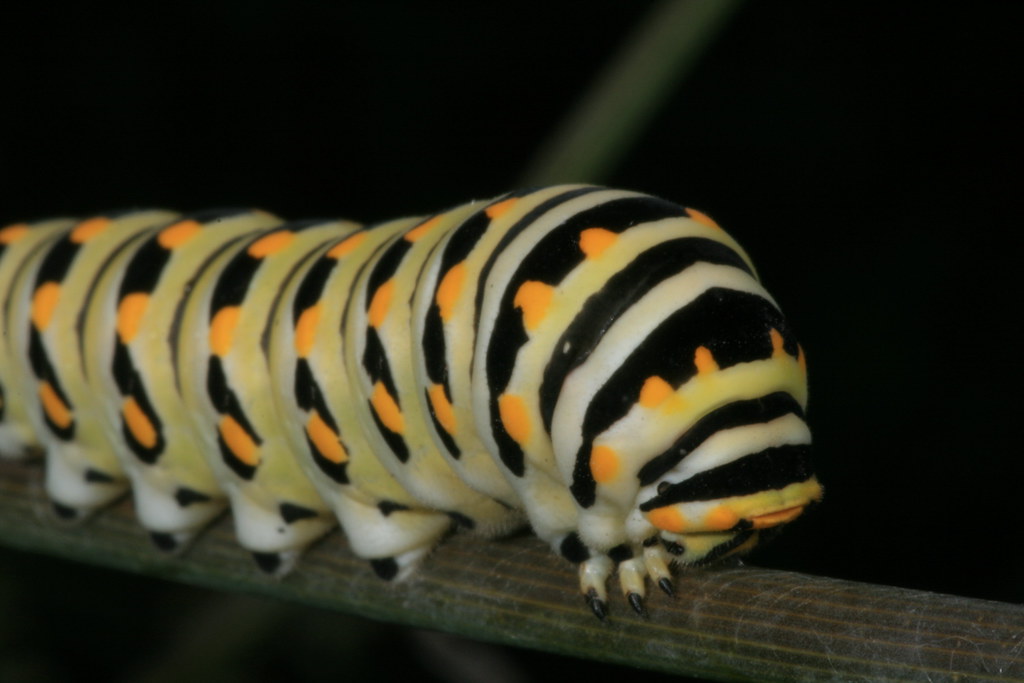 |
| Black swallowtail caterpillar on bronze fennel (photo by John Brandauer) |
 |
| Osmanthus heterophyllus 'Goshiki', false holly, the small reddish leaves represent new growth, while the older leaves have green and yellow variegation. Yep, Goshiki offers pretty a whole rainbow of colors in a single plant! |
 |
| Lanceleaf coreopsis (Coreopsis lanceolata) started to bloom on May 11th. |

 |
| The sundrops have opened! Today is the second day I've seen flowers on Oenothera fruticosa. These are really bright, cheerful flowers that are visible way across the garden. And the red buds provide extra appeal alongside the flowers. |
 |
| Handsome. Symmetrical. Weedy? |
 |
| These next three photos might all be the same species, though they're not the same specimen. |
 |
| Vigorous for sure. |
 |
| Healthy and strong, but is it desirable or pernicious? |
 |
| This deep green beauty with toothed leaves popped up in the front border amid some Agastache. Should I keep it or give it the heave-ho? |
 |
| Ilex decidua, possumhaw holly, photo by Earl McGehee |
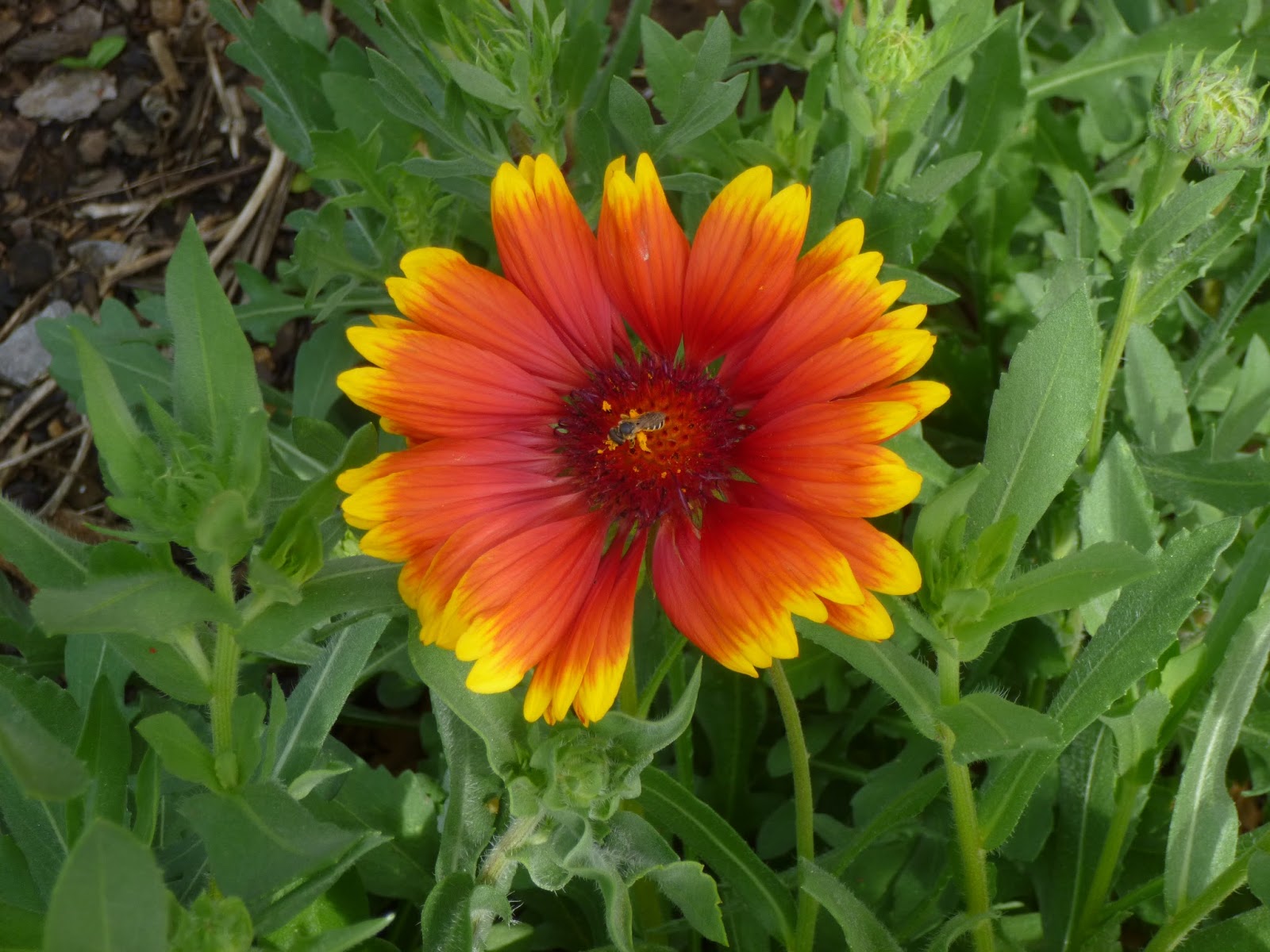 |
| Gaillardia (blanket flower) has come into full bloom and is now attracting pollinators. Once it starts, Gaillardia x grandiflora often will bloom straight through until frost (!) with little or no deadheading required. |
 |
| Clematis 'Crystal Fountain' in full bloom |
 |
| Likewise, the 'Natchez' mock orange (Philadelphus x virginalis) is blooming its heart out. I detect a bit more fragrance this year and have seen a few pollinators. (In previous years, the pollinators seemed to bypass this shrub, but as the flowering show gets bigger and bigger each year, perhaps they're starting to take more notice?) |
 |
| Epimedium x perralchicum 'Frohnleiten' looking fantastic. The new growth has effectively swamped and hidden the old foliage on those parts of the clump that I did not cut back this winter (as most gardening sources suggest doing). |
 |
| Love the incongruous touch of bronze in the spring garden, courtesy of the new growth on Dryopteris erythrosora (autumn fern, Japanese shield fern) |
 |
| This corner of the front foundation border is looking quite ferny thanks to (from left to right) lady fern (Athyrium filix-femina), eastern wood fern (Dryopteris x australis) and Japanese painted fern (Athyrium niponicum var. pictum). |
 |
| Can you believe all this new growth sprang to life in just a few weeks? Aralia racemosa (American spikenard) only emerged from dormancy in early April. Three weeks later, it was already the size of a small shrub. At maturity, I've heard this native perennial can reach 6 feet tall or even higher! |
 |
| I profiled Cornus amomum (silky dogwood) as a new addition to the garden back in February with a photo off a mature shrub loaded with berries. Well, here's the shrub I planted last autumn. As you can see, it has leafed out nicely. I really like the tinge of red on the new growth! |
 |
| I was really excited to see the native Asclepias incarnata (swamp milkweed) emerge from dormancy in early April. As you can tell, it seems to be doing really well, with lots of healthy-looking foliage and strong stems emerging from the base of the plant. |
 |
| I tried scattering lots of silky seeds from the Asclepias incarnata pods last autumn. And what's this? It looks like I have successful germination throughout one of the beds in the back of the garden! Exciting!! The monarch butterfly caterpillars and lots of other critters made a home on my single swamp milkweed plant last year. If these are in fact all swamp milkweed seedlings, I can't wait to see how much insect life turns up around the plants this year! (I did also scatter seeds from Asclepias viridis, green antelopehorn, last autumn, so some of these milkweed seedlings could be from that species, but the leaves look a bit narrower and more pointed than the photos of A. viridis seedlings I've seen online. It also looks as though A. viridis has wavy leaves, but the leaves on these seedlings don't seem wavy to me, so I'm guessing that they are A. incarnata seedlings. We shall see if/when they bloom! |
 |
| Here's the red maple (Acer rubrum) showing cracked bark and some new growth emerging from the trunk below the crack. This tree is probably about 15-20 feet tall, with a bare trunk for 5-6 feet off the ground. When we had a landscaper install it a few years ago, it was already pretty much this height with a very slender, upright growth habit. In other words, the 'canopy' (such as it is) offers little-to-no shade protection for the trunk in a full-sun setting. |
 |
| This redbud - also in full sun - has a vertical crack extending for several feet along its trunk almost to the soil line. |
 |
| Yet another full sun redbud (Cercis canadensis) with a crack extending almost the entire length of the trunk. I don't know whether these cracks will kill or hurt the trees - whether they are a symptom of poor health or whether they might cause the trees' demise by providing entry for diseases and insects. Or perhaps the trees will be able to heal themselves and seal the cracks on their own with new bark? I do suspect that sun scald might be part of the problem, so if the trees do survive, I plan on wrapping the trunks with some sort of protective tree paper next winter to protect the bark. |
 |
| Here's a volunteer redbud looking extremely healthy. It seems to me this little guy has a much bushier growth habit than the redbuds we had installed from a tree nursery. As I understand it (and from what I observe), redbuds often grow naturally in a forest understory or on the edge of a woodland. In those situations, perhaps redbuds would have a lanky, upright growth habit. But it seems to me that in the open, redbuds - like this volunteer - would have a bushier growth habit so that that the leaves could protect the bark of the trunk, at least during the summertime. (This theory sort of falls apart for wintertime protection, since the tree will be bare and the bark probably unprotected regardless of the growth habit of the branches...) |
 |
| Packera aurea, golden groundsel |